Choosing the right baking tray can feel overwhelming. The wrong pan leads to uneven bakes and frustrating cleanups, costing you time and money. So, what is the best choice?
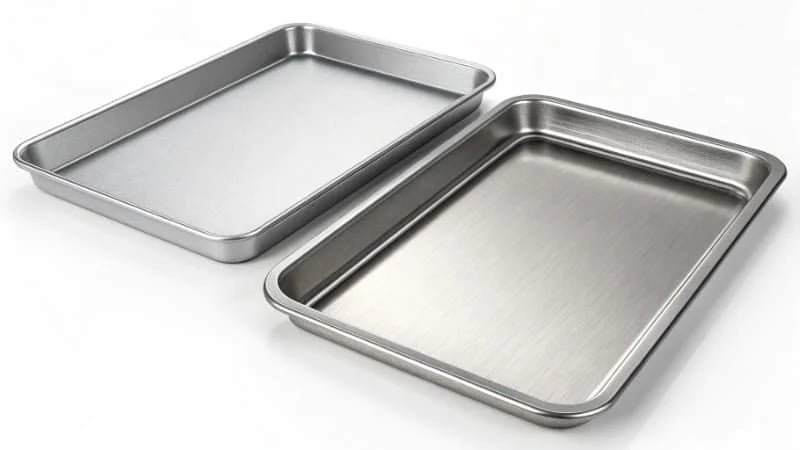
For overall versatility, aluminum1 is often better than stainless steel2 because it heats more evenly and can be formed into custom shapes3. However, for most professional bread factories, aluminized steel4 is the true winner, combining strength, heat performance, and durability5 for heavy-duty use6.
I've spent years helping bakeries choose the right equipment, and the pan debate is one I see all the time. It seems simple, but the material you choose has a huge impact on your final product and your daily workflow. Let's dig into the details of each material so you can find the perfect fit for your bakery's needs.
Is Aluminum the Best Choice for All-Around Performance?
You need trays that heat up fast and can be made into custom shapes3 for your signature products. But you worry about how they will hold up over time.
Aluminum is a fantastic choice for its light weight, even heating7, and ability to hold non-stick coatings8. This makes it highly versatile for a wide range of baked goods, especially those with custom shapes3 or a tendency to stick, like cakes and pastries.
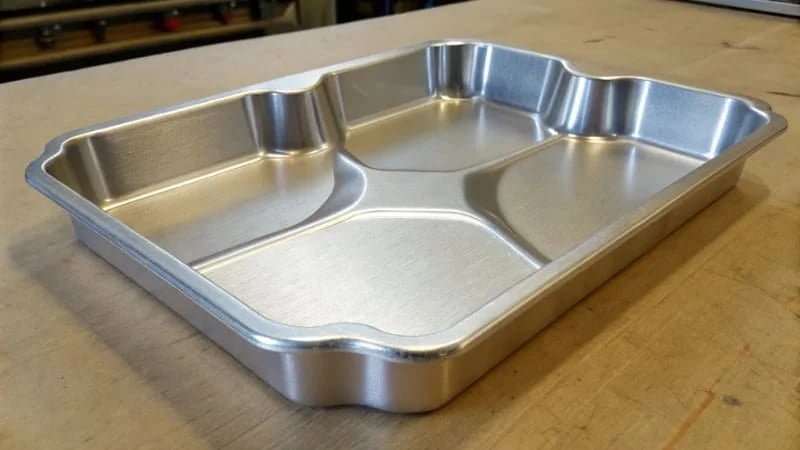
When I think about aluminum1, I think about speed and flexibility. Its main advantage is excellent heat conductivity9. This means the pan heats up quickly and, just as importantly, cools down quickly. For a busy bakery running multiple batches, this fast turnaround is a huge plus. You can get your products in and out of the oven efficiently without long waits. Another major benefit is its formability. Aluminum is a relatively soft metal, which means we can easily shape it into complex designs. If your bakery is known for a uniquely shaped bread or pastry, aluminum1 is often the only practical choice to create a custom tray. Finally, it's the perfect base for non-stick coatings8. The surface of aluminum1 bonds very well with coatings, which is essential when you're working with high-sugar doughs or sticky batters. This makes depanning and cleaning so much easier.
| Feature | Aluminum Tray Performance |
|---|---|
| Heat Transfer | Excellent, heats and cools very fast. |
| Weight | Very lightweight, easy for staff to handle. |
| Formability | High, making it ideal for custom shapes3. |
| Non-Stick Coating | Holds coatings extremely well. |
| Durability | Moderate. It can warp or dent over time with heavy use. |
| Best For | Cakes, pastries, custom-shaped products, and general-purpose baking. |
When Should You Choose Stainless Steel Trays?
You want a tray that is strong, easy to clean, and won't react with your food. But you have heard they can warp and cause uneven baking. What is the truth?
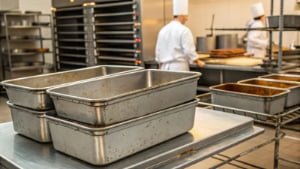
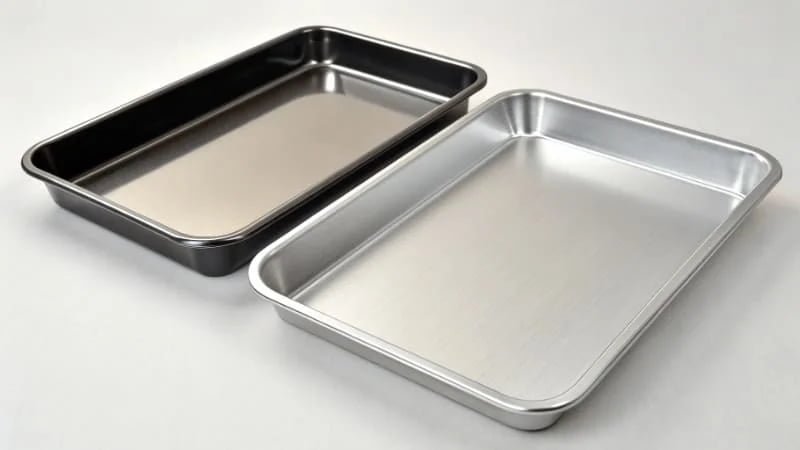
Stainless steel trays are best for tasks where strength and chemical resistance are the top priorities, not baking performance10. They are great for proofing, storage, or transport, but their poor heat transfer11 and tendency to warp make them a poor choice for most ovens.
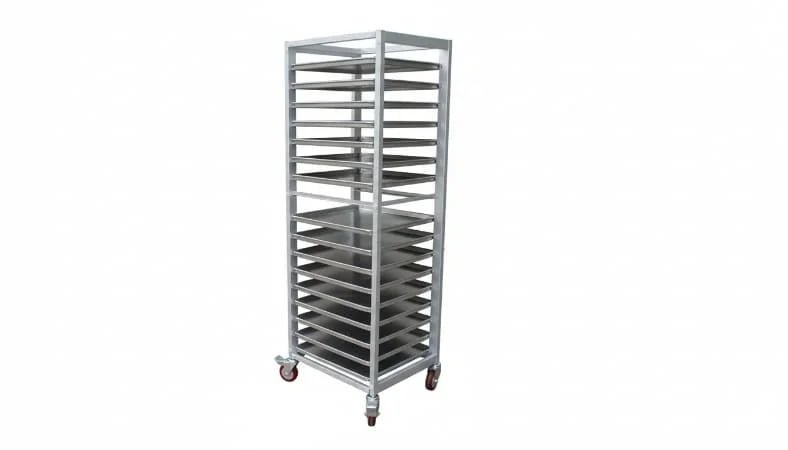
I've seen many bakeries use stainless steel2 trays, but rarely for the actual baking process. Their biggest strength is that they are incredibly durable and non-reactive. You can use them with very acidic or salty doughs without worrying about the metal leaching into your food. They are also very resistant to scratches and rust, so they look good for a long time. However, these benefits come with major drawbacks for baking. Stainless steel is a poor conductor of heat. This leads to hot spots and unevenly baked products, with some parts burnt while others are undercooked. Even worse is the warping12. Stainless steel has a high degree of elasticity, which means when it gets hot, it expands and often "pops" or twists. I remember a client who was frustrated because his stainless steel2 pans would warp so badly in the oven that they would spill batter. On top of that, non-stick coatings8 just don't stick to stainless steel2 well. For these reasons, their use in a hot bakery is usually limited to workbenches or cooling racks.
| Feature | Stainless Steel Tray Performance |
|---|---|
| Heat Transfer | Poor, leads to uneven baking and hot spots. |
| Weight | Heavier than aluminum1, but manageable. |
| Formability | Low. It's difficult to shape, so most trays are flat. |
| Non-Stick Coating | Poor adhesion. Not suitable for coated pans. |
| Durability | High scratch resistance, but warps easily under high heat. |
| Best For | Food prep, storage, proofing, and transporting goods. |
Is There a "Hexagon Warrior" That Beats Both?
It feels like you have to choose between aluminum1's performance and stainless steel2's strength. Is there a material that gives you the best of both worlds without the compromises?
Yes, for demanding professional bakeries, aluminized steel4 is the "hexagon warrior" of baking trays13. It combines the strength of steel with the benefits of aluminum1, offering superior performance, durability5, and a long service life for heavy-duty commercial use.
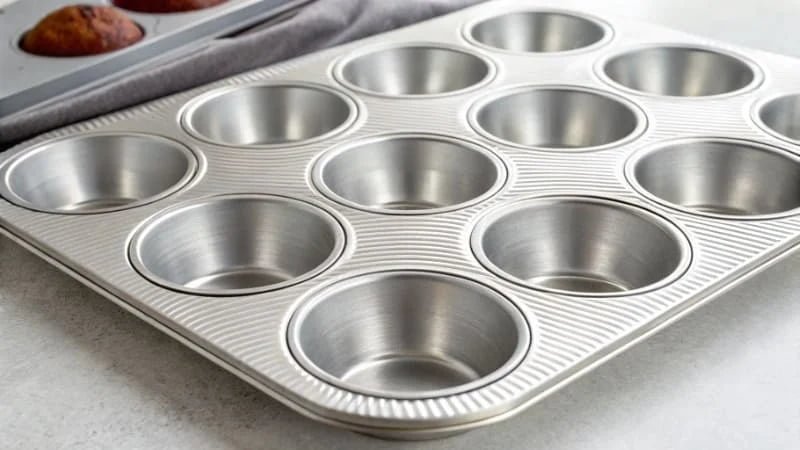
In my experience working with large-scale food production enterprises, aluminized steel4 is the undisputed champion. This material is made from a steel core that is hot-dip coated with an aluminum1-silicon alloy. This brilliant combination solves the problems of the other two materials. You get the incredible strength and rigidity of steel, which means these pans are extremely resistant to warping12, even at high temperatures in a tunnel oven. At the same time, the aluminum1 coating provides excellent corrosion resistance and promotes even heat distribution for a perfect, uniform bake. Furthermore, this surface is an ideal base for high-performance non-stick coatings8, ensuring easy release of products day after day. These pans are built to last and can handle the most complex and demanding factory environments. The only downsides are that they are heavier and more expensive. But as the saying goes, you get what you pay for. A cheap pan is no good, and a good pan is not cheap.
| Feature | Aluminum | Stainless Steel | Aluminized Steel |
|---|---|---|---|
| Performance | Fast heating | Uneven heating7 | Even & stable heat |
| Durability | Can warp | Warps easily | Very strong, resists warping12 |
| Coating | Good adhesion | Poor adhesion | Excellent adhesion |
| Weight | Light | Medium | Heavy |
| Cost | Low | Medium | High |
| Verdict | Great for versatility | Best for non-baking tasks | The Professional's Choice |
Conclusion
While aluminum1 and stainless steel2 have their place, aluminized steel4 is often the best investment for professional bakeries seeking durability5, performance, and a long-lasting, reliable baking tray.
Explore the advantages of aluminum trays, including their heat conductivity and versatility for various baked goods. ↩
Learn about the durability and non-reactive properties of stainless steel trays for food preparation. ↩
Learn how custom-shaped trays can enhance the presentation and quality of your baked goods. ↩
Discover why aluminized steel combines the best features of aluminum and stainless steel for professional baking. ↩
Explore the durability of various baking tray materials and their suitability for heavy-duty use. ↩
Find out which baking trays are designed to withstand the rigors of professional baking environments. ↩
Discover the significance of even heating in achieving perfectly baked products. ↩
Find out which non-stick coatings work best with different baking tray materials for easy release. ↩
Understand heat conductivity and its role in achieving optimal baking results. ↩
Understand the key factors that affect baking performance and how to choose the right tray. ↩
Understand the importance of heat transfer in baking and how it impacts the final product. ↩
Explore the causes of warping in baking trays and tips to avoid this common issue. ↩
Explore the various types of baking trays and their specific uses in baking. ↩