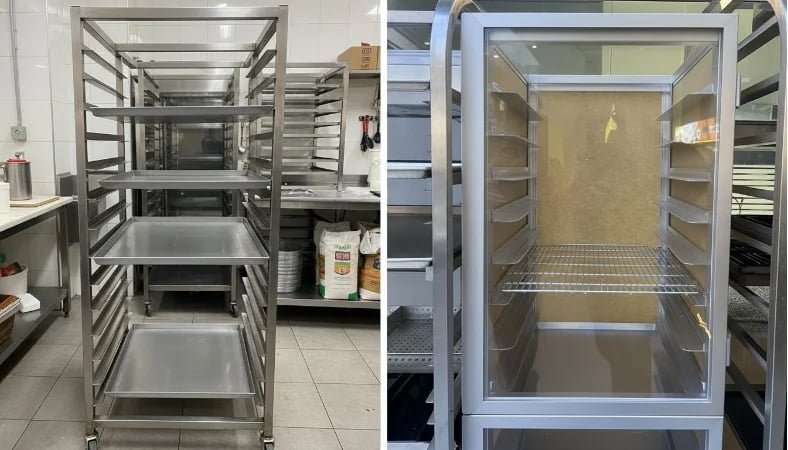
Choosing the right pan rack feels complicated. The wrong choice can slow you down and risk food safety. I'll help you decide which one is best for your bakery.
For a fast-paced, high-volume bakery1, an open rack2 is best for its speed and airflow. For an artisan shop where hygiene3 is the top priority, an enclosed rack4 offers superior protection from dust and contaminants, keeping your products safe and clean.
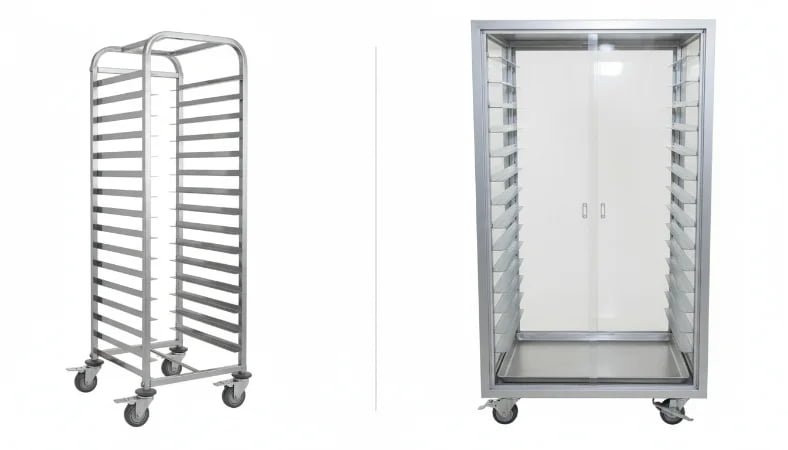
Making the right choice really comes down to the details of your daily work. I've seen both types of racks completely transform a kitchen's workflow, for better or for worse. It all depends on matching the rack to the job. Let's start by looking at the workhorse of many large bakeries: the open pan rack. You might be surprised by all the ways you can use it.
Is an Open Pan Rack the Best Choice for a Fast-Paced Bakery?
Your bakery is running at full speed, and you need to move pans quickly. Slow equipment costs you time and money. An open pan rack might be the simple, fast solution you need.
Yes, for a busy bakery, an open rack2 is often the best choice. Its design allows for quick loading and unloading. It also has great air circulation5 for cooling. It is built for speed and efficiency, which is why it's a favorite in big kitchens.
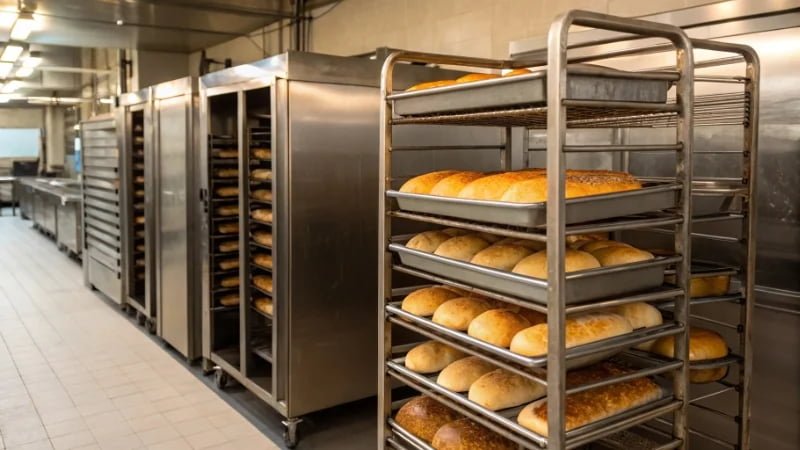
I remember when my team was developing a new line of pastries. We needed to cool dozens of trays at once, and our open rack2 were a lifesaver. The open design is all about easy access and airflow. You can grab a tray from any side without opening doors or fumbling with latches. This saves valuable seconds when you're in the middle of a rush. Because there are no walls, air moves freely around your products. This is perfect for cooling baked goods quickly and evenly, preventing them from getting soggy. It's also great for proofing dough6 that needs good ventilation.
Key Features and Trade-offs
The simple structure makes these racks very durable7 and easy to clean. There are fewer parts to break and fewer corners for grime to hide in. But this openness has a downside. Your food is exposed to dust and anything else in the air. This is why open rack2 are best for high-turnover environments where products are not sitting out for long.
| Feature | Advantage | Disadvantage |
|---|---|---|
| Open Design | Fast loading/unloading, easy access | Exposes food to dust/contaminants |
| Air Circulation | Excellent for rapid cooling and proofing | Not suitable for holding temperature |
| Simple Build | Durable, easy to clean, lower cost | Less protection for products |
| Special Use | Can be rolled into ovens (with heat-proof wheels) | Requires specific high-temp casters |
Should Your Artisan Bakery Invest in an Enclosed Pan Rack?
You take great pride in the quality and cleanliness of your artisan shop. A single speck of dust can ruin a customer's trust. An enclosed rack4 offers the best protection for your products.
Absolutely. Enclosed racks are perfect for artisan bakeries that prioritize hygiene3. They protect your baked goods from dust and germs. Some models even have insulation to hold temperature, which is great for proofing delicate doughs and keeping products fresh.
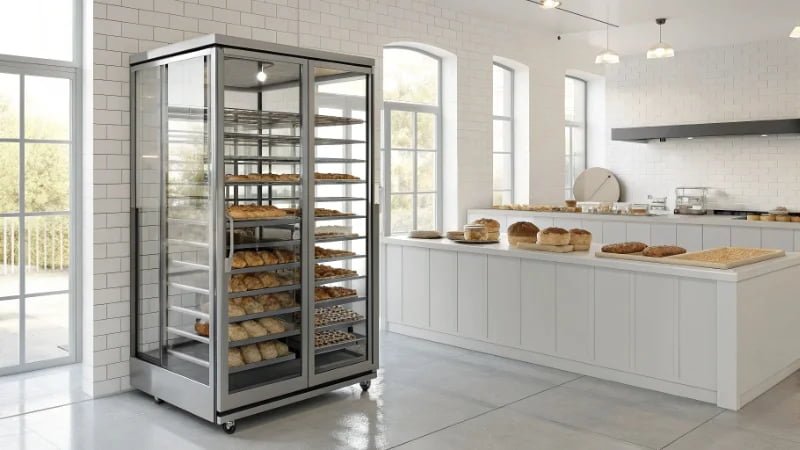
An enclosed rack4 is like a big, mobile cabinet for your pans. Its main job is to protect what's inside. I once visited a small bakery where the owner told me his enclosed rack4 was his "best employee." It kept his delicate macarons safe from the dry air and any dust from the street. This is the biggest advantage: total protection. The sealed environment is perfect for proofing dough6 that requires a specific humidity or for holding finished products in a clean space before they are packaged or displayed. This level of control is essential for many high-end or delicate baked goods.
Design and Functionality
Many enclosed rack4 come with clear doors. This lets you check on your products without opening the door and changing the temperature or letting in dust. They also look very professional and clean, which adds to the look of your kitchen, especially if it's visible to customers. While they are heavier and more expensive than open rack2, they offer a level of control and safety that is unmatched. They are not designed for rolling into a hot oven, but they are the best choice for protecting your product from the mixer to the oven, and from the oven to the display case.
| Feature | Advantage | Best For |
|---|---|---|
| Fully Enclosed | Maximum protection from dust, pests, and airborne contaminants | Artisan bakeries, clean rooms, sensitive products |
| Clear Doors | Easy to monitor products without opening the cabinet | Checking proofing progress, inventory management |
| Insulation (Optional) | Maintains temperature for proofing or holding warm food | Delicate doughs, holding finished items for service |
| Professional Look | Looks clean, neat, and hygienic | Open kitchens, shops focused on brand image |
Conclusion
Open racks are best for speed and high volume. Enclosed racks are best for hygiene3 and protection. Choose the one that fits your bakery's workflow and priorities.
Gain insights into the characteristics and needs of high-volume bakeries. ↩
Explore the advantages of open racks for fast-paced bakeries, including speed and airflow. ↩
Understand essential hygiene practices to ensure food safety in your bakery. ↩
Learn how enclosed racks provide superior protection and hygiene for delicate baked goods. ↩
Discover the importance of air circulation in baking and how it impacts product quality. ↩
Find out the best techniques for proofing dough to achieve perfect results. ↩
Explore the features that contribute to the durability of bakery equipment. ↩