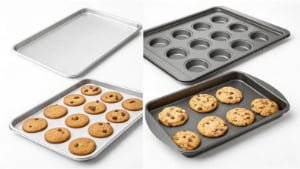
Are you confused by all the baking pan choices? You see "commercial-grade1" but wonder if it's a marketing trick. You just want a pan that works without overpaying.
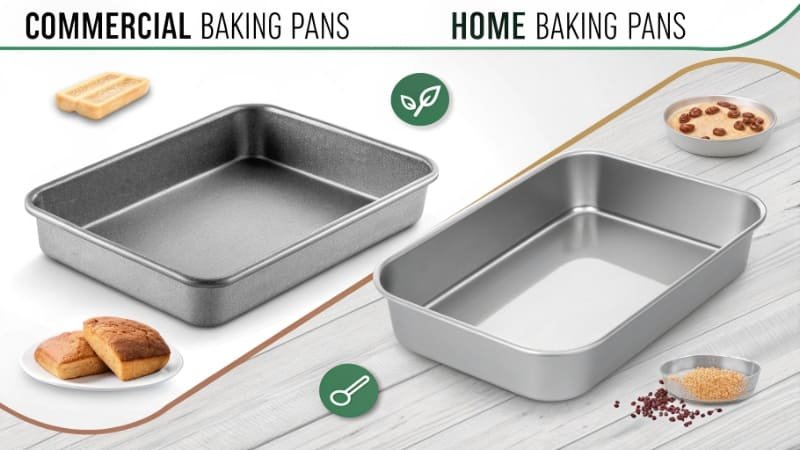
The biggest difference is focus. Commercial pans prioritize durability2 and performance over looks, using robust materials like aluminized steel3. Home pans focus on aesthetics and diverse materials, often making them more expensive for the same size and function due to higher cosmetic standards4 in production.
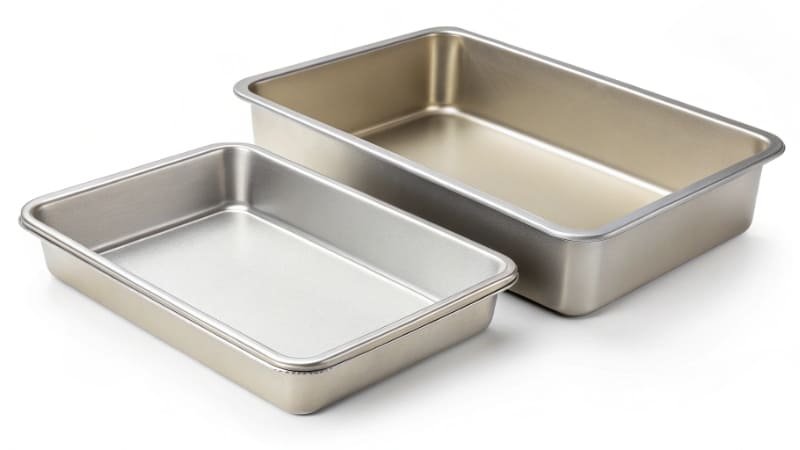
I've spent years in the bakeware industry. I've seen pans made for huge factories and for home kitchens. I understand the confusion because people often think "commercial" just means "expensive." The truth is actually the opposite and much more interesting. Let's break down what really separates these two types of pans. You might be surprised by which one is the better deal for your own kitchen.
Are commercial and home pans made from different materials?
You see beautiful glass or silicone pans5 for home use. But factories only seem to use metal. Does this difference in material really affect your baking and how long the pan lasts?
Yes, the materials differ a lot. Home pans use a wide variety, including glass, ceramic, and silicone, for looks and specific uses. Commercial pans almost exclusively use aluminum alloy or aluminized steel3 because they offer the best heat conduction6, strength, and lifespan for demanding environments.
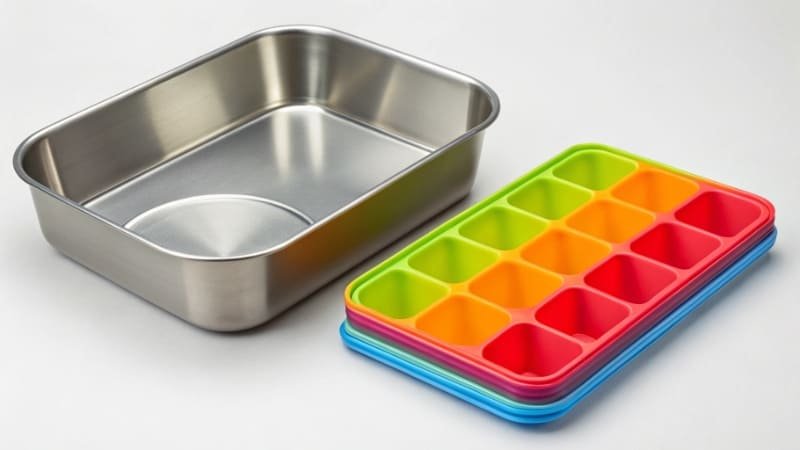
Commercial kitchens are tough places. Pans have to go from a -30°C freezer straight into a 250°C oven. They get dropped, scraped, and put through harsh washers. Materials like aluminized steel3 are workhorses built for this abuse. They are strong, resist warping, and transfer heat very evenly, which is critical for consistent results on a production line. Home pans have more freedom. A silicone pan is flexible and easy to store. A ceramic dish looks great and can go from the oven to the dinner table. These are great benefits for a home cook. But they can't survive in a commercial setting. I remember a client, a large bakery, tried using silicone molds. They failed within a week because they couldn't be stacked rigidly and tore easily during high-speed de-panning. It showed us that for real performance, nothing beats metal.
| Feature | Commercial Pans | Home Pans |
|---|---|---|
| Primary Material | Aluminized Steel, Aluminum Alloy | Silicone, Glass, Ceramic, Coated Steel |
| Main Priority | Durability, Performance | Aesthetics, Convenience |
| Heat Tolerance | Very High (withstands thermal shock) | Varies (can be lower) |
| Best For | High-volume, consistent results | Presentation, specific recipes |
Why do commercial pans look so rough?
Have you ever picked up a commercial pan and noticed small scratches or an uneven finish? It might make you question its quality. Is a perfect-looking home pan actually better made?
Commercial pans look rougher because their manufacturing prioritizes function over form. Minor scratches or cosmetic blemishes don't affect performance and are acceptable. Home pans, however, are consumer products where a flawless appearance is crucial, adding extra production steps and costs to achieve that perfect finish.
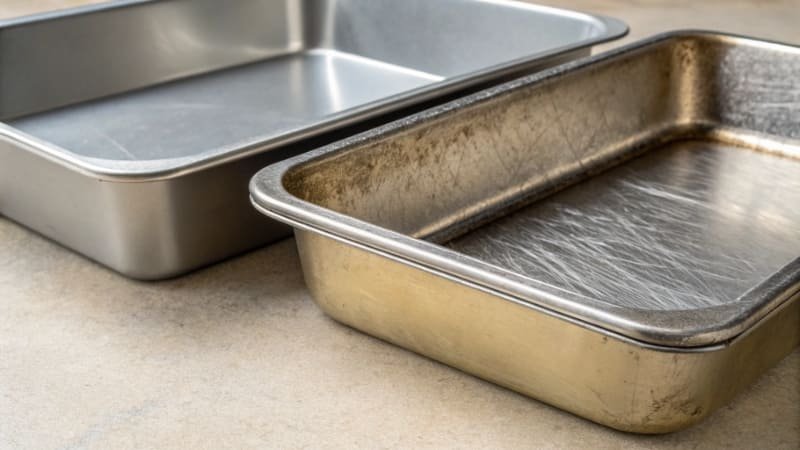
In our factory, the journey of a pan tells the whole story. A commercial pan moves quickly down the line. The goals are simple: make it the right size and give it a durable coating. If a machine grabber leaves a small scuff on the edge, nobody cares. That pan is going to be used 3,000 times and will get banged up in a busy kitchen anyway. Its job is to work, not to look pretty. Now, take that same pan but label it for the home goods market. Everything changes. That tiny scuff means the pan is a reject. We have to add extra handling steps. Workers wear gloves to prevent fingerprints. We add more inspection points. This slows down production and increases our scrap rate. All this extra effort is just to make sure it looks perfect on a store shelf. You are paying for those extra steps.
Is a commercial pan a smarter buy for my home kitchen?
You want the best value for your money. You see a cheap, pretty home pan next to an industrial-looking commercial one. Which one will actually save you money in the long run?
Absolutely. A commercial pan is often a better long-term investment7 for a home baker. It might have minor cosmetic flaws, but it is built to last thousands of baking cycles. It's usually cheaper than a visually perfect home pan made of the same material and size.
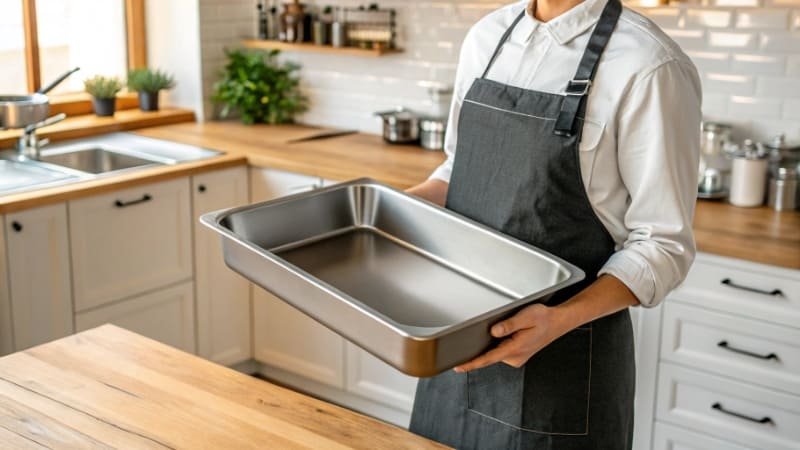
Let's talk about the real cost. I once did an internal cost analysis8 on two identical pans from our production line. They were both standard 9x13 inch pans made from the same aluminized steel3 with the same non-stick coating9. One was destined for a restaurant supply store, and the other was headed to a retail home goods chain. The commercial pan cost us a certain amount to produce. The home-use pan, after going through the extra finishing and inspection processes, cost us 30% more to make. That cost gets passed directly to you, the home baker. When you buy a commercial pan for your home, you are getting a heavy-duty, long-lasting tool without paying the "appearance tax10." It will likely outlast several prettier home-use pans, which might warp or lose their coating much faster. For anyone who bakes regularly and values performance11, it is the smartest choice.
Conclusion
In short, commercial pans are built for performance and durability2. Home pans are built for looks and variety. For the best value and lifespan, a commercial pan is a fantastic choice.
Understanding 'commercial-grade' can help you make informed choices about durability and performance. ↩
Explore the key elements that make baking pans last longer, especially in commercial settings. ↩
Learn why aluminized steel is favored for its heat conduction and durability in baking. ↩
Learn how cosmetic standards can influence the cost and quality of baking pans. ↩
Get insights into the benefits and drawbacks of using silicone pans in your kitchen. ↩
Understanding heat conduction can enhance your baking skills and results. ↩
Find out why investing in commercial pans can save you money over time. ↩
Learn how to analyze costs effectively to make the best purchasing decisions. ↩
Discover the best non-stick coatings to ensure easy release and longevity of your pans. ↩
Understanding the 'appearance tax' can help you choose more cost-effective baking tools. ↩
Discover how performance impacts your baking results and why it matters. ↩