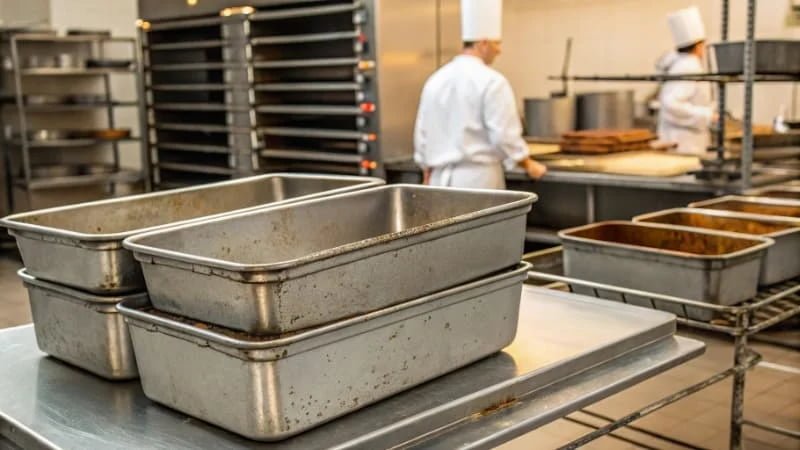
Your baking pans are wearing out, and you're not sure when to replace them. This uncertainty can risk your production quality and slow down your entire operation.
Industrial baking pans1 typically last around two years in daily use. However, this is not a fixed rule. The true lifespan depends heavily on the pan's material2, its non-stick coating3, how intensely you use it, and your specific baking environment4.
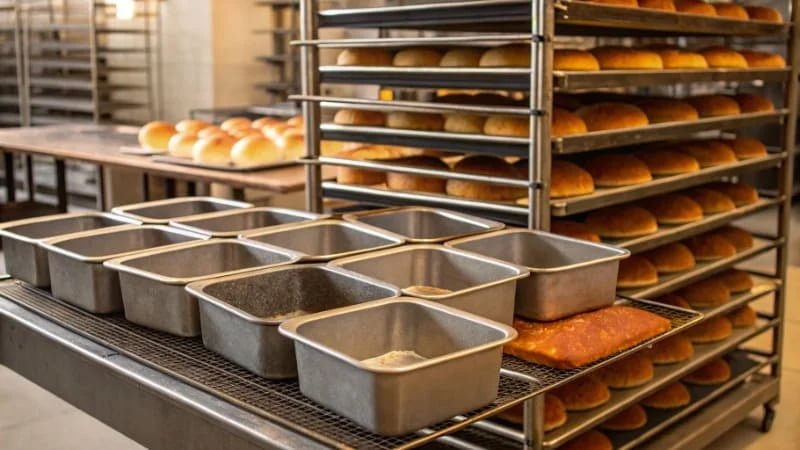
So, you know the general two-year rule, but that's just the beginning of the story. The real value comes from understanding what makes one pan outlast another. Let's break down the details so you can make the smartest investment for your bakery and avoid wasting money on pans that don't hold up.
Which Pan Material Lasts the Longest in a Busy Kitchen?
Choosing the wrong pan material means you'll be replacing them constantly. This wastes money and creates unnecessary disruptions in your production line. Let's find a material that can truly handle the heat.
For maximum durability in a demanding factory, aluminized carbon steel pans5 are your best choice. They are stronger and far more resistant to warping from constant heat and heavy use compared to aluminum alloy or stainless steel pans.
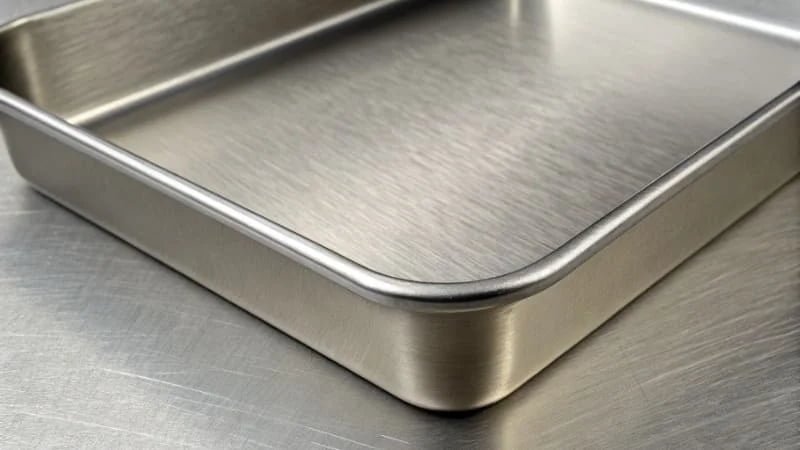
When I talk with factory owners, the conversation always turns to durability. A pan isn't just a container for dough; it's a piece of industrial equipment that has to perform under pressure, day in and day out. Based on my experience providing pans for long-term partners, the material is the foundation of a pan's lifespan.
Why Aluminized Steel is the Workhorse
Aluminized carbon steel is the undisputed champion for most industrial bakeries. Think of it as the heavy-duty option. Its mechanical properties6 are excellent, which is a technical way of saying it’s thick, tough, and built to last. It doesn't easily bend or deform when exposed to high heat and the stress of daily production. This stability ensures consistent baking results over a longer period. For the vast majority of our large-scale food production clients, aluminized steel7 is the ideal material that balances performance and longevity.
What About Aluminum Alloy and Stainless Steel?
Aluminum alloy is another common choice, and it comes in many different grades. While it offers excellent heat conductivity8, it generally doesn't have the same structural strength as aluminized steel7. It's more prone to denting and warping over time, especially in a high-volume setting. Stainless steel is incredibly durable and resistant to corrosion, but we almost never use it for coated baking pans. Its surface is very smooth and naturally non-reactive, which means non-stick coating3s have a very hard time adhering to it.
Here’s a simple table to compare them:
| Material | Durability | Heat Distribution | Best For |
|---|---|---|---|
| Aluminized Carbon Steel | High | Excellent | High-volume, continuous production |
| Aluminum Alloy | Moderate | Excellent | Lighter use, smaller bakeries |
| Stainless Steel | Very High | Good | Uncoated applications, acidic foods |
Does the Pan's Coating Really Matter for Its Lifespan?
Your baked goods are sticking, and cleaning has become a nightmare. This is a clear sign your pan's non-stick coating3 is failing. It’s a frustrating problem that slows down production.
Yes, the coating is absolutely critical. A quality coating not only ensures your products release perfectly but also protects the pan's metal. However, most industrial coatings have a functional lifespan of just one to two years with daily use.
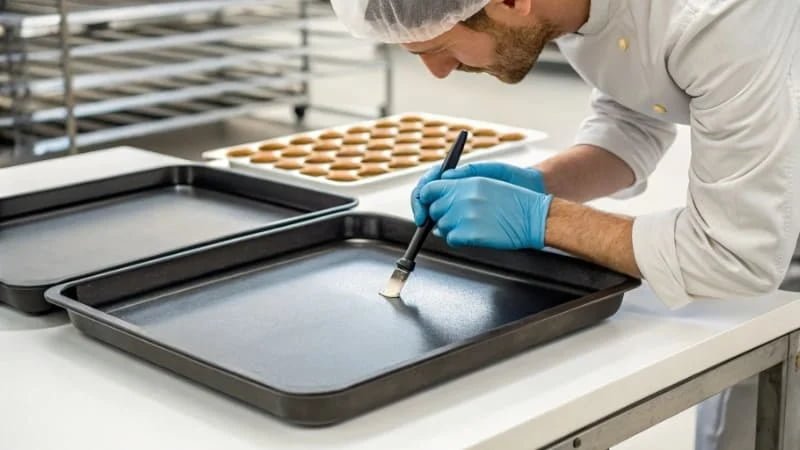
The non-stick coating3 is the part of the pan that interacts directly with your product. It’s also the part that takes the most abuse from scraping, high heat, and washing. Thinking that a coating will last forever is a common mistake. It's a consumable part of the pan, and planning for its replacement is key to maintaining efficiency.
The 1-2 Year Rule for Coatings
From what I've seen across hundreds of bakeries, a good quality coating will serve you well for about one to two years under normal, daily use. After that, it will start to degrade and lose its non-stick properties. This is a normal process. If your bakery runs around the clock with very high intensity, you might even see the coating wear out in just one year. I once visited a partner's factory that produced snack cakes 24/7. Their coatings lasted just under a year. This wasn't a sign of a bad pan; it was a sign of incredible productivity.
Coating Adhesion on Different Materials
A coating is only as good as its bond to the pan. To improve this, we use a sandblasting process on both aluminum alloy9 and carbon steel pans before applying the coating. This creates a rougher surface texture that the coating can grip onto tightly. This is why we don't typically coat stainless steel pans. The material is naturally so smooth and non-porous that coatings simply can't get a strong enough hold. So, if you need a non-stick surface, you should be looking at pans made from aluminized steel7 or aluminum alloy9.
Is It Cheaper to Recoat Old Pans or Just Buy New Ones?
Your pans are worn, but the budget for new equipment is tight. You're considering recoating your existing pans to save money, but you’re worried about the hidden costs and potential risks.
While recoating seems cheaper upfront, it is often not the best long-term solution. When you factor in the costs of stripping, transport, and potential food safety risks10, replacing the pans with new ones from your original supplier is usually safer and more cost-effective.
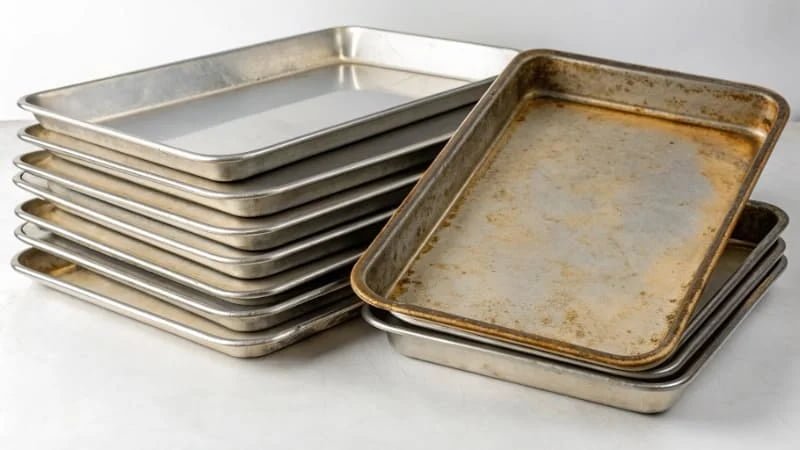
This question comes up a lot, especially with our large-scale bakery partners who manage thousands of pans. I was on a follow-up call with a client, and they mentioned they were getting quotes from a third-party factory to recoat their old pans. On the surface, it sounds like a smart, frugal move. But when we dug into the details, the picture changed completely.
The Hidden Costs of Recoating
Recoating isn't just a simple spray-on job. First, the old coating must be completely stripped off, which is a chemical or mechanical process. Then, you have the cost of shipping all those pans to the recoating facility and back. You also have to account for the production downtime11 while those pans are out of service. When my client added up these "hidden" costs—the stripping, the two-way transport, and the new coating itself—they were surprised to find the total was much closer to the price of new pans than they had expected.
The Critical Food Safety Factor
The biggest issue with recoating is risk. You are introducing a new, unknown variable into your production line. Can you be 100% sure that the third-party recoating factory uses a coating that meets the same food-grade safety standards as the original? Are their processes certified? A failure here could lead to contamination and a food safety crisis, which is a risk no food business should be willing to take. You lose the quality assurance that comes from your original, trusted supplier.
The Smartest Financial Move: Reordering
Here’s the part that many people forget. When you reorder the same pans from us, you don’t have to pay for the mold again. We built that custom mold12 for your first order, and the cost was included in that initial price. For all future orders of that same pan, the mold cost is gone. This provides a significant saving that makes buying new pans much more financially attractive. You get brand-new, perfectly safe pans that perform flawlessly, often for a total cost that is very competitive with the risky, complicated process of recoating.
Conclusion
A pan's lifespan is about two years, but material and coating are key. Ultimately, replacing worn pans is often a safer and smarter financial choice than recoating them.
Explore this link to discover top-rated industrial baking pans that ensure durability and efficiency in your bakery. ↩
Understanding the impact of pan material can help you make informed decisions for your baking operations. ↩
Discover the critical role of non-stick coatings in ensuring efficient baking and easy cleanup. ↩
Discover how different baking environments can influence the lifespan of your baking pans. ↩
Learn why aluminized carbon steel pans are the go-to choice for industrial bakers seeking durability and performance. ↩
Explore the mechanical properties that make certain baking pans more durable and effective for industrial use. ↩
Discover why aluminized steel is the top choice for durability and performance in high-volume bakeries, ensuring consistent results and long-lasting equipment. ↩
Learn how heat conductivity influences baking results and why it matters for your production. ↩
Explore the advantages and disadvantages of aluminum alloy pans to make the best choice for your bakery. ↩
Understand the potential food safety risks involved in recoating pans and why new pans may be safer. ↩
Explore the impact of production downtime on efficiency and how to minimize it in your bakery. ↩
Discover the advantages of custom molds in producing high-quality, consistent baking pans. ↩