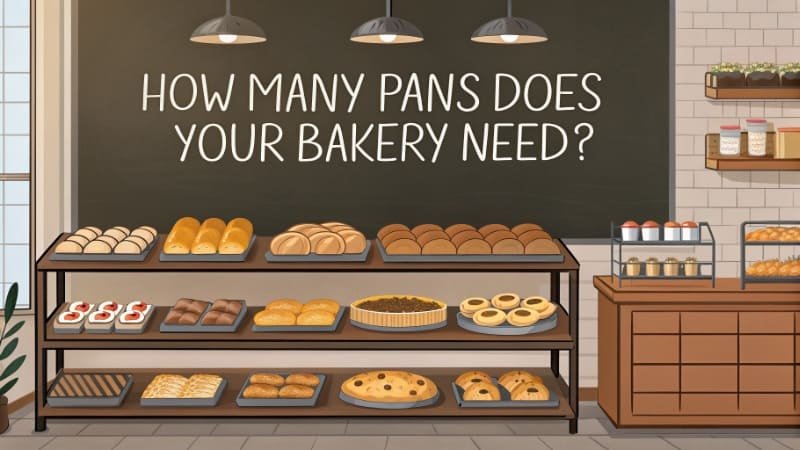
Are production bottlenecks1 slowing you down? An incorrect pan count could be the culprit. Let's fix that and boost your bakery's efficiency.
The right number of pans matches your entire production cycle2—from mixing to cooling. This ensures your oven never sits idle, preventing delays and maximizing output for every shift.
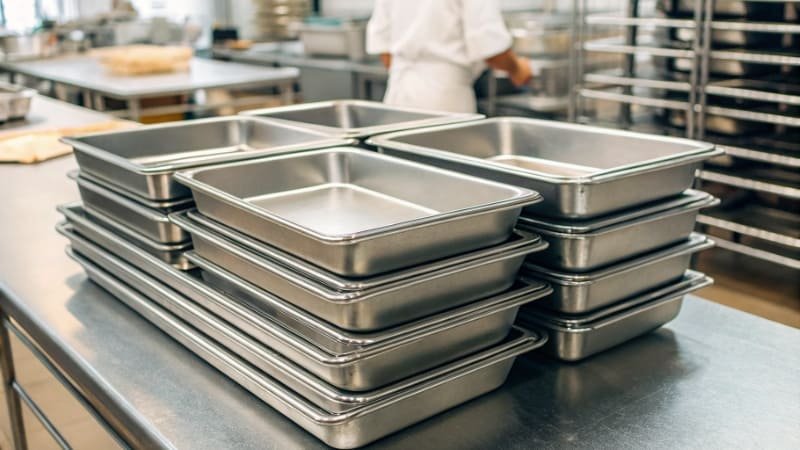
Getting this number right feels like a balancing act. Too few, and your whole line grinds to a halt. Too many, and you're wasting money and space. I remember a time when we miscalculated for a new client, and the results were a real eye-opener. It taught me a valuable lesson about planning. So, let's break down why this balance is so crucial for your bakery's success.
What Happens When You Have Too Few Pans?
Is your expensive oven often waiting for the next batch? This downtime costs money. A shortage of baking pans3 is a common cause of this frustrating and costly problem.
Having too few pans creates a domino effect of delays4. Your proofer gets backed up, your oven sits empty between bakes, and your entire production line stops, killing your efficiency and output.
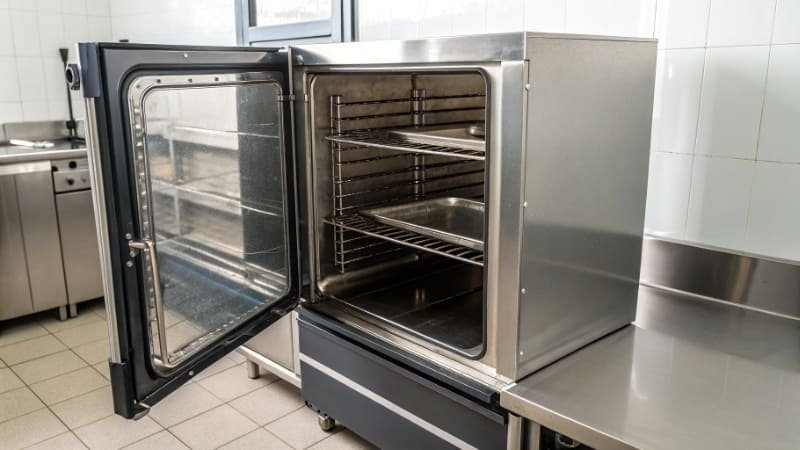
When you don't have enough pans, the entire rhythm of your bakery is thrown off. It's not just a minor inconvenience; it's a direct hit to your productivity and profits. I once visited a bakery that was struggling to meet its orders. They had a top-of-the-line oven, but it was sitting idle for 20 minutes between every single batch. The reason was simple: they were waiting for pans to be washed and cooled before they could prepare the next round of dough. This single bottleneck created a chain reaction of problems that crippled their workflow. Let’s look at how this happens.
The Domino Effect of Pan Shortages
A pan shortage is never an isolated issue. It starts a cascade of delays that ripple through your entire production line. First, the shaping and prep station has to stop because there's nowhere to place the dough. This then leads to a backlog at the proofing box5, where products might over-proof, affecting the final quality. The biggest cost, however, is at the oven. An empty oven is still consuming energy and taking up valuable floor space, but it's not generating any revenue. Your staff is left waiting, which means you are paying for unproductive labor time. It's a simple problem with very expensive consequences.
| Production Stage | Impact of Pan Shortage | Consequence |
|---|---|---|
| Preparation | No available pans to place shaped dough. | Work stops, labor time is wasted. |
| Proofing | Pans are stuck waiting for the oven. | Proofer becomes a bottleneck, risk of over-proofing. |
| Baking | Oven is empty between batches. | Wasted energy, lost production capacity. |
| Cooling/Cleaning | Rush to clean pans for the next cycle. | Increased risk of pan damage, potential for mistakes. |
Is It Possible to Have Too Many Pans?
Worried about running out of pans, so you bought extra? This seems safe, but it can hide serious costs. Idle equipment is a drain on your bakery's finances.
Yes, you can have too many. Excess pans tie up capital that could be used elsewhere. They also increase storage costs and risk damage or degradation from long-term disuse, adding to your operational burden.
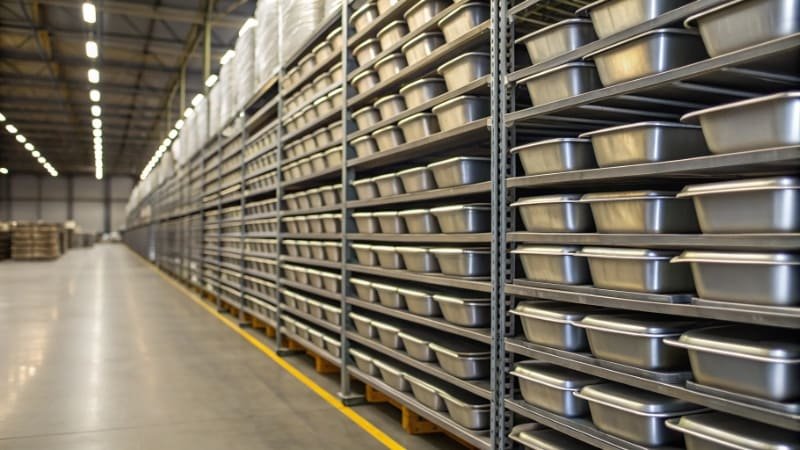
It seems logical to overbuy on pans to avoid the shortages we just talked about. I've seen many bakery owners make this choice, thinking it's a safe bet. But this "just in case" strategy creates its own set of problems. The most obvious issue is the financial one. Every pan sitting on a shelf is money that isn't working for you. That capital could have been invested in a new mixer, marketing, or staff training. Instead, it's tied up in metal. But the costs don't stop there. You have to store all those extra pans, which takes up valuable space that could be used for production. Over time, pans that sit unused can get dented, scratched, or even rust, especially in a humid bakery environment. They become a sunk cost and an operational headache.
The Hidden Costs of Excess Inventory
The financial drain from too many pans goes beyond the initial purchase price. You have to factor in the ongoing costs of managing this dead stock. This includes the physical space they occupy, the labor required to move and organize them, and the potential for loss due to damage. I worked with a large-scale facility that had an entire room filled with pans they hadn't used in years. They were paying rent and utilities for a space that was essentially a pan graveyard. By clearing it out and optimizing their inventory, they were able to install a new packaging line that significantly increased their revenue. It's a powerful reminder that every square foot of your facility should be productive.
| Cost Factor | Description | Financial Impact |
|---|---|---|
| Tied-Up Capital | Money spent on pans that are not in use. | Reduces cash flow for other investments. |
| Storage Costs | Space, shelving, and utilities for housing pans. | Increases overhead and reduces profitability. |
| Management Labor | Time spent organizing, cleaning, and tracking inventory. | Adds to labor costs6 without adding value. |
| Damage & Depreciation | Risk of dents, rust, or becoming obsolete. | Leads to a total loss on the initial investment. |
How Can You Calculate the Ideal Number of Pans?
Do you want your bakery to run like a well-oiled machine? The secret is a simple calculation. Let's ensure your oven is always working at peak capacity.
To find the ideal number, calculate how many pans you need to complete the full cycle (prep, proof, bake, cool, clean) within the time it takes to bake one batch. This keeps your oven continuously fed.
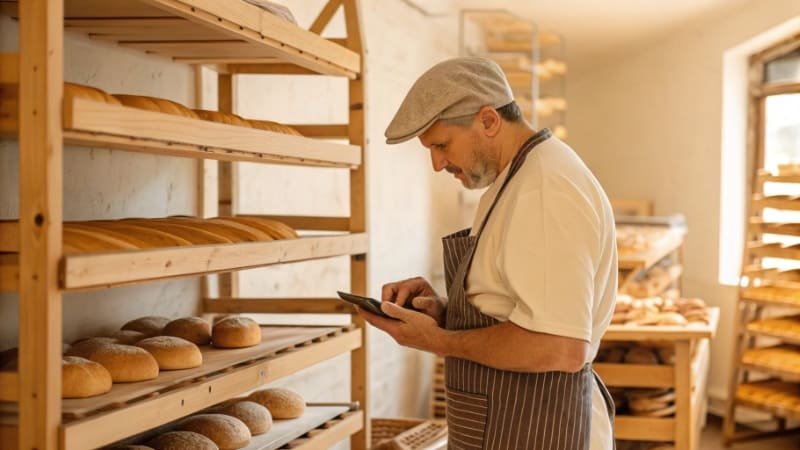
Calculating your ideal pan count isn't guesswork; it's a straightforward formula based on your unique production timeline. The goal is to create a seamless loop where a fresh batch of pans is always ready the moment your oven is free. To do this, you need to map out the entire life cycle of a pan, from the moment it's used for prep to the moment it's clean and ready to be used again. This total time is your "pan cycle time7." By comparing this to your "oven bake time," you can figure out exactly how many sets of pans you need to keep production moving without a single pause. This is how you achieve maximum efficiency and get the most out of your expensive equipment. I guide my clients through this process all the time, and it transforms their operations.
A Formula for Maximum Efficiency
Let's break down the calculation. First, add up the time for each step in your pan's journey. Then, use that total to determine your ideal inventory. The key formula is: (Total Pan Cycle Time / Bake Time) * Pans per Batch = Ideal Pan Count.
Let's use an example. Imagine your bakery makes croissants. You need to know how long each stage takes.
| Stage | Time (in Minutes) |
|---|---|
| Prep & Shaping | 30 |
| Proofing | 90 |
| Baking | 20 |
| Cooling | 30 |
| Washing & Drying | 10 |
| Total Pan Cycle Time | 180 |
In this case, your total pan cycle time7 is 180 minutes. Your bake time is 20 minutes. If your oven holds one rack with 18 pans, then:
- (180 minutes / 20 minutes) = 9. This means you need 9 full sets of pans in your rotation.
- 9 sets * 18 pans per set = 162 pans. This is your ideal number to run at maximum capacity.
How Do You Adjust Your Pan Count for Real-World Production?
Is running at 100% capacity just a dream? Real-world schedules have peaks and valleys. Your pan inventory should reflect this reality, not just the ideal theory.
The ideal calculation assumes you are always at full capacity. For real-world use, base your pan count on your planned production schedule8. You can often reduce the number slightly to match your typical output.
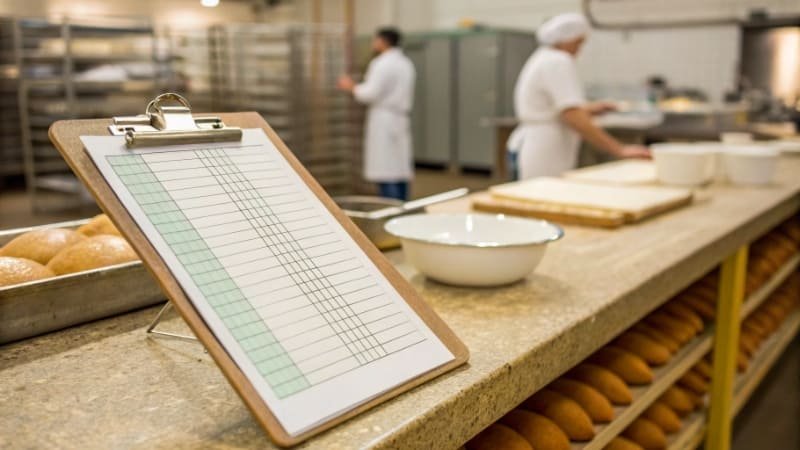
The formula we just discussed gives you the number of pans needed for 100% continuous production. This is the gold standard for efficiency, but let's be honest: most bakeries don't operate at full throttle 24/7. You have slower days, different product runs, and seasonal demand shifts. Ordering pans based on a theoretical maximum that you rarely hit is a recipe for the "too many pans" problem. The smart approach is to use the ideal calculation as your starting point and then adjust it based on your actual, planned production levels. I always advise my clients to look at their sales forecasts and production schedule8s. This data-driven approach ensures you have enough pans for your busiest days without tying up unnecessary capital during your quieter periods.
From Theory to Practice: Planning for Reality
Your production plan is your best guide. If you know you typically operate at 80% of your maximum capacity, you don't need 100% of the ideal pan count. You can adjust your inventory to match that reality. For example, using our croissant scenario, if you plan to run at 80% capacity, you would need 80% of 162 pans, which is about 130 pans. This frees up capital and storage space. I also recommend adding a small buffer—around 5-10%—to account for damaged pans or unexpected rush orders. This gives you flexibility without creating massive overstock. Your pan inventory should be a dynamic asset9 that reflects the real rhythm of your business, not a rigid number based on a perfect-world scenario.
| Capacity Level | Calculation (Based on 162 Ideal) | Adjusted Pan Count |
|---|---|---|
| 50% Capacity | 162 * 0.50 = 81 | ~81 pans |
| 75% Capacity | 162 * 0.75 = 121.5 | ~122 pans |
| 90% Capacity | 162 * 0.90 = 145.8 | ~146 pans |
| 90% + 5% Buffer | 146 * 1.05 = 153.3 | ~154 pans |
Conclusion
In short, matching your pan count to your production rhythm10 is key. It prevents downtime and avoids wasted capital, directly boosting your bakery's bottom line.
Understanding production bottlenecks can help you identify and eliminate inefficiencies in your bakery. ↩
Understanding the production cycle can help streamline operations and improve overall efficiency. ↩
Choosing the right baking pans can enhance your baking process and improve product quality. ↩
Learn how delays can impact your entire production line and how to mitigate them. ↩
Understanding proofing boxes can help you optimize your dough preparation process. ↩
Reducing labor costs can significantly improve your bakery's profitability. ↩
Calculating pan cycle time is essential for determining the ideal number of pans needed. ↩
An effective production schedule can help you manage resources and meet customer demand. ↩
Learn how to treat your inventory as a dynamic asset to improve operational efficiency. ↩
Understanding production rhythm can help you align your resources for maximum efficiency. ↩