Struggling with stubborn, baked-on grease1 on your trays? This residue can ruin your equipment and affect your product quality. You need a cleaning method that works without causing damage.
The best way to clean baking trays depends on the tray's surface. For standard trays, use an automated process with high heat2, strong alkali, and high-pressure water. For non-stick trays3, use a gentle, controlled method with mild detergents4, lower temperatures, and strict handling to protect the coating.
I've seen it all in my years in the baking equipment industry. From small startups to massive food production plants, one question comes up again and again: how do we get our trays perfectly clean? A clean tray isn't just about looks. It's about food safety, product consistency, and protecting your investment. So, let's look at how the professionals handle this essential task. There are two very different approaches, and choosing the right one is critical.
How Do Professional Bakeries Clean Standard Baking Trays?
Your standard aluminum or stainless steel trays are covered in burnt sugar and carbonized fats. Scrubbing them by hand is slow, inconsistent, and costs a lot in labor.
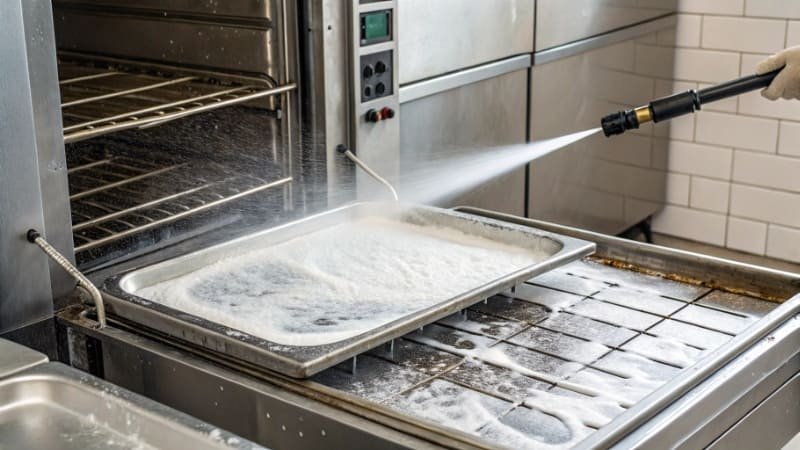
Professional bakeries clean standard trays using automated tunnel washers5. These machines combine high-temperature water (around 80°C), a strong alkaline detergent6, and high-pressure jets7. This powerful combination efficiently strips away all residues, ensuring every tray is perfectly clean and sanitized for the next production run.
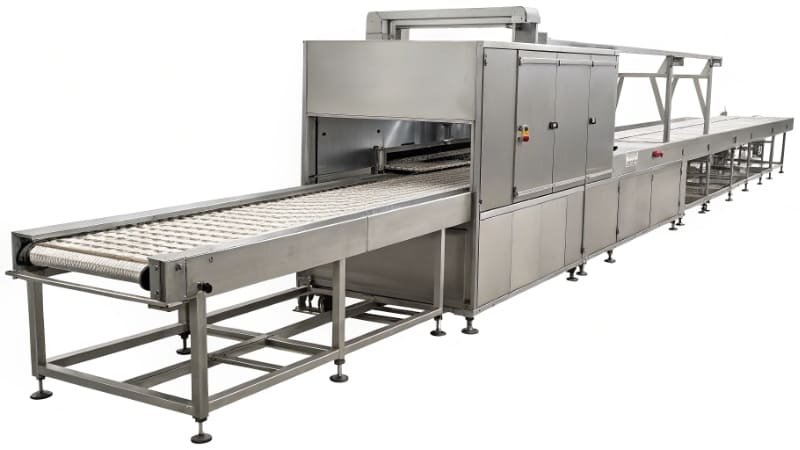
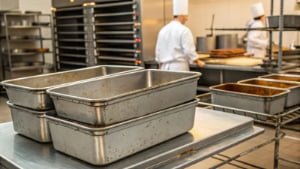
I remember visiting one of our largest clients, a massive bread factory. I was amazed by their cleaning operation. It wasn't a team of people scrubbing in a sink. It was a huge, stainless steel machine, a tunnel washer, doing all the work. Trays went in dirty on one end and came out sparkling clean, dry, and cool enough to handle on the other. This is the gold standard for high-volume bakeries. The entire system is built around a simple but powerful principle: "High Temperature + Strong Alkali + High-Pressure Water." This combination is the key to efficiency, consistency, and absolute hygiene. It’s a solution we at KKbake often recommend when designing production lines because it addresses the core needs of our large-scale enterprise customers for speed and reliability.
The Automated Cleaning Cycle Breakdown
The magic of the tunnel washer isn't just brute force. It's a carefully sequenced process. Each stage has a specific job. If you're running a large operation, understanding this process helps you see why manual cleaning can't compete. Let's break down what happens inside that machine.
| Stage | Purpose | Key Elements |
|---|---|---|
| 1. Pre-Wash / Scraping | To remove large, loose debris. | High-pressure, ambient-temperature water jets. Sometimes mechanical scrapers are used. |
| 2. Main Wash | To break down and remove baked-on grease1 and carbon. | Hot water (around 80°C) mixed with a strong alkaline (high pH) detergent. |
| 3. First Rinse | To wash away the detergent and loosened soil. | Recirculated hot water jets. |
| 4. Final Rinse / Sanitize | To remove all detergent traces and kill bacteria. | Fresh, very hot water (often 85-90°C). A sanitizing agent can be added here. |
| 5. Drying | To dry the trays quickly and prevent water spots or rust. | A high-velocity "air knife" blower that blasts water off the surface. |
The main wash stage is where the real work happens. The high temperature makes fats and sugars soft. The strong alkaline detergent6 then reacts with the fats in a process called saponification8. This basically turns the hardened grease into a type of soap that can be easily washed away. The high-pressure jets7 provide the physical force to strip everything from the tray's surface. This automated process means every single tray gets the exact same, perfect cleaning. This guarantees consistency in your baking and meets the strict food safety standards required in the industry.
What's the Secret to Cleaning Non-Stick Trays Without Ruining Them?
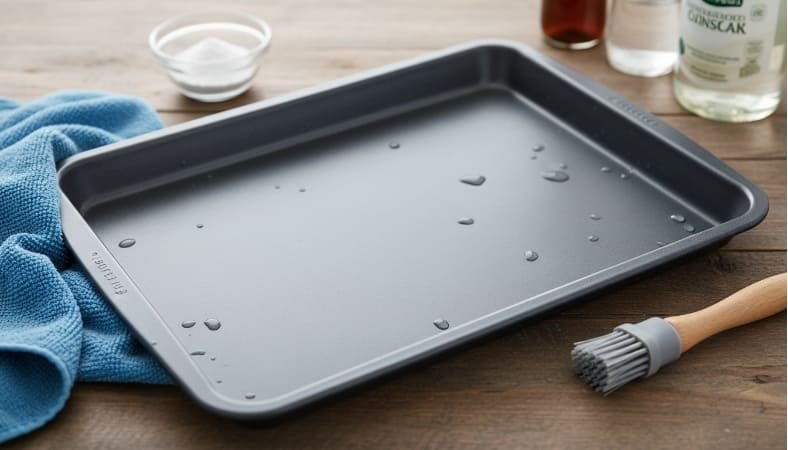
You invested in expensive [https://kkbake.com/baking-pans/)%%%FOOTNOTE_REF_3%%% for perfect release. But after a few washes, products start to stick. The delicate coating is getting damaged, and you're losing money.
To clean non-stick trays3, you must use a gentle, highly controlled process. This involves special mild detergents4, strictly controlled water temperature and pressure, and a complete ban on any abrasive materials9. The goal is to clean effectively while protecting the fragile, expensive non-stick coating.
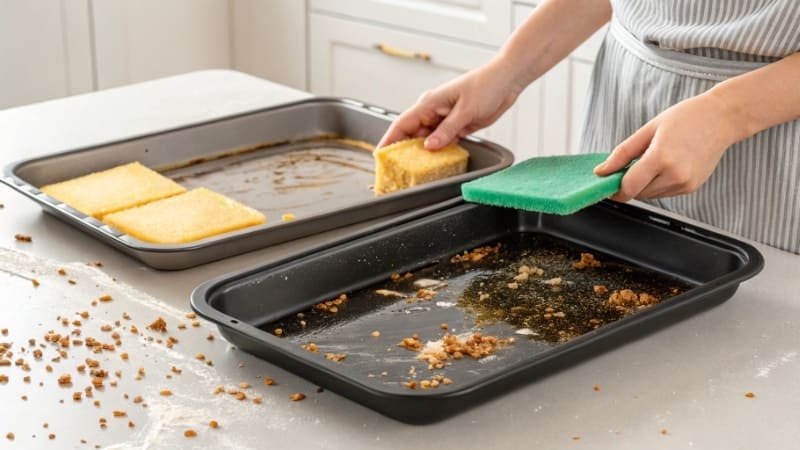
I once got a call from a client who ran a chain of high-end bakeries. They were in a panic. Their new batch of custom non-stick trays3 was failing after just a month. I went to their central kitchen and saw the problem immediately. They were washing the non-stick trays3 in the same powerful washer they used for their stainless steel pans. The combination of high heat and harsh chemicals was literally stripping the coating off. It was an expensive lesson for them, but it highlights a critical point. Cleaning non-stick trays3 is a completely different game. You can't use the same "brute force" method. The secret is "Gentle Customization + Strict Control." You are not just cleaning metal. You are preserving a delicate, high-performance surface.
Protecting Your Non-Stick Investment
The coating on a non-stick pan is a thin layer of polymer (like PTFE). It's amazing for baking, but it's not very tough. High heat, harsh chemicals, and physical scraping will destroy it. That's why the cleaning process must be much more precise. It's less about power and more about finesse. We work with our clients, from chain bakeries to artisan startups, to develop cleaning protocols that extend the life of their trays. It costs a bit more in care and specific supplies, but it saves a fortune in replacement costs.
Here is a simple comparison to show you the difference.
| Cleaning Factor | Standard Trays (Aluminum/Steel) | Non-Stick Trays |
|---|---|---|
| Detergent | Strong Alkaline (high pH) | Neutral or Mildly Alkaline (pH-neutral) |
| Temperature | High (Up to 90°C) | Moderate (Usually below 60°C) |
| Pressure | High-pressure jets | Low to medium-pressure jets |
| Handling | Metal scrapers are okay. | No abrasives. Soft brushes or cloths only. |
To protect the coating, you must follow these rules. First, use only detergents specifically made for non-stick surfaces. They clean without being corrosive. Second, keep the water temperature lower. Too much heat can cause the coating to degrade or the pan to warp, which also damages the coating. Third, use lower water pressure. You want to wash residue away, not blast it off. Finally, and most importantly, never use anything abrasive. No metal scrapers, no steel wool, no harsh scrubbing pads. Once the coating is scratched, it's the beginning of the end. Regular inspection is also key. Train your staff to spot signs of wear and to retire trays when the coating is no longer effective. This protects your product quality and your brand's reputation.
Conclusion
Cleaning baking trays properly protects your investment and ensures food safety. Use a powerful, automated process for standard trays and a gentle, controlled method for your delicate non-stick trays3.
Baked-on grease can be tough to remove and affects tray performance. Learn effective methods to tackle this stubborn residue. ↩
Discover how high heat in automated processes ensures thorough cleaning of standard baking trays, enhancing efficiency and hygiene. ↩
Non-stick trays require special care to maintain their coating. Find out the best practices for cleaning them safely. ↩
Mild detergents clean non-stick trays without harming the coating. Find out why they're the preferred choice. ↩
Automated tunnel washers offer a high-efficiency solution for cleaning trays. Learn how they work to keep trays spotless. ↩
Strong alkaline detergents are effective in removing tough residues. Discover why they're essential in tray cleaning. ↩
High-pressure jets provide the force needed to remove stubborn residues, ensuring trays are thoroughly cleaned. ↩
Saponification turns grease into soap, making it easier to clean. Learn how this process benefits tray cleaning. ↩
Abrasive materials can ruin non-stick coatings. Discover why it's important to use gentle cleaning tools. ↩