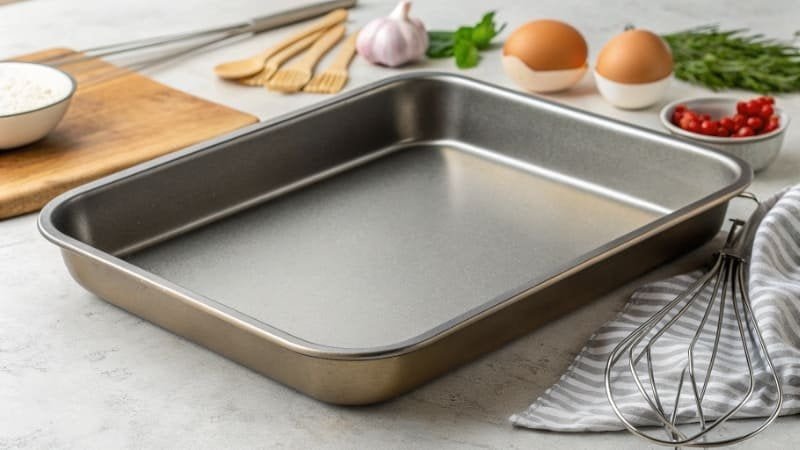
Tired of your cakes sticking and falling apart? This frustrating cleanup wastes time and ingredients. The best solution is to use a pan with the right non-stick coating1.
The most reliable way to make a baking pan non-stick for professional use is to buy a pan with a factory-applied coating. This coating should be specifically chosen based on your product's sugar content2, baking temperature, and acidity for maximum efficiency and pan lifespan.
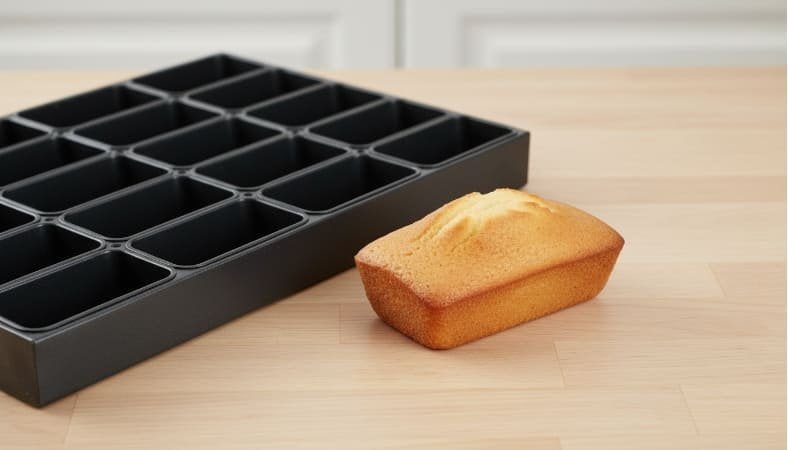
A little butter or a sheet of parchment paper3 can save a home baker's cake. But for industrial bakeries and food producers, this simply isn't a scalable solution. The real answer isn't about what you add to the pan before each bake, but about the technology of the pan itself. For professionals, efficiency is everything. Let's look at why a purpose-built non-stick pan is the only choice for a serious baking operation.
Why can't I just use parchment paper for everything?
You think parchment paper3 is an easy fix for sticking. But the recurring costs of paper, extra labor, and constant waste add up quickly in a commercial bakery.
Parchment paper is a recurring operational cost in both materials and labor. It adds an extra step to your workflow, creates waste, and is less efficient than a durable, built-in non-stick coating1. A quality coated pan is a one-time investment that boosts productivity.
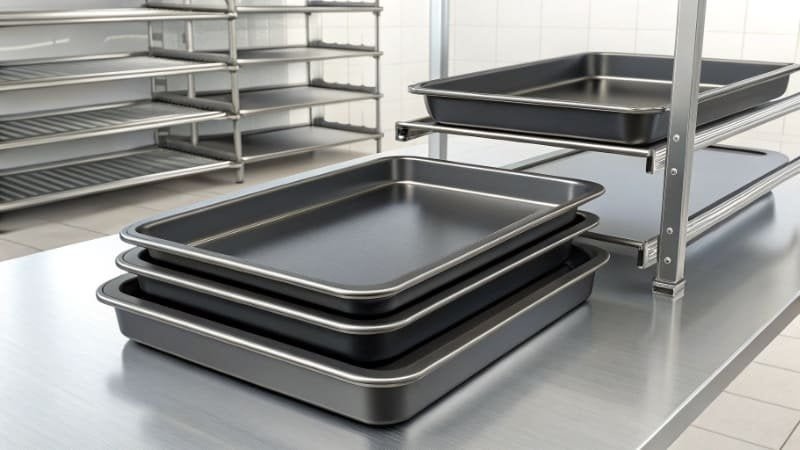
In a commercial kitchen, small costs multiply quickly. What seems like a simple step—lining each pan with paper—becomes a major expense when you produce thousands of items a day. We need to look at the real cost of using these disposable solutions. It goes far beyond the price of a roll of paper. You must account for the labor cost of an employee cutting and fitting the paper. You also have to consider the slower production speed and the cost of waste disposal4. For our large-scale food production clients, every second and every cent matters. A small inefficiency can become a huge financial drain over a year. This is why our strategic partners in the food industry always choose integrated, long-term solutions. They understand that investing in the right equipment from the start pays for itself.
The True Cost of "Disposable" Solutions
| Cost Factor | Parchment Paper (Ongoing) | Coated Pan (Investment) |
|---|---|---|
| Material Cost | High (recurring purchase) | Moderate (one-time) |
| Labor Cost | High (adds a process step) | Zero (integrated feature) |
| Production Speed | Slower workflow | Faster, streamlined process |
| Waste Generated | High (daily disposal) | Minimal (end-of-life only) |
| Overall Impact | Reduces daily profitability | Increases long-term efficiency |
Aren't all non-stick coating1s the same?
You might assume any pan labeled "non-stick" will work for all your recipes. This can lead to failed batches when a coating is not suited for high sugar or heat.
No, non-stick coating1s are very different. They are engineered for specific baking conditions. A coating designed for low-sugar bread will likely fail with a high-sugar cake. The material, thickness, and application process all matter for performance and durability.
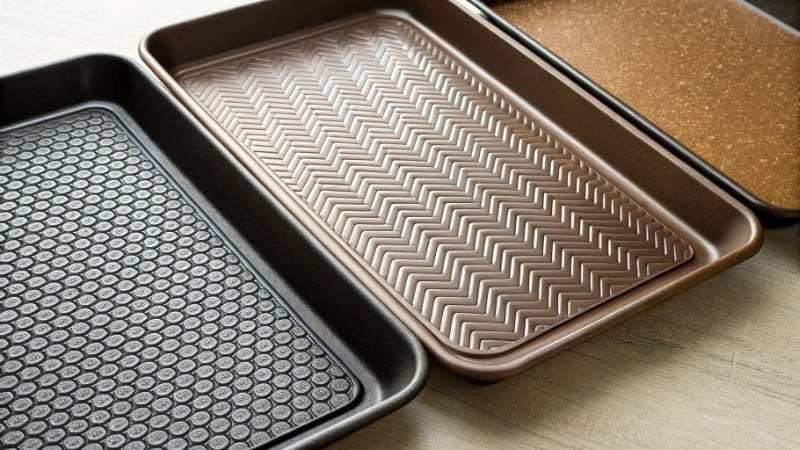
This is a lesson I've learned firsthand over my years in this business. I remember a specific client who came to us for pans to produce a new line of artisan bread. We provided them with pans that had a fantastic coating, perfect for that exact application. The pans worked beautifully. A few months later, they launched a high-sugar fruit cake and decided to use the same pans. The results were a complete disaster. Everything stuck, ruining entire batches of product. The client called us, very frustrated, and believed our pans were poor quality. We had to walk them through the science. The coating formulated for their low-sugar bread was not designed to handle the chemical reaction of caramelizing sugar at high heat. Sugar becomes extremely sticky and can bond chemically to a coating that isn't made for it. Once we supplied them with a different pan using a coating designed for high-sugar release, the problem disappeared completely.
A Lesson from a Client
This experience taught us both a valuable lesson. It showed how critical it is to match the pan's technology directly to the product you are making. It's not about finding a "good" pan; it's about finding the right pan.
How do I choose the right non-stick coating1?
You see many coating options and do not know where to start. Choosing the wrong one means you waste money and get inconsistent results in your bakery.
To choose the right coating, analyze your product's sugar content2, baking temperature, acidity, and your expected usage frequency. High-sugar or acidic recipes need specialized coatings5. Discuss these factors with your equipment supplier to get the best recommendation for your needs.
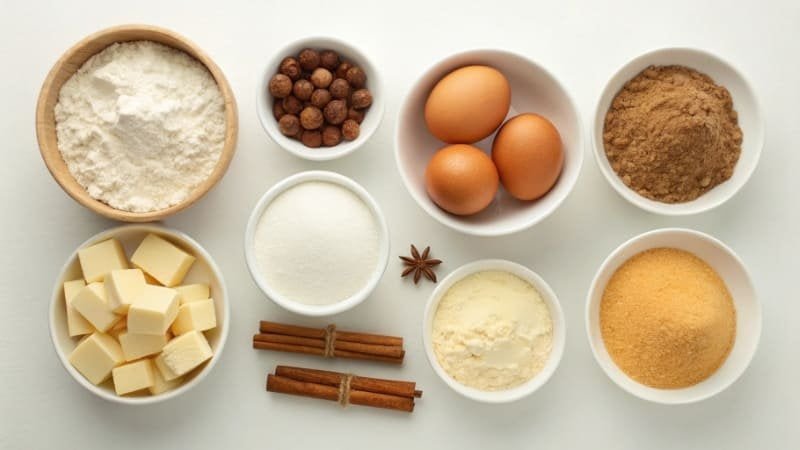
The decision is technical, but it can be broken down into a few key questions about your product and process. Each factor directly impacts how a coating will perform and how long it will last. High sugar content2 is the biggest challenge, as the sugar caramelizes and acts like a glue. Similarly, high baking temperatures can cause some simpler coatings to break down over time, reducing their non-stick properties. Even the ingredients matter. Acidic components, like lemon or certain fruits, can be corrosive and slowly eat away at the wrong type of coating. Finally, a bakery running three shifts a day needs a much more durable, abrasion-resistant6 coating than a small shop that bakes once a day. The goal is to find the perfect balance between performance, lifespan, and cost. At KKbake, our technical team7 specializes in this. We help you analyze your needs to provide the perfect pan solution.
Matching the Coating to Your Bake
| Factor to Consider | Why It Matters for Performance | Example Coating Solution |
|---|---|---|
| Sugar & Fat Content | High sugar and fat create a very sticky residue that requires a specialized release surface. | Multi-layer PTFE or Silicone Glaze |
| Baking Temperature | The coating must remain stable and not degrade at your oven's maximum operating temperature. | High-temperature rated coatings |
| Product Acidity | Acidic ingredients (e.g., fruit, sourdough) can be corrosive to some materials over time. | Chemically resistant coating systems |
| Daily Usage & Cleaning | High-volume use requires a coating that can withstand repeated heating, cooling, and washing. | Abrasion-resistant, multi-layer systems |
Conclusion
Choosing the right non-stick pan is an investment in your bakery's efficiency. Match the coating to your product to ensure perfect, consistent results and improve your bottom line.
Explore this link to understand the different types of non-stick coatings and their specific applications for baking. ↩
Discover why sugar content matters when selecting non-stick pans and how it affects baking outcomes. ↩
Explore the pros and cons of using parchment paper versus non-stick pans in baking. ↩
Understand the hidden costs of waste disposal in baking and how to minimize them. ↩
Learn about specialized coatings designed for high-sugar recipes and their benefits. ↩
Find out why abrasion-resistant coatings are crucial for high-volume baking operations. ↩
Explore how a technical team can assist in choosing the right baking equipment for optimal results. ↩