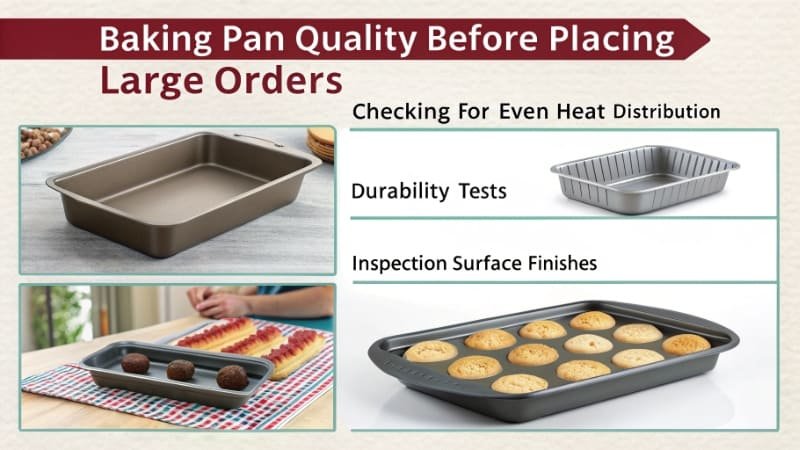
Are you worried about committing to a huge order of baking pans? A bad batch can disrupt your entire production line. A simple sample test is the best way to protect your investment.
The best way to test baking pan quality is to get samples from the manufacturer. You should then test these samples for three key things: how they fit in your production environment1, the physical durability2 of the pan, and the long-term performance3 of the non-stick coating4.
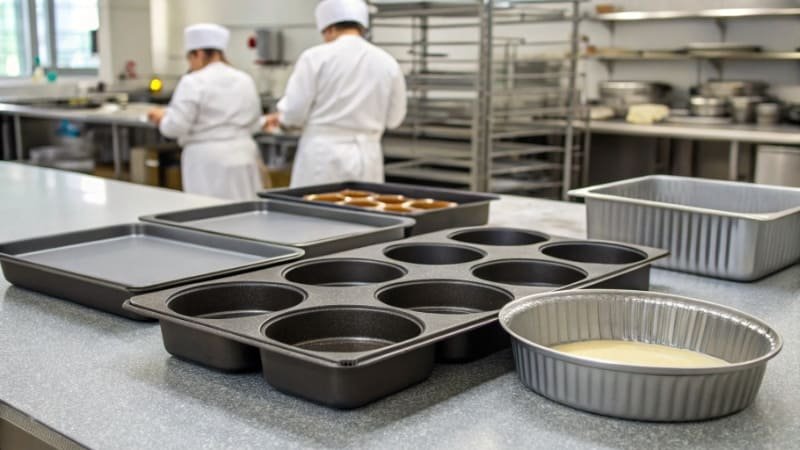
Getting your hands on a sample is the easy part. The real question is, what should you do with it? You need a clear plan to test the pan properly. This plan will help you see if the pan is right for your business. Let's walk through the exact steps you should take to test a sample baking pan. This process will give you the confidence you need before placing that big order.
How do you test if a pan fits your production environment?
Do your new pans fit your racks and automated lines? A pan that is off by a few millimeters can cause jams and chaos. You need to test for a perfect fit.
First, physically measure the sample pan and test its fit in your racks, carts, and automated machinery like depanners. Then, bake your actual product in it to check for even heat distribution5 and consistent results in your specific ovens. This ensures it works with your equipment and recipes.
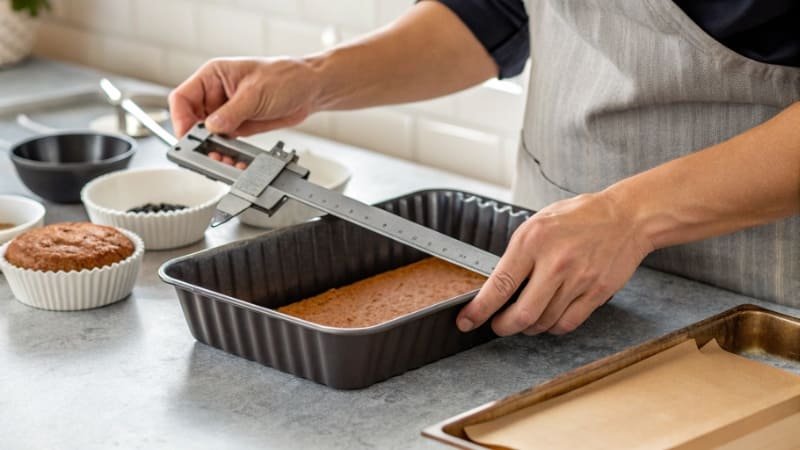
When we work with large industrial clients, we know that precision is everything. A purchasing manager for a massive frozen dough company once told me their automated line has a tolerance of just one millimeter. If a pan is too big or too small, the whole system can shut down. This is why the first test should always be a physical fit test6. Use a measuring tape or calipers to confirm the dimensions. But don't stop there. Slide the pan into your oven racks, place it on your cooling carts, and run it through your conveyor system if you have one. It must move smoothly without catching or wobbling. The next step is a bake test. Different pan materials and colors absorb and distribute heat differently. Use your own dough or batter to see how it performs. Does the bottom brown at the same rate as the top? Are the corners baking as quickly as the center? This test tells you if the pan is a good match for your oven and your product.
Key Environment Fit Tests
| Test Parameter | How to Test | What to Look For |
|---|---|---|
| Dimensional Fit | Measure the pan and place it in all relevant equipment (racks, conveyors). | No catching, jamming, or instability. |
| Heat Evenness | Bake your standard product and check for uniform color and doneness. | Consistent browning across the entire product. |
| Handling | Have your staff move the pan around, both empty and full. | Pan is not too heavy or awkward to handle. |
What's the best way to check a baking pan's durability?
Pans that warp, bend, or break will stop your production. You need equipment that can handle constant, heavy use. Here is how you can spot a weak pan before it becomes your problem.
To check durability, perform a thermal shock test7 by moving the hot pan to a cold environment. This mimics real-world stress. Also, check its physical strength by loading it with weight to see if it flexes or bends under pressure. A strong pan will not deform.
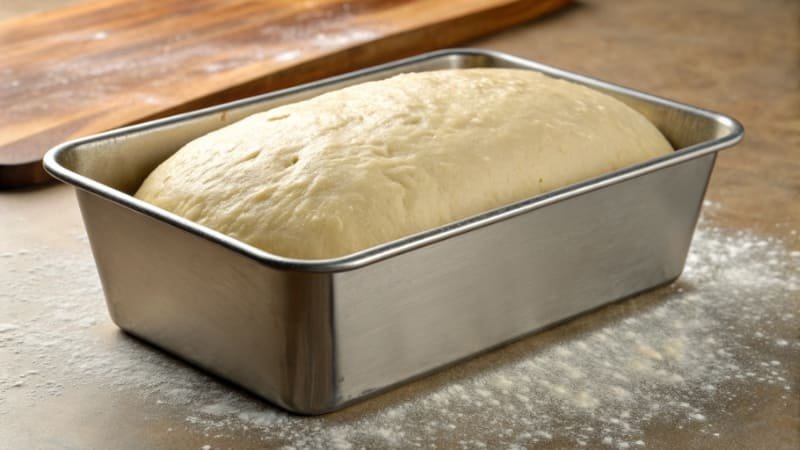
Durability is about more than just the material. It’s about how the pan is built. I once had an executive chef from a five-star hotel test our deep roasting pans. He needed them to cook whole lambs, which meant they had to withstand extreme heat and heavy loads without warping. His test was simple but effective. He cooked with them during his busiest weekend service. This real-world test showed him that our pans, with their reinforced steel edges and thick aluminum construction, could handle the pressure. You can do something similar with your sample. The thermal shock test7 is critical, especially if you move products from a hot oven to a blast freezer. Heat the pan to your normal baking temperature, then place it in a cold environment. Let it cool completely and check if it has warped or twisted. Also, test its structural strength8. Place it between two supports and add some weight to the middle. It shouldn't sag. Look closely at the corners and welds, as these are often the weakest points. A well-made pan will feel solid and rigid.
How can you verify the coating is safe and long-lasting?
A peeling coating is a nightmare. It can get into your food, which is a major safety risk. It also means you have to replace your pans sooner. You need to know the coating is tough.
The best way to test a coating is through repeated use. Bake and wash the sample pan over and over, using your standard procedures. After many cycles, check the coating for any signs of scratching, peeling, or chipping. The non-stick performance should not decrease.
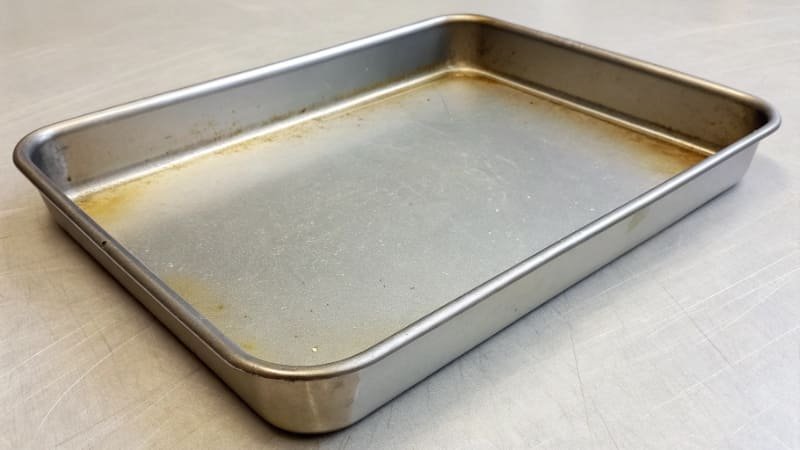
A coating's real test is time and use. A national bakery chain buyer needed pans that could be cleaned in a high-temperature commercial dishwasher by part-time staff. The coating had to be tough. For her test, she took our sample and ran it through 50 bake-and-wash cycles9. She used metal spatulas lightly and scrubbed it just like her team would. This is the kind of test you should perform. The goal is to simulate the pan's life in your bakery. Bake with it daily for a few weeks. Does the food release as easily on day 20 as it did on day 1? After each use, wash it using your normal method. Don't be too gentle. If you use commercial dishwashers, put the sample through it. Look for any changes in the surface. Tiny scratches are one thing, but any sign of peeling or flaking is a major red flag. Also, ask us for food safety certifications. We have documents like CQC and ISO9001 that prove our materials and coatings are safe for food contact.
Simple Coating Test Protocol
| Test Name | Procedure | Success Criteria |
|---|---|---|
| Release Performance | Bake a sticky product (e.g., sugary dough) without using release agents. | Product releases cleanly with minimal residue. |
| Durability/Scratch Test | Use your typical utensils (silicone, plastic, wood) during normal use. | No deep scratches, peeling, or flaking of the coating. |
| Cleaning Test | Wash the pan using your standard method (e.g., dishwasher, hand scrub). | Coating remains intact and does not fade or chip. |
Is a free sample enough for a thorough test?
You might wonder if one or two free samples are enough to base a big purchasing decision on. You might worry that it doesn't give you the full picture. Let's look at when a free sample is enough.
For most small and medium-sized bakeries, one or two free samples are enough to test fit, baking performance10, and basic durability. For large-scale industrial operations11, a larger paid pilot batch12 provides more reliable data on consistency and long-term wear.
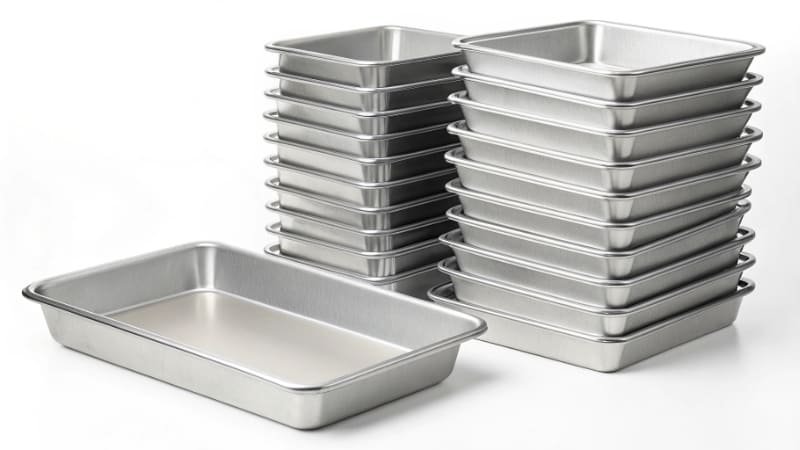
The answer really depends on the scale of your operation. We often provide one or two free samples to potential clients, and they just cover the shipping cost. For a local bakery or a small chain, this is perfect. You can confirm the pan fits your ovens, bakes your croissants perfectly, and is easy for your staff to clean. It's a low-risk, low-cost way to verify our quality. However, for a massive automated factory that runs 24/7, testing a single pan isn't enough. They need to see how a batch of 50 or 100 pans performs over several months. They are testing for consistency across the batch and how the pans hold up after thousands of baking cycles. This is why these larger companies will order and pay for a pilot batch12. It’s a bigger investment, but it provides the deep data they need to make a decision worth hundreds of thousands of dollars. We are happy to support both approaches. It shows we are flexible and confident that our products will pass the test, whether it’s one pan or one hundred.
Conclusion
Testing samples for fit, durability, and coating quality before you buy is the smartest way to protect your investment. This process guarantees performance and gives you confidence in your final decision.
Exploring production environment factors can help you choose pans that fit seamlessly into your workflow. ↩
Knowing how to test durability can prevent disruptions in your production line due to weak pans. ↩
Evaluating long-term performance ensures that your investment in baking pans is worthwhile. ↩
Learning about non-stick coating durability can prevent safety risks and ensure long-term use. ↩
Testing heat distribution helps ensure even baking, which is critical for product quality. ↩
Conducting a fit test is essential to avoid jams and ensure smooth operation in your kitchen. ↩
Understanding thermal shock tests can help you identify pans that withstand extreme temperature changes. ↩
Assessing structural strength is vital to ensure pans can handle heavy loads without deforming. ↩
Understanding the impact of bake-and-wash cycles can help you choose pans that last. ↩
Exploring factors that influence baking performance can help you select the best pans for your needs. ↩
Understanding the challenges of industrial operations can guide you in making informed purchasing decisions. ↩
Understanding pilot batches can help large operations ensure consistency and quality before bulk orders. ↩