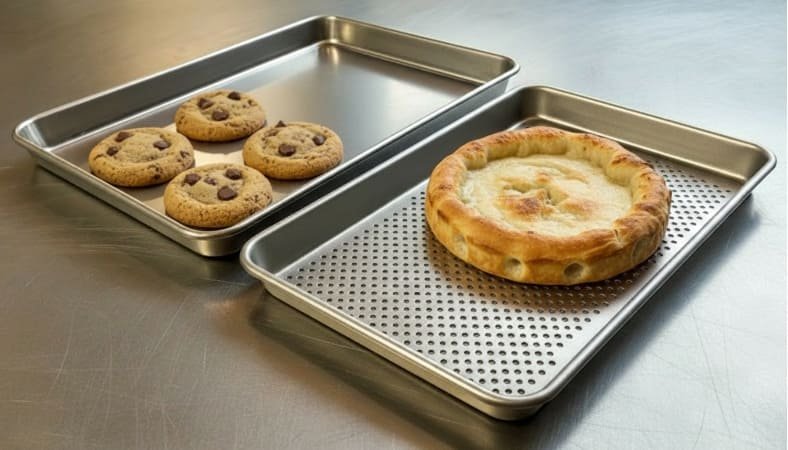
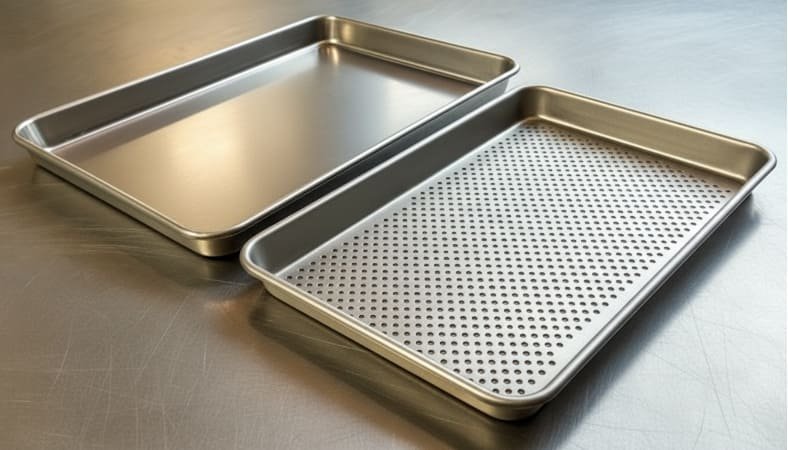
You stand in the equipment aisle, staring at two baking pans that look almost identical. One has tiny holes across the bottom, the other doesn't. This simple difference will change everything about your baked goods.
The choice between perforated and solid baking pans depends on your specific baking goals. Perforated pans excel at creating crispy, well-ventilated products like pizza crusts and pastries, while solid pans1 work better for moist, tender items like cakes and brownies.
After 18 years in the baking equipment industry, I've seen countless bakeries struggle with this decision. The wrong choice costs money, time, and customer satisfaction2. Let me share what really matters.
Does Pan Design Really Impact Your Bottom Line?
Every hole in a perforated pan serves a purpose. Every smooth surface on a solid pan has its place. These aren't just manufacturing choices - they're engineering solutions.
Pan design directly affects heat transfer, moisture control3, and product consistency. The right choice can reduce baking time by 15-20% while improving texture quality and reducing waste rates in commercial operations.
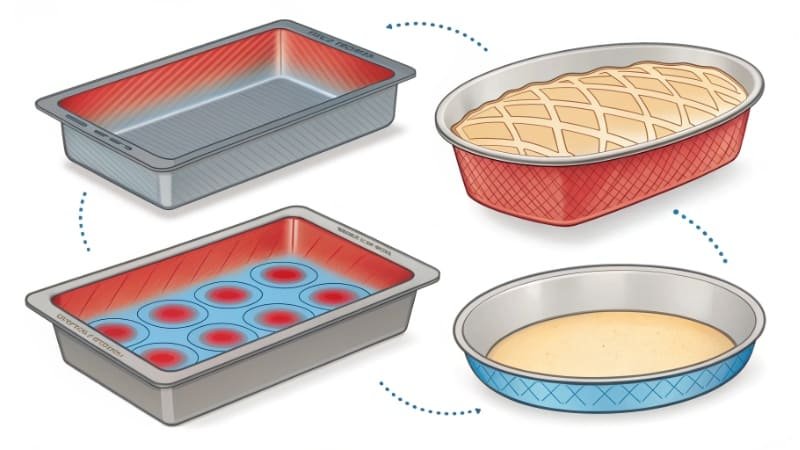
The physics behind this difference shapes your entire production process. Heat moves differently through perforated versus solid surfaces. Moisture behaves in opposite ways. Your products respond accordingly.
Understanding these mechanics helps you choose equipment that works with your recipes, not against them. I've watched bakeries double their efficiency simply by matching the right pan to the right product.
Heat Transfer Mechanisms
Perforated pans create direct heat contact through the holes. Hot air circulates underneath your product, touching the bottom surface directly. This creates faster, more intense heating from below.
Solid pans conduct heat through the metal itself. The entire pan surface heats up, then transfers that heat to your product. This creates more gentle, even heating across the whole bottom.
| Pan Type | Heat Transfer Method | Temperature Distribution | Baking Speed |
|---|---|---|---|
| Perforated | Direct air contact + conduction | Intense bottom heat, variable | 15-20% faster |
| Solid | Pure conduction | Even bottom heat, consistent | Standard timing |
The holes in perforated pans4 also allow steam to escape immediately. This prevents moisture buildup that can make bottoms soggy. Solid pans trap this moisture, which can be good or bad depending on your desired outcome.
What Makes Perforated Pans Special for Crispy Products?
Steam is the enemy of crispiness. Perforated pans wage war against moisture from the first minute of baking. Every hole becomes an escape route for steam.
Perforated pans reduce moisture retention by up to 40% compared to solid pans1, creating crispier bottoms and more defined textures. This makes them ideal for pizza crusts, pastries, and any product where bottom crispiness matters.
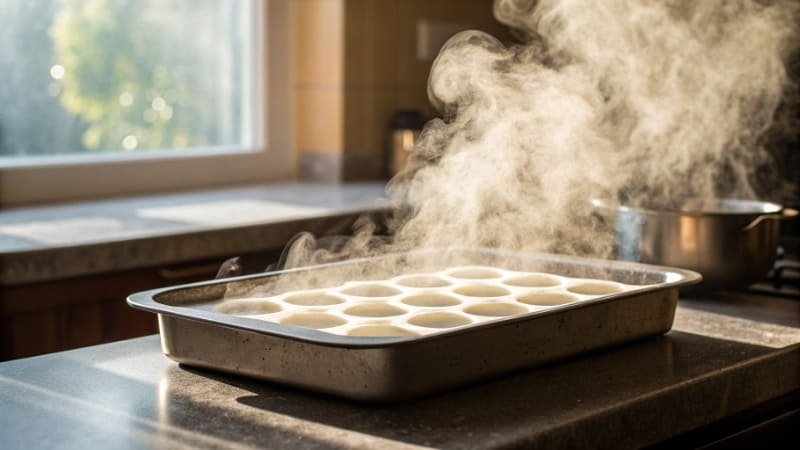
I remember visiting a pizza chain that switched from solid to perforated pans4. Their customer complaints about soggy crusts dropped to zero within a month. The difference was that dramatic.
The holes don't just remove moisture - they create air circulation patterns that enhance browning reactions5. This gives you better color, better texture, and better customer satisfaction2.
Optimal Hole Patterns
Not all perforations work the same way. Hole size, spacing, and pattern all affect performance. Smaller holes provide more support but less ventilation. Larger holes increase airflow but may leave marks on delicate products.
Standard perforated pans4 use 2-3mm holes spaced 8-10mm apart. This balances support with ventilation for most applications. Custom patterns can optimize performance for specific products.
The total open area typically ranges from 15-25% of the pan surface. Less than 15% doesn't provide enough ventilation benefit. More than 25% can compromise structural support6 and heat retention.
| Hole Size | Spacing | Best Applications | Ventilation Level |
|---|---|---|---|
| 2mm | 8mm | Pastries, cookies | High |
| 3mm | 10mm | Pizza, flatbreads | Very high |
| 4mm | 12mm | Specialty items | Maximum |
When Do Solid Pans Deliver Superior Results?
Moisture isn't always the enemy. Some products need that trapped steam to develop properly. Solid pans create a controlled environment where moisture works for you.
Solid pans retain moisture and heat more consistently, making them essential for cakes, brownies, and other products that need gentle, even baking. They also provide better support for liquid batters and delicate items.
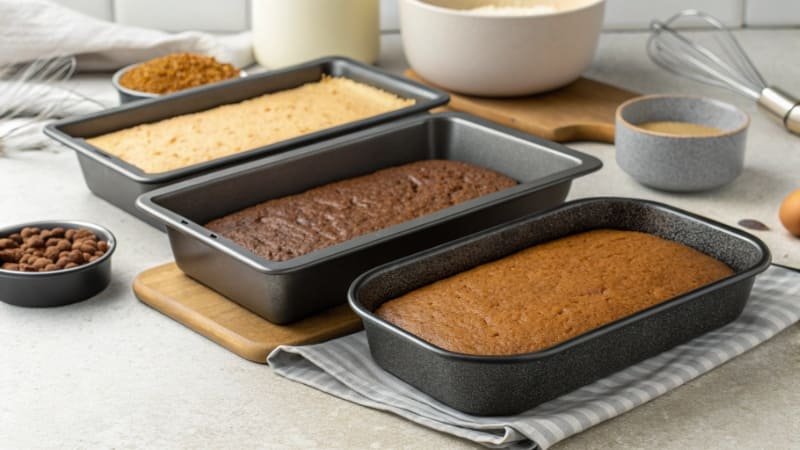
Think about a perfect brownie - fudgy inside, slightly firm outside. That texture comes from controlled moisture and gentle heat. Perforated pans would dry it out and create the wrong texture entirely.
Solid pans also excel with liquid batters that might drip through holes. They provide complete surface contact for even heat distribution. This prevents hot spots and ensures consistent results across large production runs.
Heat Retention Properties
Solid pans store thermal energy more effectively than perforated ones. The continuous metal surface absorbs heat during preheating, then releases it steadily during baking. This creates more stable temperatures.
Temperature fluctuations can ruin delicate products. Solid pans buffer these changes, maintaining consistent conditions even when oven temperatures vary slightly. This stability is crucial for large-scale production.
The thermal mass7 of solid pans1 also helps with energy efficiency8. Once heated, they maintain temperature longer, reducing the energy needed to sustain baking conditions.
| Product Type | Moisture Needs | Heat Requirements | Recommended Pan |
|---|---|---|---|
| Cakes | High retention | Gentle, even | Solid |
| Cookies | Low retention | Direct heat | Perforated |
| Breads | Medium retention | Variable | Depends on style |
| Pastries | Low retention | Intense bottom heat | Perforated |
How Do Production Volumes Affect Your Choice?
Scale changes everything. What works for a small bakery might fail in industrial production. Volume affects heat distribution, timing, and quality control in ways that influence pan selection.
High-volume operations benefit from perforated pans4' faster baking times and reduced moisture issues, while smaller operations may prefer solid pans1' versatility and gentler heat characteristics for diverse product lines.
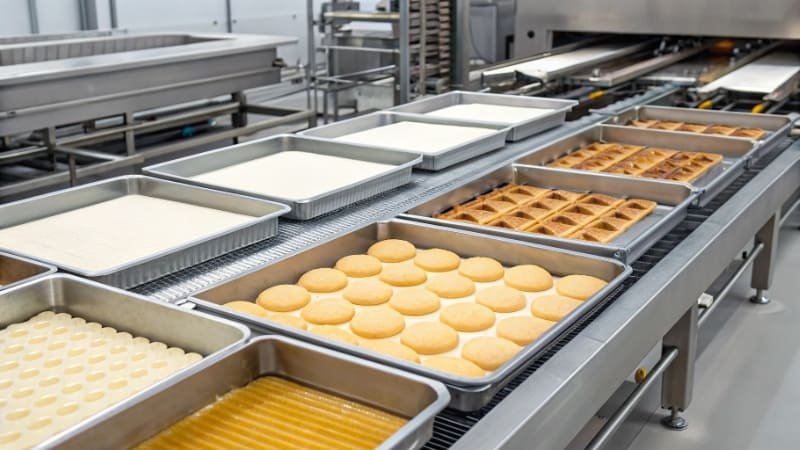
I've worked with factories producing thousands of units per hour. Every second of baking time matters. Every quality defect costs money. The right pan choice can save minutes per batch and reduce waste by significant percentages.
Small bakeries face different challenges. They need flexibility to make various products with limited equipment. One pan type that handles multiple recipes often makes more sense than specialized options.
Efficiency Considerations
Perforated pans typically reduce baking times by 15-20%. In high-volume production, this translates to significant capacity increases without additional equipment investment. Faster throughput means higher profits.
Energy costs also factor into the equation. Shorter baking times use less energy per unit produced. Over thousands of units daily, these savings add up quickly.
Quality consistency becomes more critical at scale. Perforated pans' enhanced air circulation helps maintain uniform results across large batches, reducing waste and rework.
| Production Scale | Primary Concern | Pan Advantage | Efficiency Gain |
|---|---|---|---|
| Industrial (1000+ units/hour) | Speed, consistency | Perforated | 15-20% faster |
| Commercial (100-500 units/hour) | Flexibility, quality | Mixed approach | 5-10% improvement |
| Artisanal (< 100 units/hour) | Versatility, cost | Solid | Better multi-use |
What About Cleaning and Maintenance Differences?
Equipment that's hard to clean becomes expensive to operate. Downtime for maintenance cuts into profits. Pan design affects both cleaning efficiency and long-term durability9.
Perforated pans require more thorough cleaning due to food particles caught in holes, but solid pans1 can develop hot spots from uneven wear patterns. Maintenance costs and cleaning time should factor into your total cost calculations.
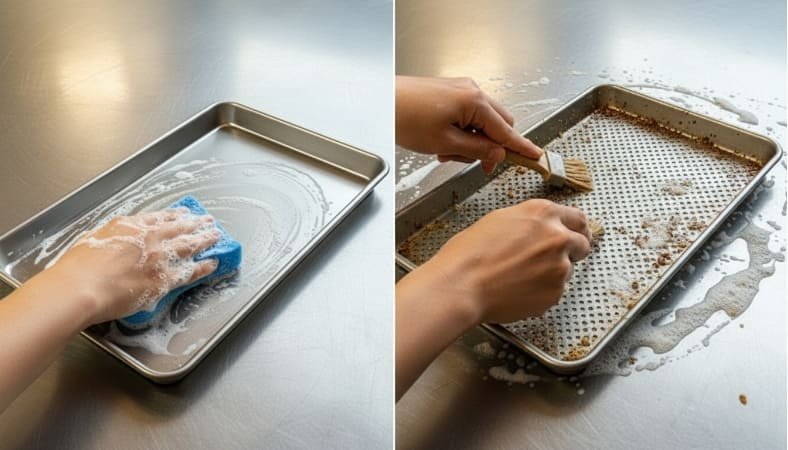
The holes that make perforated pans4 effective also create cleaning challenges. Food particles get stuck. Grease builds up in small spaces. Special cleaning procedures become necessary.
Solid pans seem easier to clean, but they have hidden issues. Warping from thermal stress creates uneven surfaces. These irregularities affect heat distribution and product quality over time.
Long-term Durability
Perforated pans distribute stress across many small points. This can actually increase durability compared to solid pans1 that concentrate stress in larger areas. However, the holes can become enlarged with heavy use.
Solid pans are more prone to warping but easier to repair or refinish. The smooth surface shows wear patterns clearly, making maintenance needs obvious.
Material choice affects both pan types similarly. Heavy-gauge aluminum or steel provides better durability regardless of perforation. Cheap materials fail quickly in commercial use.
Conclusion
The choice between perforated and solid baking pans depends on your specific products, production volume, and operational priorities rather than one being universally better.
Learn why solid pans are essential for cakes and brownies, offering gentle heat and moisture retention. ↩
Discover how the right pan can improve product quality and reduce customer complaints. ↩
Discover how moisture control impacts the texture and quality of baked goods. ↩
Explore how perforated pans enhance crispiness and reduce moisture retention, ideal for pizza crusts and pastries. ↩
Explore the science behind browning reactions and how perforated pans improve color and texture. ↩
Explore the balance between ventilation and support in perforated pans for optimal performance. ↩
Learn how thermal mass contributes to stable temperatures and energy efficiency in baking. ↩
Understand how pan choice can reduce energy consumption and costs in baking operations. ↩
Understand the durability factors that affect pan longevity and performance. ↩