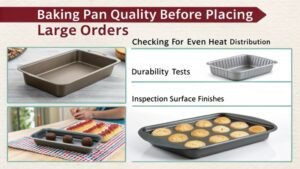
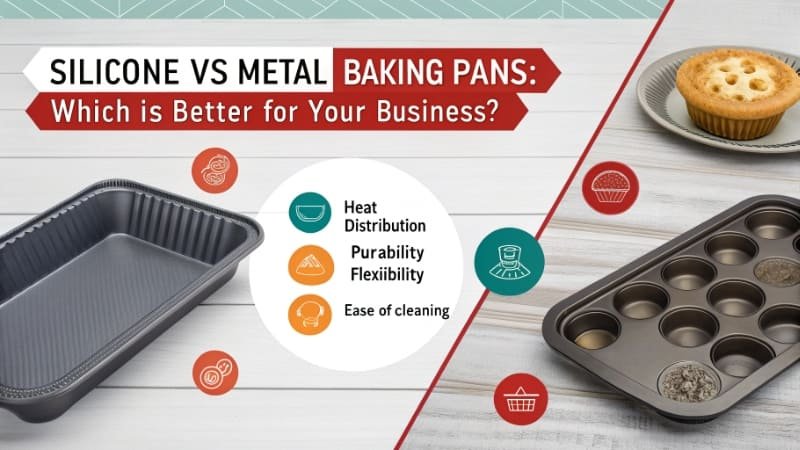
Struggling to choose the right bakeware for your kitchen? The wrong pan can ruin your product and hurt your bottom line. I've been there and can help you decide.
For most commercial bakeries, metal pans are the superior choice. They offer excellent heat conduction1 for even baking and are incredibly durable. Silicone pans are best for delicate desserts or unique shapes, but they lack the longevity needed for high-volume, heavy-duty use.
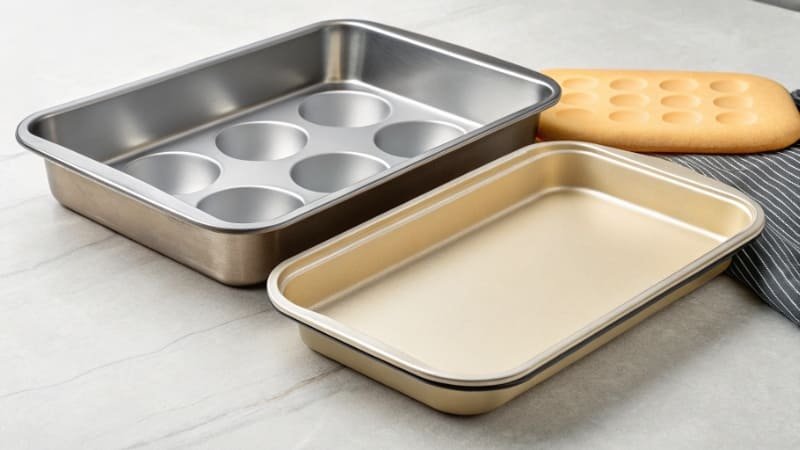
You have a general idea now. But the real answer depends on what you are making and how you are making it. Let's break it down further to find the perfect fit for your kitchen. This will help you make a smart investment.
When Should You Choose Metal Baking Pans?
Are your breads and cakes coming out unevenly baked? Your pan material might be the problem. Metal pans offer the consistent heat that professional results demand every single time.
Choose metal pans for traditional baking like breads, cakes, and pizzas. Their excellent heat transfer ensures a golden-brown crust and even cooking. They are also extremely durable, making them the best choice for high-volume kitchens2 and automated production lines where longevity is key.
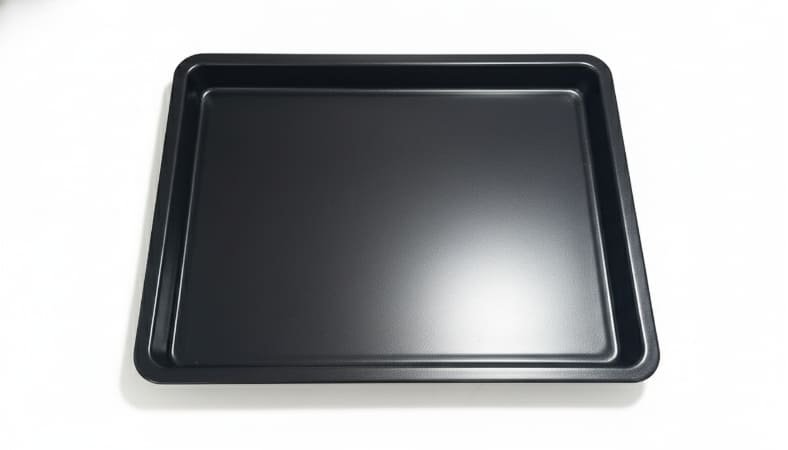
In my experience, metal pans are the workhorse of any serious commercial kitchen. Their main advantage is how well they conduct heat. This means heat spreads quickly and evenly across the entire surface. The result is a perfect, uniform bake for products like bread and cake. You get that beautiful golden crust and a fully cooked interior without any frustrating hot spots.
Another huge factor is durability3. These pans are built to last. I have some stainless steel pans in my operation that I've been using for five or six years, and they still perform like they are brand new. They can handle the daily abuse of a busy kitchen, from high temperatures to being dropped or scraped. This strength is why they are the only real option for industrial production lines4. The combination of a strong metal base with a quality non-stick coating5 gives you both durability3 and easy release, which is the perfect solution for automation.
Key Strengths of Metal Pans
| Feature | Benefit for Your Business | Best For |
|---|---|---|
| Superior Heat Conduction | Ensures even baking and consistent browning. | Breads, cakes, pizza, cookies |
| Exceptional Durability | Withstands high-volume use, reducing replacement costs. | Automated lines, busy bakeries |
| Easy to Clean & Sanitize | Can handle high-heat washing and harsh detergents. | Any professional food environment |
| Maintains Shape | Resists warping under high heat, crucial for standardization6. | Industrial production, stackable storage |
Are Silicone Baking Pans Ever a Good Choice?
Worried about delicate mousses or puddings sticking and breaking? Removing them perfectly can be a nightmare. Silicone's flexibility7 might be the simple solution you have been looking for.
Yes, silicone pans8 are an excellent choice for no-bake desserts, items needing intricate molds, and products that require easy release, like mousses and jellies. Their flexibility7 is their biggest advantage, but they are not ideal for tasks requiring sharp browning or high-volume use.
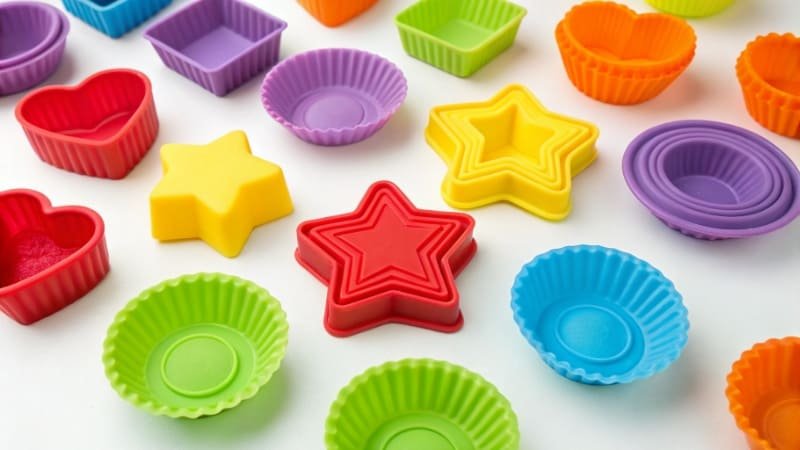
Silicone pans definitely have a place in certain kitchens. Their biggest strength is their incredible flexibility7. You can literally peel the pan away from the product. This is a game-changer for delicate items like mousses, puddings, or cheesecakes where you can't risk anything sticking. They also come in endless creative shapes9, which is great for making visually appealing desserts that stand out. Another plus is that they won't scratch or rust, and staff can handle them without fear of causing damage.
However, silicone has some serious downsides for commercial use. The material is a poor heat conductor, which means your products won't brown well. This makes them a bad choice for bread or anything that needs a crust. Durability is also a major concern. In a high-frequency environment, they can start to break down. I've seen cheaper ones begin to get chalky or brittle after just a year or two of heavy use. So, while they are useful, they are more of a specialty tool than an everyday workhorse.
Silicone Pans: Pros and Cons
| Pros | Cons |
|---|---|
| Excellent Non-Stick | Poor heat conduction1, no browning. |
| Flexible & Easy Release | Less durable, can age and degrade. |
| Creative Shapes & Colors | Can absorb odors and oils over time. |
| Won't Scratch or Dent | Too flimsy for heavy batters or industrial use. |
How Do You Make the Final Decision for Your Production Line?
Making the wrong investment in bakeware can cripple your efficiency and hurt your product quality. You need a clear framework to choose correctly. I will show you how to match the tool to the job.
Your final choice depends on your primary products and production scale. For high-volume, automated lines baking standard goods, always choose metal pans. For smaller artisan bakeries10 focusing on variety and presentation11, a mix of metal and silicone is often the best approach.
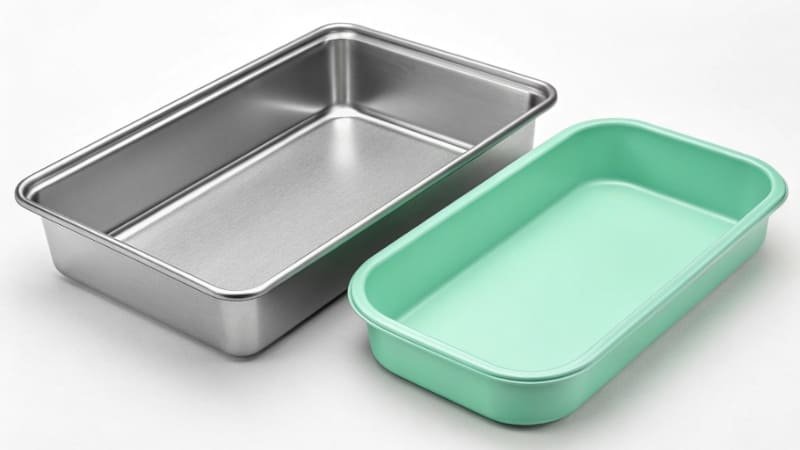
The most important rule is that the tool must serve the product, not the other way around. Don't buy a pan just because it's new or trendy. Start by looking at your menu. If you are a large-scale producer making thousands of loaves of bread or pizza bases a day, like an industrial plant, there is no debate. You need standardized, heavy-duty metal pans. Their durability3 and performance in automated systems are unmatched. The short lifespan of silicone is a fatal flaw in an industrial setting.
If you run a boutique hotel or a small chain bakery, your needs are different. You might bake standard croissants and cookies, where metal pans are ideal. But you might also offer special molded panna cotta or creative financiers. In that case, having a collection of specialty silicone molds makes perfect sense. You can use a core inventory of metal pans for 80% of your production and supplement it with silicone for the creative 20%. This hybrid approach gives you the best of both worlds: reliability for your core items and flexibility7 for your signature desserts.
A Guide for Different Kitchens
| Business Type | Primary Need | Recommended Pan Type | Why? |
|---|---|---|---|
| Industrial Bakery | Durability, Standardization | Metal Only | Silicone cannot withstand the volume and automation. |
| Chain Bakery | Consistency, Ease of Use | Mostly Metal | Metal ensures every location produces the same quality product. |
| Luxury Hotel/Pastry Shop | Versatility, Presentation | Metal + Silicone | Metal for basics, silicone for high-end, creative desserts. |
| R&D Lab | Precision, Inertness | Specialty Metal (e.g., Stainless Steel) | Material must not interfere with test results. |
Conclusion
In summary, metal pans are the durable workhorse for most baking. Use silicone for its flexibility7 with delicate desserts. Always match the pan to your specific product and production needs.
Understanding heat conduction is crucial for achieving perfect baking results; discover how it impacts your baked goods. ↩
Find out which baking pans are ideal for high-volume kitchens to maintain quality and speed. ↩
Durability in bakeware can save costs and improve efficiency; find out why it matters for your kitchen. ↩
Learn about the best bakeware options for industrial settings to ensure efficiency and quality. ↩
Discover how non-stick coatings can improve your baking experience and ease of cleaning. ↩
Understand the importance of standardization in baking for consistent product quality. ↩
Learn how flexible bakeware can simplify the baking process, especially for delicate items. ↩
Learn about the unique benefits of silicone pans, especially for delicate desserts and creative shapes. ↩
Explore how using creative shapes in baking can elevate your dessert presentation and appeal. ↩
Discover essential baking tools for artisan bakeries to balance quality and creativity. ↩
Explore the impact of presentation on dessert sales and how to make your desserts stand out. ↩