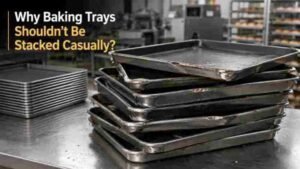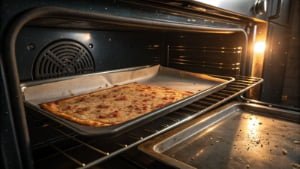
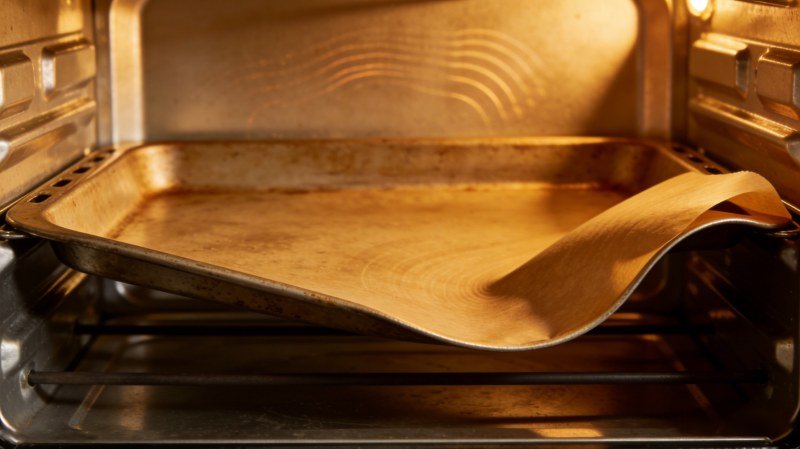
You put a flat pan in the oven, and suddenly it twists. This ruins your baked goods and wastes money. You must understand why this annoying problem happens.
Baking pans warp due to fast temperature changes1 and uneven heat. Metal expands when it gets hot. Thin materials expand unevenly. The wrong metal type also expands unevenly. This uneven growth makes the metal twist and bend permanently.
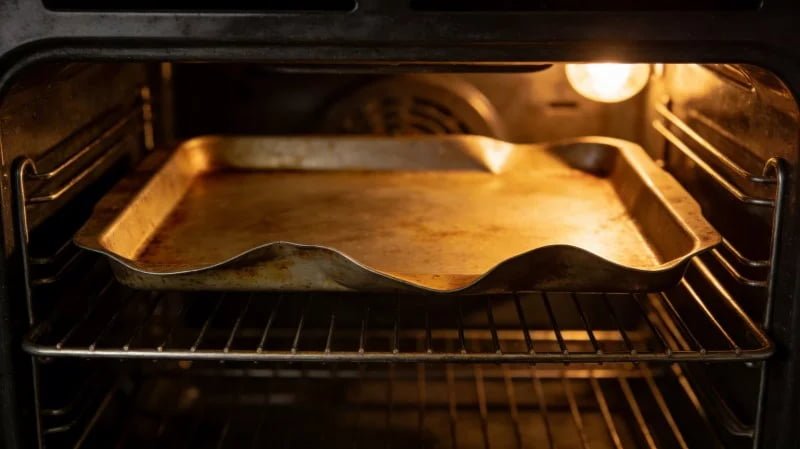
You might think any metal pan can handle the oven heat. That is a big mistake. I want to share a real story. This story cost my company money. It taught me a hard lesson about pan materials. You should read this before you buy your next baking pans2.
Does the material of the pan matter?
You buy light pans to save effort. They bend out of shape and ruin your bread. You must choose the right metal to solve this problem.
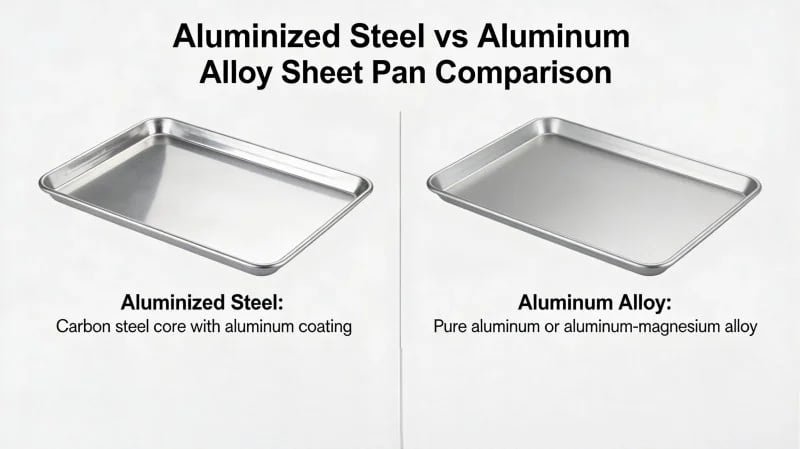
Yes, the material matters a lot. Aluminized steel and aluminum alloys3 are common. Aluminized steel offers better strength and resists warping at high temperatures. Pure aluminum or thin aluminum alloys3 bend very easily under thermal stress4.
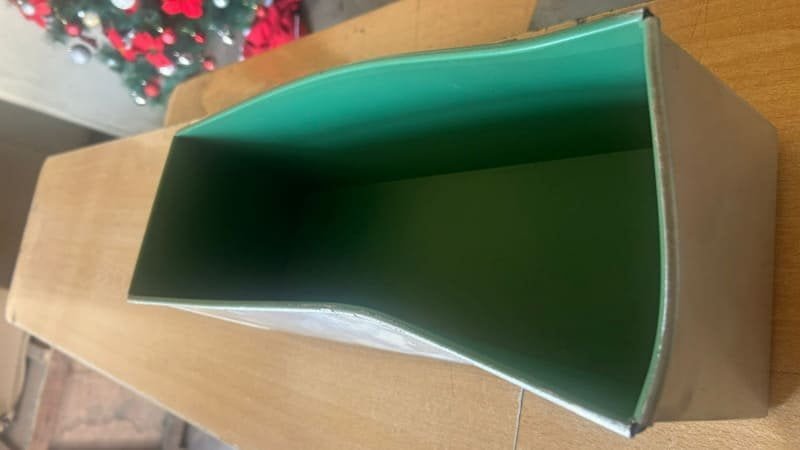
I want to tell you about a client from Chile. I met this client at a trade show. They ordered a batch of large loaf pans from us. The client asked for lightweight products. We looked at the large size of the pans. We decided to use aluminum alloy. We wanted to keep the weight low. This was a huge mistake. We did not have enough experience with this specific large size. We focused on the total weight. We ignored the strength and hardness of the metal. The client used the pans for a short time. Soon, they saw severe warping on the loaf pan lids. The lids bent out of shape completely. The client sent us pictures. They complained about the bad quality. We thought about the shipping costs to Chile. We agreed to give them a partial refund. This taught me a great lesson. Factories should always use aluminized steel5. They should not use aluminum alloy for large pans. Aluminized steel is heavier. But it lasts much longer. Aluminized steel combines the strength of steel with the rust resistance of aluminum. It handles the daily stress of industrial baking lines6. The steel core stops the pan from bending. Now, we strictly control the material choices for all large orders.
Aluminized Steel vs Aluminum Alloy
| Feature | Aluminized Steel | Aluminum Alloy |
|---|---|---|
| Weight | Heavy | Light |
| Warping Resistance | Very High | Low to Medium |
| Best Use Case | Large industrial pans | Small, light duty pans |
| Lifespan | Very Long | Short under high heat |
We now know that heavier materials save money in the long run.
How does temperature shock7 cause warping?
You take a hot pan and wash it with cold water. The metal screams and bends permanently. You must stop this sudden temperature shock7 to save your pans.
Temperature shock happens when a pan experiences a sudden, extreme temperature change. This forces the metal to expand or contract too fast. The uneven stress across the pan pulls the metal out of its flat shape. This causes permanent warping.
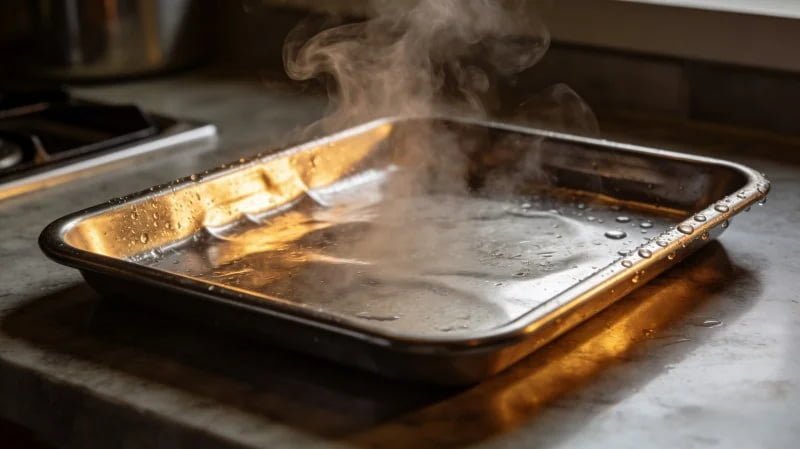
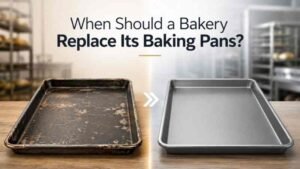
Metal reacts to heat. It grows larger when it gets hot. It shrinks when it gets cold. This is a basic rule of physics. Commercial bakeries use very high temperatures. Sometimes, workers move pans directly from a freezer to a hot oven. Some factories freeze dough at negative thirty degrees Celsius. Then, they bake the dough at two hundred and fifty degrees Celsius. This creates massive stress on the metal. The pan heats up unevenly. One side expands faster than the other side. This uneven growth makes the pan twist. You cannot fix a twisted pan. It will never sit flat on the oven rack again. A warped pan ruins the baking process8. The twisted metal creates uneven spots. Some parts of the dough touch the hot oven rack directly. Other parts sit high in the air. The bread bakes unevenly. Some loaves burn. Other loaves stay raw. This wastes ingredients. It also wastes time. The factory manager must throw away the bad bread. The company loses money.
Safe Temperature Practices
| Action | Result on Metal | Risk of Warping |
|---|---|---|
| Hot pan into cold water | Rapid shrinking | Very High |
| Freezer to hot oven | Rapid expanding | High |
| Slow cooling on a rack | Even shrinking | Very Low |
| Gradual heating | Even expanding | Very Low |
You must train your kitchen staff. They must handle hot pans carefully. Do not put hot pans in cold water. Let them cool down slowly on a rack. This simple step stops temperature shock7.
Does pan thickness9 affect bending?
You try to save money with thin baking pans2. They warp immediately under commercial oven heat. You need thicker metals10 to fix this expensive problem.
Pan thickness directly affects a pan's ability to resist bending. Thicker metals absorb heat and distribute heat evenly. This reduces stress spots. Thin pans heat up too quickly in certain areas. This leads to severe warping and a short lifespan.
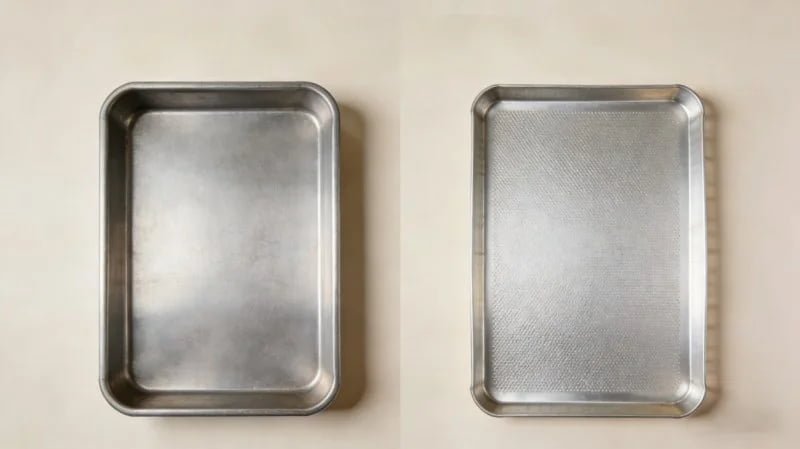
Many buyers look at the price first. They buy thin pans to save money. I see this mistake often. Thin metal cannot hold its shape under heavy use. A luxury hotel chef cooks huge meals every day. He roasts whole lambs. He bakes massive lasagnas. A thin pan bends under the heavy weight of the food. It also warps under the high heat of the oven. The food cooks unevenly. The chef must buy new pans very soon. You should always choose thicker metal for commercial kitchens. We often recommend pans with a thickness of one point five millimeters. Some extreme jobs require metal with a thickness of four millimeters. Thin pans cost less at the start. You might save two dollars on each pan. But you will lose money in the long run. A thin pan might last one month in a busy bakery. A thick pan can last three years. You must buy the thin pan thirty-six times to equal the thick pan. This is a terrible business decision. Thicker pans absorb the heat slowly. They spread the heat across the entire bottom.
Metal Thickness Guide
| Thickness | Strength Level | Best Application | Warping Risk |
|---|---|---|---|
| 0.6mm - 0.8mm | Weak | Home baking only | High |
| 1.0mm - 1.2mm | Medium | Light commercial baking | Medium |
| 1.5mm - 2.0mm | Strong | Heavy industrial baking | Low |
| 3.0mm - 4.0mm | Very Strong | Extreme loads and heat | Very Low |
You must check the thickness before you buy. Ask the supplier for the exact millimeter measurement.
Can pan design prevent twisting?
You use flat sheets with simple edges. They warp after a few weeks of heavy use. A smart pan design prevents this structural failure completely.
Yes, a good pan design prevents twisting. Features like reinforced rims11, enclosed wires in the edges, and corrugated surfaces12 add structural strength. These smart design choices help the metal hold its flat shape during high commercial baking temperatures.
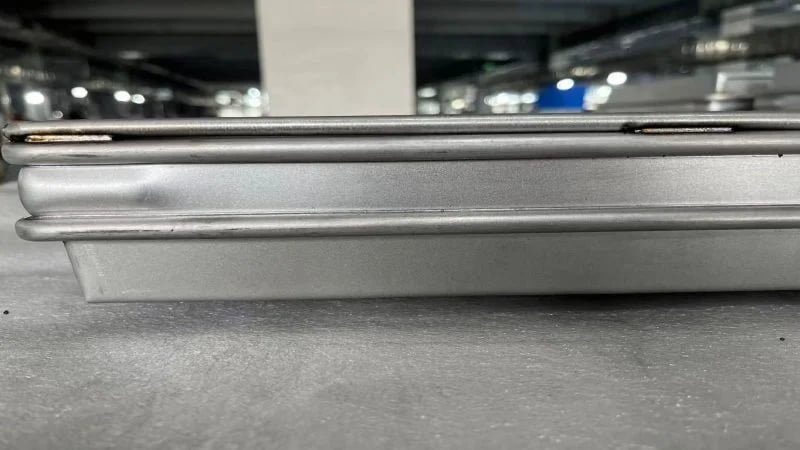
You cannot rely on the metal alone. The shape of the pan gives it extra strength. A completely flat sheet of metal is very weak. It curls up like a piece of paper in a hot oven. We add special design features13 to stop this problem. We roll the edges of the pan. We put a thick stainless steel wire inside the rolled edge. This wire acts like a skeleton. It holds the pan straight. We also use corrugated surfaces12. A corrugated surface has small ridges. These ridges make the metal much stiffer. They also help air flow under the food. National chain bakeries need identical pans for all their stores. They need pans for rough handling by part-time staff. We always suggest pans with reinforced edges for these customers. Reinforced edges also help with storage. Bakeries stack hundreds of pans every day. Flat pans stick together. The metal grinds against metal. Warped pans do not stack well. They fall over and cause accidents. Pans with rolled edges and wires stack perfectly. They leave a small gap between each pan.
Design Features That Stop Warping
| Design Feature | How It Works | Benefit for Bakeries |
|---|---|---|
| Rolled Edges | Folds metal over | Stops the sides from curling |
| Wire in Rim | Adds a solid core | Keeps the pan perfectly straight |
| Corrugated Bottom | Creates rigid lines | Resists twisting and improves airflow |
| Deep Drawn Corners | Removes weak seams | Adds strength to the whole pan |
Good design fights the natural movement of hot metal. It keeps your pans flat.
Conclusion
Warping happens due to bad materials, thin metals, and sudden heat shock. You must choose strong aluminized steel5 and reinforced designs to keep your commercial baking pans2 perfectly flat.
Understanding the impact of temperature changes on baking pans can help you make informed choices for your kitchen. ↩
Explore this link to discover the top baking pans that can withstand high temperatures and prevent warping. ↩
Find out how aluminum alloys differ from other metals and their applications in baking. ↩
Explore the concept of thermal stress and its effects on the longevity of your baking pans. ↩
Discover why aluminized steel is preferred for baking pans and how it enhances durability. ↩
Learn about the specific needs of industrial baking lines and how to meet them with the right equipment. ↩
Understand temperature shock and how to prevent it to maintain the integrity of your baking pans. ↩
Understand the relationship between pan quality and the overall baking process for better results. ↩
Learn why thicker pans are essential for consistent baking results and durability. ↩
Discover the advantages of using thicker metals in baking pans for improved performance. ↩
Learn about the advantages of reinforced rims in baking pans and their role in preventing warping. ↩
Explore how corrugated surfaces enhance the performance and durability of baking pans. ↩
Learn about innovative design features that help maintain the shape of baking pans under stress. ↩