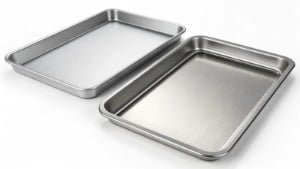
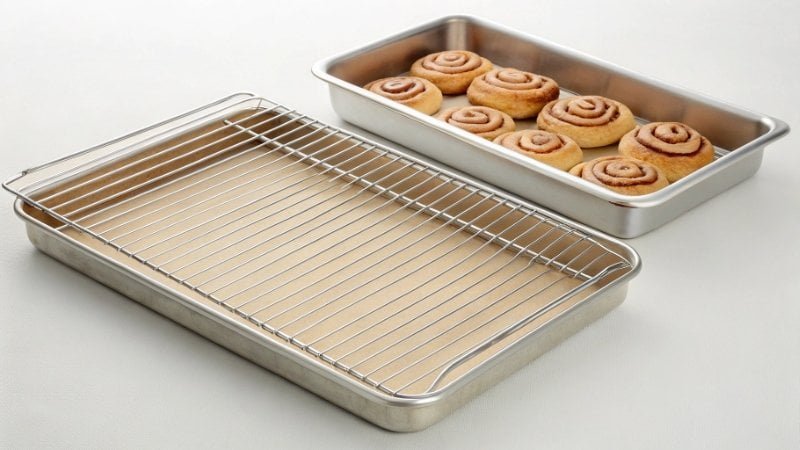
Struggling with a wobbly wire rack1 in your sheet pan2? It's frustrating when your food doesn't cook evenly. The secret isn't just size, but the perfect, stable fit3.
The best wire rack1 for a sheet pan2 is one that sits stably inside. It shouldn't be taller than the pan, ideally around two-thirds of its depth. It must fit snugly against the sides, preventing it from sliding or tipping over during use for perfect results.
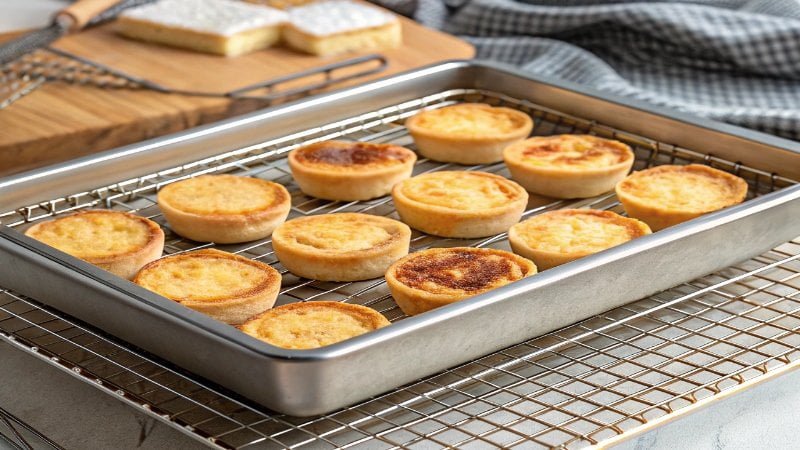
So, the key is a snug fit. That sounds simple, right? In my years of manufacturing baking equipment, I've seen how tiny details in fit and design make a huge difference. These details separate a useful tool from a piece of metal taking up space. Let's break down exactly what you need to look for to find that perfect match for your kitchen.
Why does the height of the wire rack1 matter so much?
Is your wire rack1 too tall or too short for your pan? This common issue can lead to burnt food or soggy bottom4s. The perfect height is key for even cooking.
Rack height is crucial for air circulation5. If it's too tall, food can burn by being too close to the heating element. If it's too short, you won't get the airflow needed for crisping. The right height ensures even heat distribution all around your food.
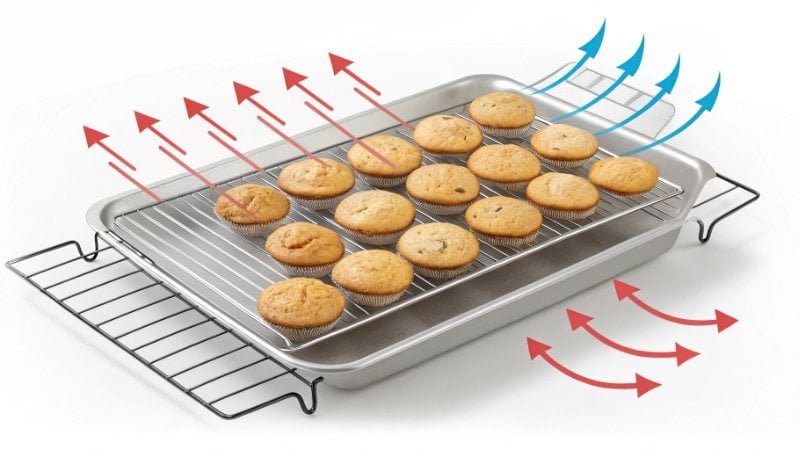
The height of a wire rack1 is probably the most overlooked feature, but it's critical. I've seen so many people focus only on length and width. They forget that the vertical space inside the pan is just as important for getting great results.
The "Two-Thirds" Rule
A good rule of thumb I always recommend is the "two-thirds" rule. The wire rack1's height should be about two-thirds of the pan's own depth. This creates the sweet spot. It lifts the food high enough for maximum air to flow underneath, which is essential for crisping and even roasting. At the same time, it keeps the food low enough to prevent it from getting too close to your oven's top heating element.
What Happens When It's Wrong?
The wrong height can ruin a dish. I remember a client, a large bakery, who was struggling with inconsistent biscuit batches. We discovered their racks were too low in their pans. By simply providing racks with the correct height, we solved their soggy bottom4 problem overnight. It's a small detail with a huge impact.
| Rack Height | Problem | Result |
|---|---|---|
| Too Tall | Uneven Browning, Burns | Food is too close to the top heating element. |
| Too Short | Poor Airflow | Food steams instead of roasts, creating a soggy bottom4. |
| Just Right (~2/3) | Optimal Circulation | Food gets evenly cooked with a crispy texture. |
How do you ensure a stable, non-slip fit?
Does your wire rack1 slide around inside the pan? This is not just annoying, it's a safety hazard with hot food. A snug, stable fit3 prevents accidents and ruined meals.
Ensure a stable fit3 by measuring your pan's interior dimensions. The best wire rack1 will fit snugly against the sides with very little room to move. A simple test: shake the pan gently. The rack should stay securely in place without rattling or tipping over.
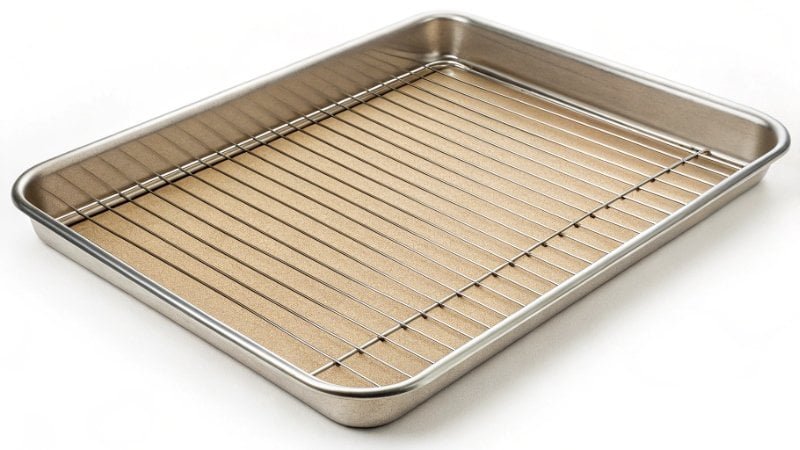
A stable rack is a safe rack. Nothing is worse than trying to pull a hot pan from the oven and having the rack slide, sending your perfectly roasted chicken tumbling. I've heard these stories, and the fix is always a better-fitting rack. Stability is about more than just convenience; it's about control in the kitchen.
Measuring for Success
To get that perfect fit, you need to measure correctly. Most sheet pan2s have sloped sides, so they are wider at the top than at the bottom. Do not measure the top rim. Instead, measure the interior bottom dimensions of your pan. This is where the feet of the rack will sit. A rack that matches these bottom dimensions will be much more stable.
The Stability Test
Here is a simple test I tell everyone to do. Place the empty rack inside the empty pan. Now, hold the pan with both hands and give it a gentle shake from side to side. The rack should not slide around or pop out. A little movement is okay, but if it rattles or lifts up, the fit is too loose. In a commercial setting, like for our chain bakery clients, stability is non-negotiable. Pans are moved quickly. A sliding rack means lost product, lost time, and a potential safety issue. That's why we engineer our racks to match our pans perfectly.
Does the grid pattern6 and wire thickness7 make a difference?
Have your delicate foods ever fallen through the gaps of a wire rack1? Or has a heavy roast bent the wires? The grid design and wire thickness7 truly matter.
Yes, the grid and wire thickness7 matter greatly. A tight grid pattern6 prevents small foods like vegetables from falling through. Thicker, stronger wires are essential for supporting heavy roasts8 without bending. You should choose a design based on what you cook or bake most often.
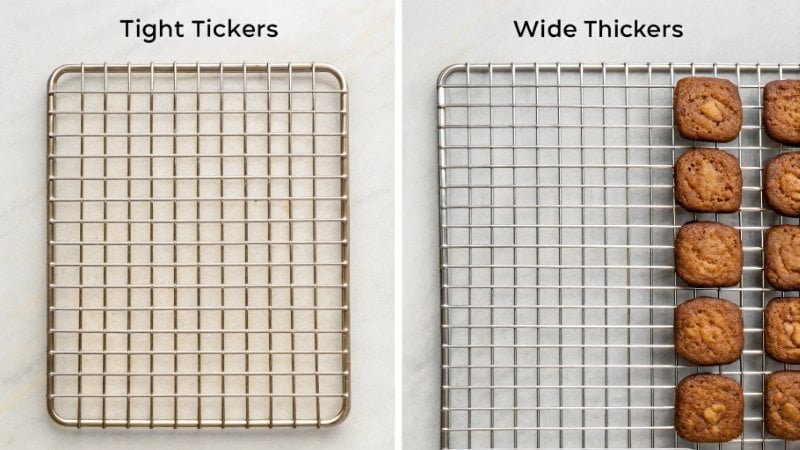
After you have confirmed the height and fit, the final piece of the puzzle is the rack's construction. This includes the spacing of the wires and how thick those wires are. This choice really depends on what you plan to use the rack for. A rack designed for cooling light cookies9 is very different from one made to hold a heavy brisket.
Grid Spacing for Your Food
The pattern of the wires is called the grid. A tight, square grid pattern6 is the most versatile. It provides great support and prevents smaller items, like asparagus or bacon, from falling through. A rack with wider, parallel wires might be a bit easier to clean, but it's less useful for small foods. For most home cooks, I recommend a tight grid because it can do everything.
Wire Gauge and Durability
The thickness of the wire, often called the gauge, determines the rack's strength. Thicker wires can support more weight without bending or warping. This is very important for our industrial clients who use them for heavy-duty applications. For home use, you don't need the thickest wires, but you should avoid racks that feel flimsy. A good rack should feel solid and rigid in your hands.
| Feature | Best For | Why? |
|---|---|---|
| Tight Grid (Square) | Vegetables, bacon, small items | Prevents food from falling through. |
| Wide Grid (Parallel) | Large roasts, cooling bread | Easier to clean, sufficient for large items. |
| Thick Wires | Heavy meats, commercial use | Offers durability and prevents bending. |
| Thin Wires | Cooling light cookies and cakes | Sufficient for light tasks. |
Conclusion
Finding the best wire rack1 is simple. Focus on the right height, a snug and stable fit3 inside your pan, and a grid pattern6 that suits your cooking needs10.
Explore this link to discover the top wire racks that ensure even cooking and stability in your kitchen. ↩
Learn about the best sheet pans that complement your wire rack for perfect baking results. ↩
Find resources that explain how to measure and select racks for a secure fit in your pans. ↩
Explore techniques and tools to avoid soggy bottoms, ensuring perfect baking results. ↩
Explore the importance of air circulation in achieving evenly cooked and crispy food. ↩
Learn about different grid patterns and how they impact cooking various types of food. ↩
Find out why wire thickness is crucial for the durability and performance of your cooking racks. ↩
Find recommendations for wire racks that can support heavy items without bending. ↩
Learn about the ideal wire racks for cooling cookies and other delicate baked goods. ↩
Discover how to select the right wire rack tailored to your specific cooking requirements. ↩