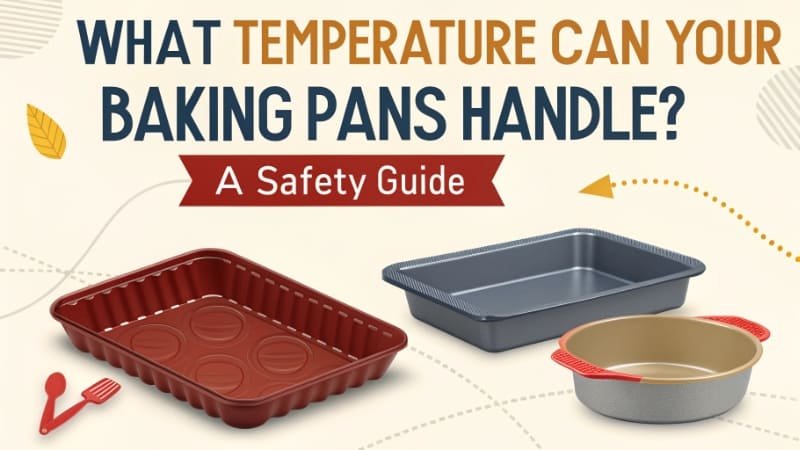
Have you ever worried your baking pans1 might warp or break in a hot oven? This uncertainty can ruin your baking day. Knowing your pan's limits is key to safety and success.
The maximum temperature your baking pan can handle depends on its material and coating. Most non-stick pans2 should stay below 230°C (450°F). Uncoated aluminized steel3 is very durable, while glass and ceramic can crack from sudden temperature changes. Always check the manufacturer's instructions4.
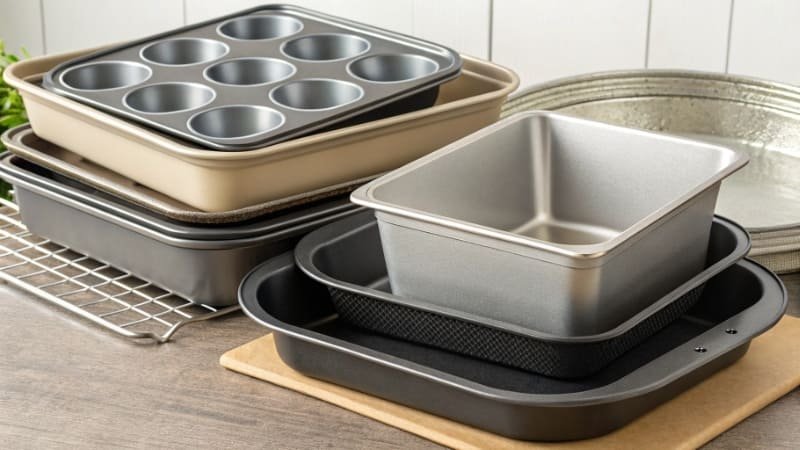
I’ve been in the bakeware business for a long time. Over the years, I've seen countless pans that have been pushed past their limits. A warped pan doesn't just bake unevenly; it can be a real headache in a busy kitchen, whether it's at home or in a professional bakery. Understanding the "why" behind these limits is the first step to making your equipment last longer and getting perfect results every time. Let's dig into the details so you can bake with complete confidence.
Are All Metal Baking Pans Created Equal in High Heat?
You trust your metal pan to be tough. But then you pull it from a hot oven and see it has warped. It's frustrating when your equipment fails. Let's compare metal choices.
No, they are not equal. For high-heat commercial use, aluminized steel3 offers the best warp resistance. Standard aluminum alloy5 is lighter but can bend more easily at high temperatures. Stainless steel, while very hygienic, is often the most likely to warp from heat stress in bakeware form6.
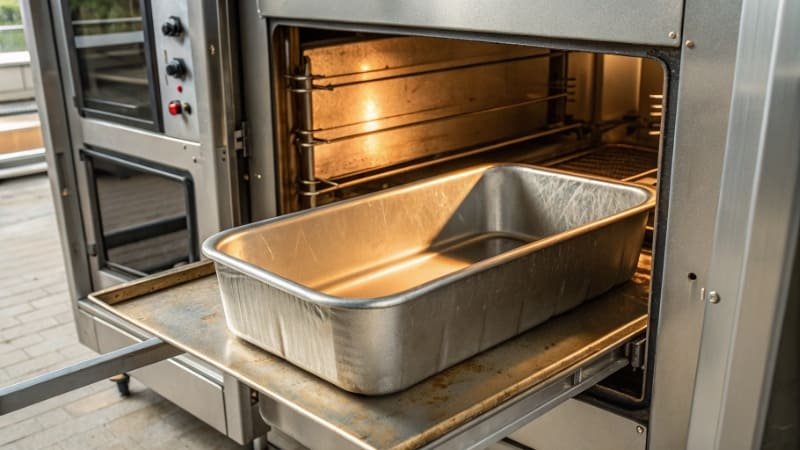
When we talk about metal bakeware, we're usually dealing with three main players: aluminized steel3, aluminum alloy5, and stainless steel7. Each one behaves differently when the heat gets turned up. I've worked with industrial clients like Klaus in Germany, who runs a massive frozen dough factory. For him, a pan that warps even a millimeter can shut down an automated production line. That’s why he relies on aluminized steel3. It has a steel core for strength and rigidity, with an aluminum coating that provides excellent heat distribution and corrosion resistance8. It’s the workhorse of the professional baking world because it stays flat and reliable, bake after bake.
A Head-to-Head Comparison
Aluminum alloy is also very popular. It's lightweight and a fantastic heat conductor, meaning your cakes and breads will brown beautifully and evenly. However, it's a softer metal. At very high temperatures, especially with thinner gauges, it’s more likely to twist or warp. For a home baker, this might just be a minor annoyance. For a chain bakery buyer like Sarah in Sydney, who needs every single cookie at 50 locations to look identical, that inconsistency is a problem. Stainless steel is the toughest when it comes to scratches and cleaning, but it's a poor heat conductor. This can create hot spots, causing the pan to expand unevenly and warp dramatically.
| Feature | Aluminized Steel | Aluminum Alloy | Stainless Steel |
|---|---|---|---|
| Heat Conductivity | Very Good | Excellent | Poor |
| Warp Resistance | Excellent | Good | Fair |
| Corrosion Resistance | Very Good | Good | Excellent |
| Best Use Case | Industrial, Commercial | Home, Light Commercial | Specialized (e.g., acidic foods) |
What About Silicone, Glass, and Ceramic Bakeware Temperatures?
You love the easy release of silicone or the classic look of a glass dish. But are you risking a kitchen disaster? Using them outside their limits can be dangerous and messy.
Silicone bakeware has a strict maximum temperature, usually around 220°C (428°F). Going over this is a food safety risk. Glass and ceramic handle very high heat but can shatter from thermal shock9—a sudden change in temperature, like going from a hot oven to a cold counter.
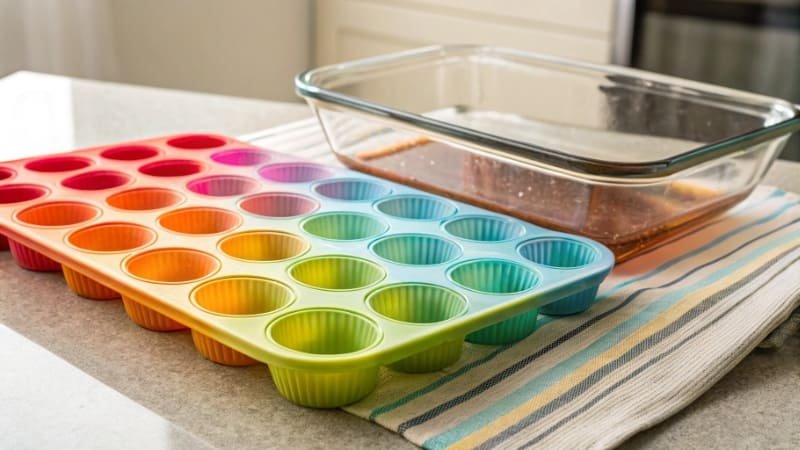
Moving beyond metal, we have a different set of rules. Silicone is incredibly popular for its flexibility and non-stick properties. However, not all silicone is created equal. High-quality, food-grade silicone is perfectly safe within its stated temperature range. The danger comes from cheaper products that might use fillers. When overheated, these fillers can break down and release unwanted chemicals into your food. My advice is simple: always buy from a reputable brand and never, ever push a silicone pan past its rated temperature. It’s just not worth the risk.
Understanding Thermal Properties
Glass and ceramic are baking classics. They look great and hold heat exceptionally well, which is perfect for a deep-dish lasagna or a bubbly casserole that you want to serve straight from the oven. They can handle very high temperatures without any issue. Their weakness, however, is thermal shock9. I once saw a beautiful glass dish full of roasted vegetables shatter into a thousand pieces. The mistake? The baker took it directly from a 220°C (425°F) oven and placed it on a cold, wet granite countertop. The sudden, extreme temperature change was too much for the glass to handle. The same rule applies to adding cold liquid to a hot glass or ceramic dish. Always let them cool down gradually.
| Material | Max Temperature (Typical) | Key Weakness | Best For |
|---|---|---|---|
| Silicone | ~220°C / 428°F | Overheating risks | Muffins, Molds, Flexible shapes |
| Glass | ~250°C / 480°F | Thermal Shock | Casseroles, Roasting, Serving |
| Ceramic | >260°C / 500°F | Thermal Shock | Pies, Breads, Roasting |
Does a Non-Stick Coating Change Everything About Temperature Limits?
That easy-release non-stick surface is a lifesaver. But did you know you might be damaging it with high heat? This common mistake shortens its life and can affect your food.
Yes, it changes everything. A non-stick coating10 is the most important factor for temperature safety. No matter what the pan is made of, most non-stick coating10s should not go above 230°C (450°F). High heat makes the coating break down, ruining its performance.
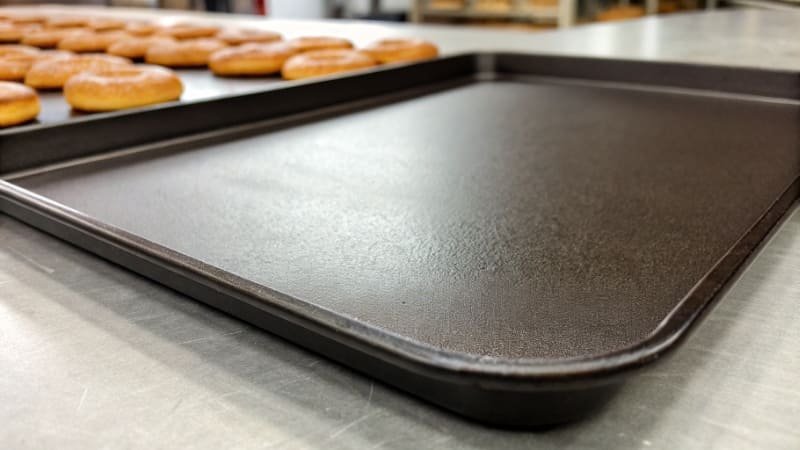
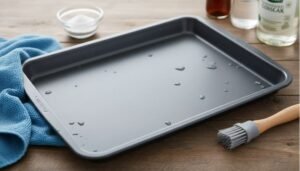
This is the most critical point I can share with you, and it’s the one people forget most often. You can have the strongest, thickest aluminized steel3 pan in the world, but if it has a non-stick coating10, the coating is now the boss. Most non-stick coating10s, like those based on PTFE, are designed to be stable up to a certain temperature, typically around 230°C or 450°F. When you go above that, things start to go wrong. The coating can begin to blister, peel, and lose its non-stick ability forever. In a professional kitchen like Chef Ahmed’s in Dubai, where they are cooking for hundreds of people, a failing coating means lost time, wasted food, and extra cleanup.
The Coating is the Limiting Factor
Think of the coating as the most delicate part of your pan. Using it on your oven’s “broil” setting is a common way to destroy it, as broilers can quickly exceed 260°C (500°F). Preheating a non-stick pan while empty is another mistake, as the pan's surface temperature can shoot up very quickly without food to absorb the energy. We always tell our customers to treat their non-stick surfaces with care. It's not just about temperature. Using metal utensils will scratch the surface, and harsh, abrasive scrubbers will wear it down. Following a few simple rules will make your non-stick pans2 last so much longer.
| Do's and Don'ts for Non-Stick Care |
|---|
| DO respect the 230°C (450°F) temperature limit. |
| DON'T use the broiler setting with non-stick pans2. |
| DO use wooden, nylon, or silicone utensils. |
| DON'T use metal utensils or knives on the surface. |
| DO wash by hand with a soft sponge and soap. |
| DON'T use steel wool or abrasive scouring pads. |
Conclusion
Your pan's material dictates its base strength, but a non-stick coating10 sets the true temperature limit. Always check the manufacturer's guide to ensure safe baking and long-lasting performance.
Explore this link to discover the best baking pans that can withstand high temperatures without warping. ↩
Find out how non-stick pans react to high heat and how to maintain their longevity. ↩
Discover why aluminized steel is favored in professional kitchens for its durability and heat distribution. ↩
Understand the importance of following manufacturer's instructions for safe and effective baking. ↩
Explore the pros and cons of using aluminum alloy for baking to make informed choices. ↩
Learn about the best bakeware forms for high-heat cooking to ensure optimal performance. ↩
Learn about the benefits of stainless steel bakeware and its unique properties in the kitchen. ↩
Explore which bakeware materials offer the best corrosion resistance for long-lasting use. ↩
Explore the concept of thermal shock and how it affects glass and ceramic bakeware. ↩
Discover how non-stick coatings influence the temperature limits of your bakeware. ↩