Starting a bakery is exciting, but buying the wrong equipment wastes money. Let's make sure you get what you need, so your business can succeed from day one.
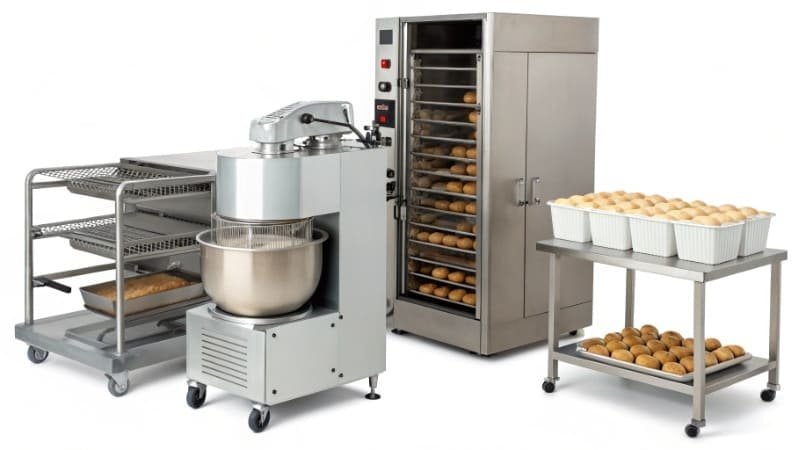
A bakery needs an oven, a proofer, and baking trays1. Small shops can start with deck or convection ovens2 and an optional mixer. Factories must have automated lines, including tunnel ovens3, depositors, and packaging machines4, to manage costs and scale production. The right choice depends on your business size.
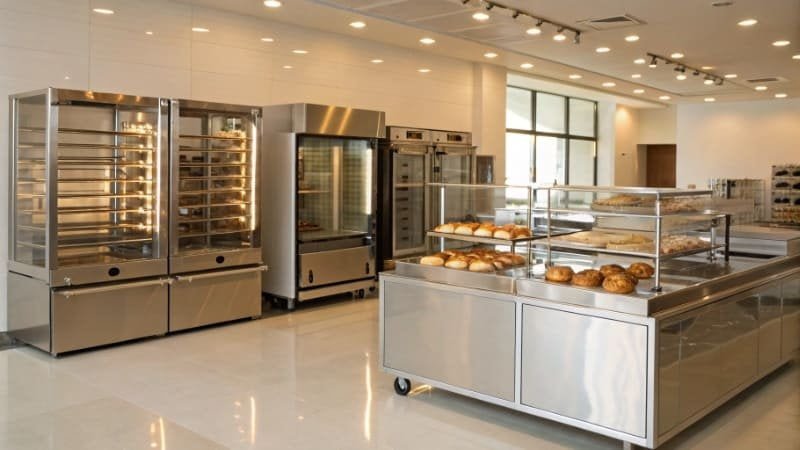
You have a basic list of machines now. But the details are what make a bakery truly successful. The right equipment can make or break your daily operations. Let's break down the specific machines you'll need for different types of bakeries. This will help you make the best choices for your budget and your goals.
What are the essential machines for a small bakery shop?
You dream of opening a cozy, local bakery. But your budget is tight. Buying big, unnecessary machines can sink your business before you even sell your first loaf of bread.
A small bakery needs a reliable oven, like a deck or convection oven, and a proofer. A commercial mixer5 is helpful but not essential at first; you can knead dough by hand. Also, consider a refrigerator6 and a toast slicer7 if you plan to sell toast.
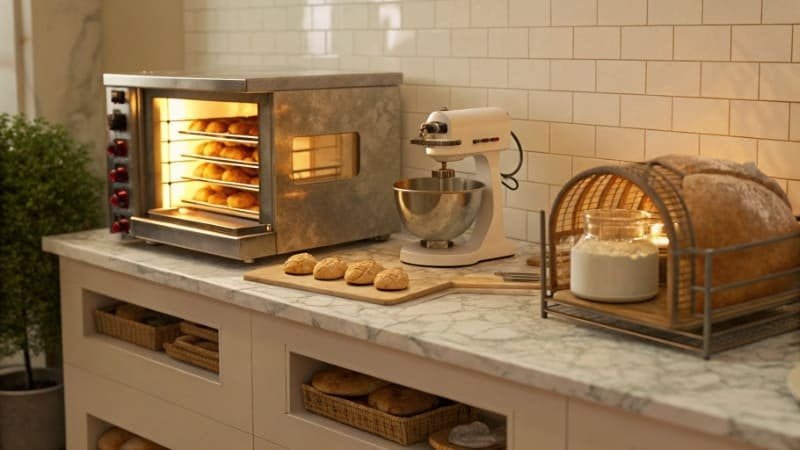
Let's dive deeper into the core equipment for a small shop. Your success depends on three key machines: the mixer, the proofer, and the oven. For a small bakery, you can start without a mixer. Hand-kneading is perfectly fine for small batches. It allows you to feel the dough and control the process. However, if your budget allows or you plan to grow, a mixer is a great investment. It saves time and physical effort. Ultimately, the quality of your bread depends more on a good recipe, proper proofing, and the right baking temperature. A proofer, on the other hand, is essential. It creates a controlled environment with the perfect temperature and humidity. This control is what gives you a consistent, perfect rise every single time. Finally, the oven is the heart of your bakery. Most small shops use a combination of a deck oven8, which is great for artisan breads and toast, and a convection oven, which is perfect for pastries that need even browning.
Other Supporting Gear
Besides the main three, you will need other equipment.
- Refrigerator: An absolute must for storing ingredients, butter, and prepared dough.
- Toast Slicer: If you sell sliced bread, you need a slicer. It provides clean, uniform slices that customers expect.
Here is a simple table to help you decide:
| Equipment | Necessity for Small Bakery | Key Consideration |
|---|---|---|
| Mixer | Optional to Recommended | Saves labor and increases consistency as you grow. |
| Proofer | Essential | Controls temperature and humidity for a perfect rise. |
| Oven | Essential | Choose based on your main products (bread vs. pastry). |
| Refrigerator | Essential | Stores ingredients and dough safely. |
| Toast Slicer | Recommended | Necessary if you plan to sell sliced bread loaves. |
What equipment does a large-scale baking factory require?
You are planning a large-scale baking factory. The production volume is massive. A single wrong equipment choice could halt your entire line and cost you a fortune in lost time and money.
A factory needs a fully automated production line%%%FOOTNOTE_REF9%%%. This includes a large-scale mixing system, dedicated [proofing rooms](https://en.wikipedia.org/wiki/Proofing(baking_technique))10, tunnel ovens3, and cooling conveyors11. You will also need depositors, filling machines, packaging machines4, and metal detectors to ensure efficiency, safety, and high output.
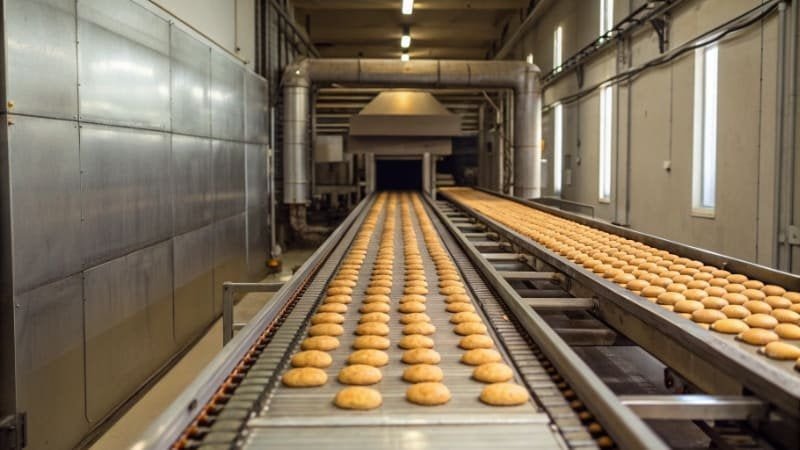
Running a factory is completely different from running a small shop. Automation is not a luxury; it's a necessity. Labor costs would be far too high without it. Your entire process must be a seamless, automated line. It starts with a large-scale mixing system that can handle huge batches of dough. From there, the dough moves to dedicated, walk-in proofing rooms10. After proofing, automated machines take over. Batter depositors portion out cake batter, and dough dividers create uniform pieces for bread. The core of the factory is the tunnel oven. This is a long, conveyorized oven with different temperature zones. The product moves through it, baking perfectly at each stage. After the oven, a long cooling conveyor is needed to bring the products to room temperature before they can be packaged.
I remember a client from Tanzania who wanted to start a large factory. He and his father came to our facility in Jiangmen to discuss a full production line. They needed everything, including nearly 20,000 small loaf pans for their toast. I could supply the pans and ovens, but the cost of the entire automated line was a surprise to them. In the end, they had to abandon the project because of the budget. This experience showed me that starting a factory requires much more capital than most people imagine.
Finishing, Packaging, and Quality Control
The line doesn't end after cooling.
- Finishing: You'll need automatic filling machines for cream or jam, enrobing machines for chocolate, and sprinkling machines for sugar.
- Packaging: Automatic packaging and labeling machines are needed to prepare products for shipping.
- Safety & QC: A metal detector is often a legal requirement. You also need to establish a quality control lab to test products and ensure they meet all standards.
Are baking trays and racks really that important?
You've planned your expensive ovens and mixers. You might think baking trays and racks12 are just minor details. But using the wrong ones can ruin your products and create chaos in your workflow.
Yes, they are absolutely critical. For trays, the non-stick coating is key. It must match the sugar content of your dough for easy release. For racks, they are versatile tools used for proofing, transport, and cooling. They are essential for an efficient bakery workflow.
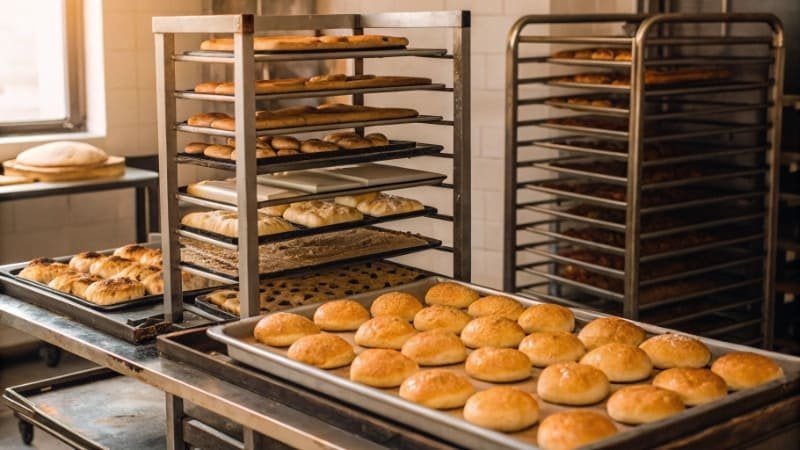
Let's talk about the unsung heroes of the bakery: trays and racks. Many people overlook them, but they are fundamental to your success. Let's start with baking trays1, or pans. A small bakery making hand-shaped bread might just need simple flat pans. Some chain bakeries, however, need custom pans. We've made all sorts of interesting custom pans for clients, from banana-shaped to heart-shaped. But the most important thing about a baking tray is its coating. This is a detail many bakers get wrong. You can't just buy any non-stick pan. The type of non-stick coating you need depends on the sugar content of your dough. A high-sugar dough requires a very specific coating to prevent it from sticking. If you choose the wrong one, the pan won't release the product cleanly, and you'll have waste and frustration.
Then there are the bakery racks, also called trolleys. These wheeled racks are essential in any professional kitchen, big or small. Their usefulness is incredible.
The Many Uses of a Bakery Rack
- Proofing: You can load trays of dough onto a rack and roll the whole thing into a proofer.
- Transport: They make it easy to move dozens of trays from your prep table to the oven area.
- Baking: Some heavy-duty racks are even heat-resistant. You can roll them directly into large, rotating ovens.
- Cooling: After baking, you can use the same racks to hold the hot trays, turning them into mobile cooling stations.
They are a simple piece of equipment, but they make the workflow smoother and save your staff from endless lifting and carrying.
Conclusion
Choosing bakery equipment depends on your scale. Small shops need core items like ovens and proofers. Factories require full automation. Don't forget essentials like the right trays and racks.
Explore this link to discover the best baking trays that ensure perfect results and efficiency in your bakery. ↩
Learn about convection ovens and their benefits for baking, ensuring even browning and perfect pastries. ↩
Explore the advantages of tunnel ovens for large-scale baking and how they improve efficiency. ↩
Find out which packaging machines can help streamline your bakery's packaging process. ↩
This resource provides insights on selecting the right commercial mixer to enhance your bakery's efficiency. ↩
Learn about the best refrigeration options to keep your bakery ingredients fresh and safe. ↩
Discover how a toast slicer can improve your bakery's efficiency and product presentation. ↩
Explore the benefits of deck ovens for artisan breads and how they enhance baking quality. ↩
Discover how automated production lines can streamline your bakery operations and increase output. ↩
Understand the significance of proofing rooms in achieving the perfect rise for your baked goods. ↩
Learn about cooling conveyors and their role in ensuring quality and safety in baked products. ↩
Discover the critical role of baking trays and racks in optimizing your bakery's workflow. ↩