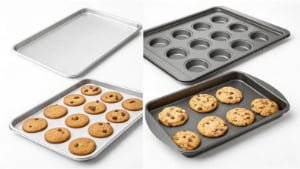
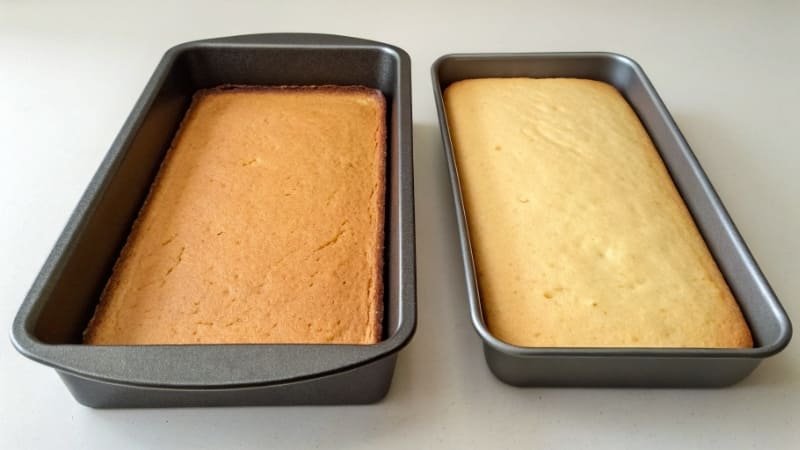
Have you ever baked something with burnt edges and a gooey, undercooked center? It’s so frustrating. You might think the problem is your oven, but it could be your pan.
Pan thickness1, or gauge, is vital because it controls how evenly heat reaches your food. A thick, heavy-gauge pan2 absorbs and distributes heat slowly and uniformly, preventing "hot spots3." This ensures a perfect bake from the edge to the very center of your product.
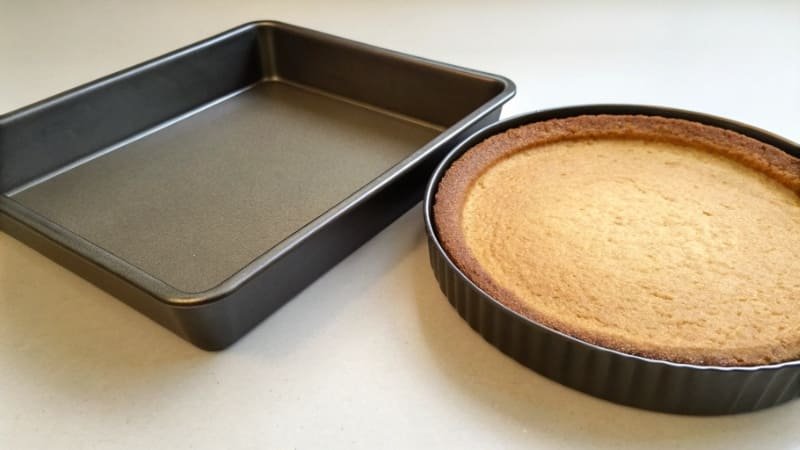
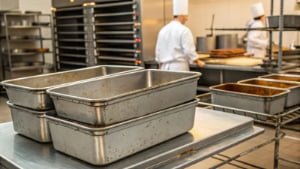
I used to grab any old baking sheet4 from the cupboard. I thought a pan was just a pan. Then I started working in a professional kitchen5 and saw the difference firsthand. The heavy, sturdy pans we used produced perfectly golden results every single time. It was a real eye-opener. That experience made me obsessed with understanding why the right equipment is so important. Let's explore why that flimsy pan might be sabotaging your baking.
How do thin baking pans ruin your perfect bake?
You followed the recipe exactly, but your cake still came out uneven. It feels like a gamble every time you use the oven. Let's look at the main suspect: your thin pan.
A thin baking pan is a poor heat manager. It heats up too fast, creating "hot spots3" that burn parts of your food while leaving others raw. It is also very likely to warp or bend under high heat, which makes the problem of uneven baking even worse.
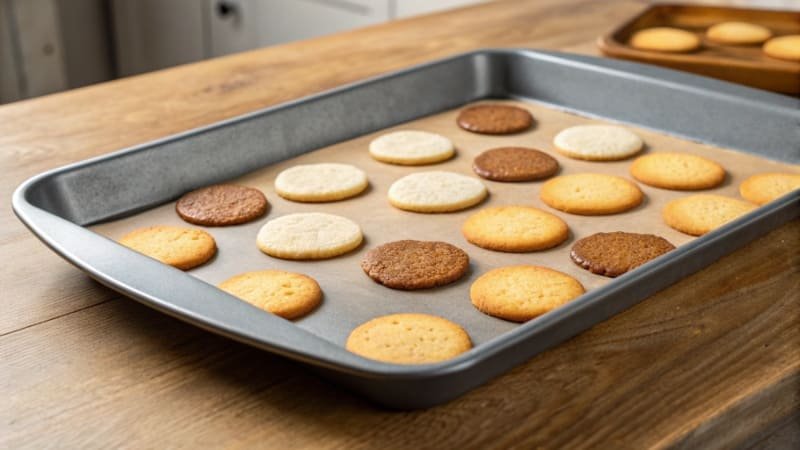
Let's dive a little deeper into the science behind this. The main issue with thin pans is poor heat conduction6. Metal needs time to absorb heat and spread it out. A thin sheet of metal gets hot almost instantly in the spot directly above the oven's heating element. This creates a "hot spot." The heat doesn't have enough material or time to travel evenly across the pan's surface before it starts cooking the food sitting on top of it. This is why you get those dark, almost burnt bottoms and edges on your cookies.
The second problem is warping7. When you put a cold pan into a hot oven, the metal expands rapidly. If the pan is thin, it can't handle this stress evenly. The edges and center expand at different rates, causing the pan to twist and buckle. A warped pan no longer sits flat on the oven rack. This means some parts are closer to the heat source than others, and your batter or dough might pool in the lower spots. The result is a lopsided cake or cookies that are thick on one side and thin on the other.
| Feature | Thin Pan Outcome | Thick Pan Outcome |
|---|---|---|
| Heat Distribution | Uneven, "Hot Spots" | Even and Consistent |
| Baking Result | Burnt Edges, Raw Center | Uniformly Golden Brown |
| Durability | Prone to Warping | Warp-Resistant |
| Product Shape | Lopsided Cakes, Uneven Cookies | Level Cakes, Uniform Cookies |
Why are heavy-gauge pan2s the secret to consistent baking?
You want to achieve that beautiful, even, golden-brown finish on everything you bake. It seems hard, but it's not. The secret is using the heavy-gauge pan2s that professionals always rely on.
Heavy-gauge pans are excellent heat conductors. Their thickness allows them to absorb heat slowly and distribute it perfectly across the whole surface. This gets rid of hot spots3 and provides a stable temperature, ensuring your food bakes evenly from the outside to the inside.
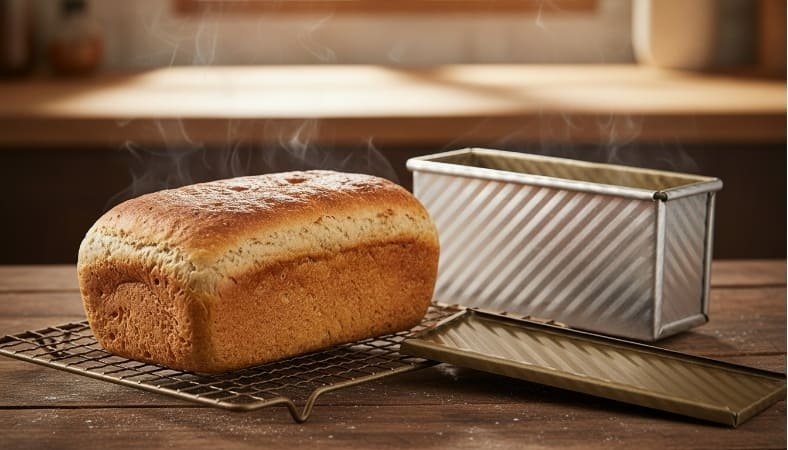
A key concept here is thermal mass8. A heavy-gauge pan2 has more mass, which means it can hold more heat. Think of it like a stone in a pizza oven. It takes a while to heat up, but once it's hot, it stays hot and radiates a very steady, even heat. This is exactly what you want for baking. Your home oven's temperature actually goes up and down as the heating element cycles on and off to maintain an average temperature. A thin pan will get hotter and cooler with these cycles, shocking your batter. A heavy pan with high thermal mass8 acts as a buffer. It holds onto its heat and provides a much more stable baking environment9, which allows cakes to rise evenly and cookies to spread predictably.
This stable heat is also the key to perfect browning. The Maillard reaction10 and caramelization, the chemical processes that give baked goods their delicious flavor and golden color, happen best with consistent heat. An even temperature across the pan means the entire surface of your product browns at the same rate. This is how you get that professional look and taste. Finally, these pans are just built to last. At KKbake, we design equipment for industrial use, so we know that a thick pan won't warp, bend, or dent easily. It's a true long-term investment in your baking.
What's the best material for a heavy-duty baking pan?
So you've decided to get a better pan, but now you see all the options. There's aluminum, stainless steel, and aluminized steel11. It's confusing. Let me make it simple for you.
For professional-level baking, aluminized steel11 is the best material. It gives you the strength and durability of steel plus the amazing heat conduction6 of aluminum. It's dense, spreads heat evenly, resists rust, and has a very long service life, making it the top choice.
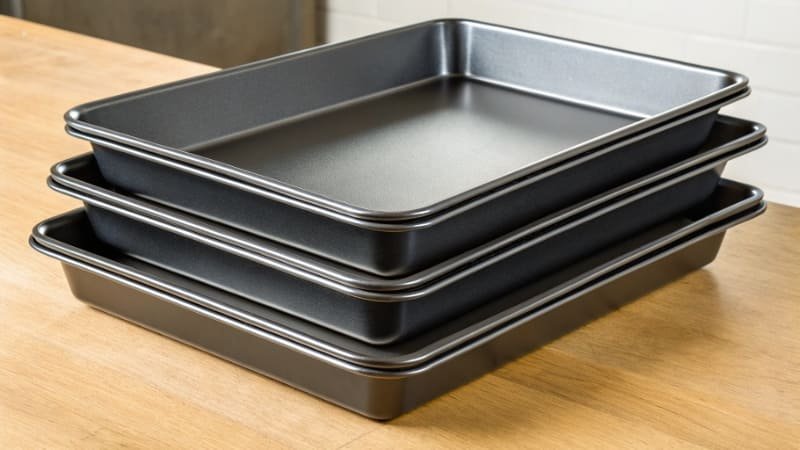
Let's break down the common materials so you can see why we recommend aluminized steel11 so strongly. Plain aluminum is very popular because it's cheap and a fantastic heat conductor. However, it's a soft metal. It dents and scratches very easily, and it can warp. It can also react with acidic ingredients like tomatoes or lemon, which can give your food a metallic taste.
Stainless steel is on the other end. It's incredibly strong, durable, and won't react with your food. The problem is that it's a terrible heat conductor. It creates major hot spots3 and is generally not good for baking applications where even color is important.
This brings us to aluminized steel11. It’s the perfect hybrid. It starts with a strong steel core that provides rigidity and prevents warping7. Then, it's coated in an aluminum-silicon alloy. This coating gives the pan the superior, even-heating properties of aluminum and also protects the steel from rust. It is the best of both worlds and the standard for commercial bakeries and serious food producers.
| Material | Heat Conduction | Durability | Reactivity | Ideal Use |
|---|---|---|---|---|
| Aluminum | Excellent | Low | Reactive | Light home use |
| Stainless Steel | Poor | Excellent | Non-reactive | Stovetop cooking |
| Aluminized Steel | Very Good | Excellent | Non-reactive | Professional Baking |
Conclusion
Investing in a heavy-gauge, aluminized steel11 pan is the foundation for professional baking. It ensures consistent, even results and puts an end to unevenly cooked goods for good.
Understanding pan thickness can significantly improve your baking results by ensuring even heat distribution. ↩
Heavy-gauge pans provide consistent heat, preventing burnt edges and undercooked centers for perfect baked goods. ↩
Identifying hot spots can help you select the right bakeware to achieve even baking results. ↩
Knowing what to look for in a baking sheet can enhance your baking experience and results. ↩
Discovering professional kitchen equipment can elevate your home baking to a new level. ↩
Learning about heat conduction can help you choose the right bakeware for optimal baking performance. ↩
Understanding warping can help you choose pans that maintain their shape and ensure even baking. ↩
Exploring thermal mass can enhance your understanding of how heat retention impacts baking outcomes. ↩
Understanding the baking environment can help you create the best conditions for your baked goods. ↩
Learning about the Maillard reaction can help you achieve better flavor and color in your baked goods. ↩
Aluminized steel pans combine durability and excellent heat conduction, making them ideal for serious bakers. ↩