Worried about the post-pandemic market slowdown? You see headlines about corrections but know you need to invest. Here's what is actually driving growth in our industry.
Key drivers for the baking equipment market1 are the push for automation2 to reduce labor costs3, the need for durable and standardized equipment4 in large-scale operations, and strategic sourcing5 from manufacturing hubs6 to improve efficiency and profitability.
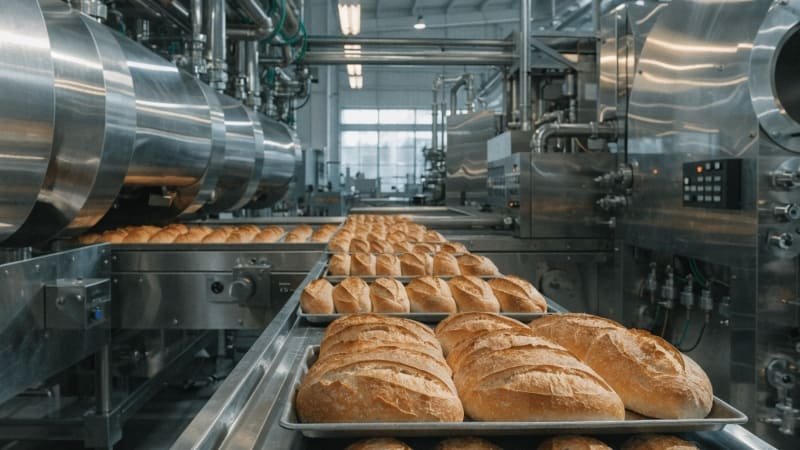
I've been in this business for over fifteen years, and I've seen many trends come and go. The current landscape is fascinating because it’s not about flashy new tech, but about smart, practical decisions that boost the bottom line. The market is mature and stable. So, let's break down what's really happening behind the scenes and where the real opportunities are for bakeries today.
Is the Baking Equipment Market Still Growing After the Pandemic Boom?
The pandemic created a huge surge in baking. Now that things are settling, are you worried the demand for equipment will dry up? It's actually shifting, not shrinking.
Yes, the market is still healthy. While the initial home-baking explosion has cooled, the professional sector7 is expanding. Cafes, industrial bakeries8, and food service chains9 are growing, driving steady demand for reliable, high-volume equipment10.
I remember the frantic calls during 2020 and 2021. Everyone wanted equipment, from home bakers to big factories trying to scale up. Now, things feel more normal, but "normal" is a new, higher baseline. The market has matured. The growth isn't explosive anymore, but it is consistent. We're seeing industrial clients, like the large-scale frozen dough producers in Europe, expanding their production lines. They are not making impulse buys. They are making strategic investments for the long term. This tells me the industry is healthy and focused. It's a professional's market now, centered on efficiency and return on investment, not just adding capacity for a temporary surge.
Market Shift Post-Pandemic
| Sector | 2020-2021 Trend | Current Trend (2024+) |
|---|---|---|
| Home Baking | Explosive Growth | Stabilization, demand for quality over quantity |
| Artisan Bakeries | Struggled, then adapted with delivery | Steady growth, focus on unique products |
| Industrial Bakeries | Ramped up production for retail | Continued investment in automation2 & efficiency |
| Food Service/QSR | Shifted to takeout/delivery | Full-scale recovery and expansion |
Why is Automation the Top Priority for Modern Bakeries?
Are rising labor costs3 and staff shortages eating into your profits? Manual processes are becoming a liability. Automation offers a powerful solution to stay competitive and consistent in today's market.
Automation is the top priority because it directly addresses the biggest challenges: high labor costs3 and the need for product consistency11. Automated lines reduce reliance on manual labor, minimize human error, and allow for 24/7 production, boosting efficiency and profitability.
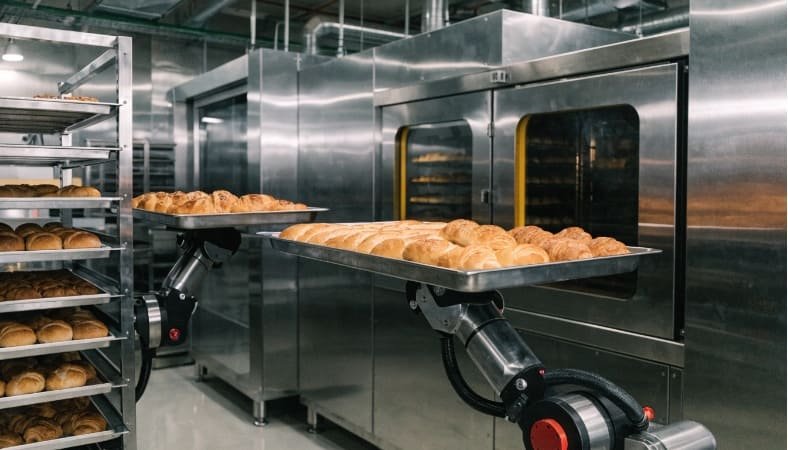
I recently visited a client's factory in Germany. They run a massive operation, and their biggest headache wasn't ingredients or recipes. It was staffing. Finding, training, and retaining skilled workers is incredibly expensive and difficult. That's why they invested in a fully automated line. Their baking pans12 move from proofer to oven to cooling rack without a single person touching them. This is not just about saving money on wages. It is about perfect standardization. Every loaf of bread is baked identically. For a national chain bakery buyer in Australia, this is non-negotiable. Customers in Sydney expect the same product as customers in Melbourne. Automation is the only way to guarantee that level of consistency at scale.
Key Benefits of Automation
| Benefit | Impact on Bakery Operations |
|---|---|
| Cost Reduction | Lowers direct labor costs3 and reduces expenses from human error. |
| Product Consistency | Ensures every product meets the exact same quality and size standards. |
| Increased Throughput | Production can run longer and faster, increasing total output. |
| Improved Safety | Reduces manual handling of hot trays and heavy equipment. |
How Does Sourcing from China Help Bakeries Cut Costs?
You need top-quality equipment but face tight budgets. Sourcing locally in many Western countries can be prohibitively expensive. Manufacturing hubs like China offer a way to get that quality without the high price tag.
Sourcing from China helps bakeries cut costs by providing access to high-quality, durable equipment at a lower price point. This is due to economies of scale, efficient manufacturing processes, and lower overheads in major manufacturing regions.
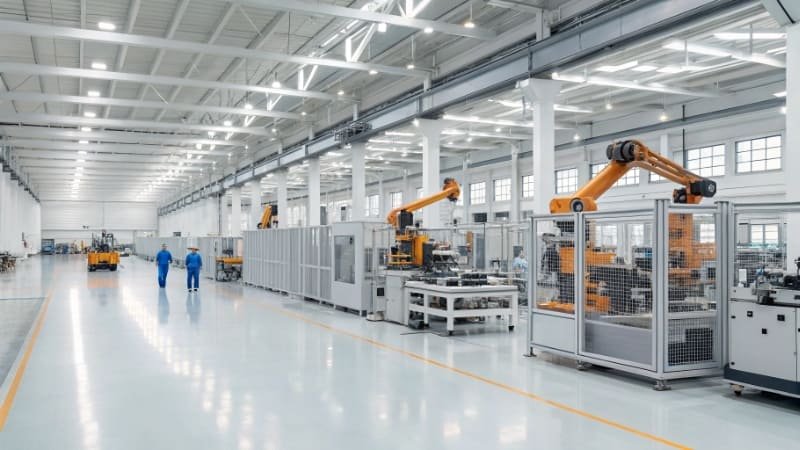
Let’s be direct. For a bakery in Germany or the United States, labor costs3 are a huge part of their budget. This also applies to their suppliers. A baking pan made in a high-cost country has that labor cost built right into its price. We at KKbake operate in a manufacturing powerhouse. Our access to advanced machinery like CNC machines and welding robots, combined with a skilled workforce, means we can produce high-quality equipment very efficiently. This efficiency translates into a better price for our customers. They get a product that meets their standards—like durable aluminized steel pans for an automated line—without paying for someone else's high overhead. It is not about buying something "cheap." It is about getting the best "value." It is a strategic business move to manage costs without compromising the quality needed for a modern bakery.
Cost Breakdown: Local vs. China Sourcing (Example)
| Cost Factor | Sourced Locally (e.g., Europe) | Sourced from China (e.g., KKbake) |
|---|---|---|
| Labor Cost | High | Moderate |
| Raw Materials | Similar, but logistics may add cost | Direct access, bulk purchasing |
| Manufacturing Overhead | High | Low (due to scale and efficiency) |
| Final Product Price | High | Competitive |
What Does Customization Mean for Large-Scale Baking Operations?
Off-the-shelf equipment doesn't fit your unique automated line. This forces compromises and hurts efficiency. True customization13 means equipment is built specifically for your process, not the other way around.
For large-scale operations, customization13 means getting equipment with exact dimensions, materials, and features to fit perfectly into automated systems. This eliminates production bottlenecks, maximizes efficiency, and ensures seamless operation from start to finish.
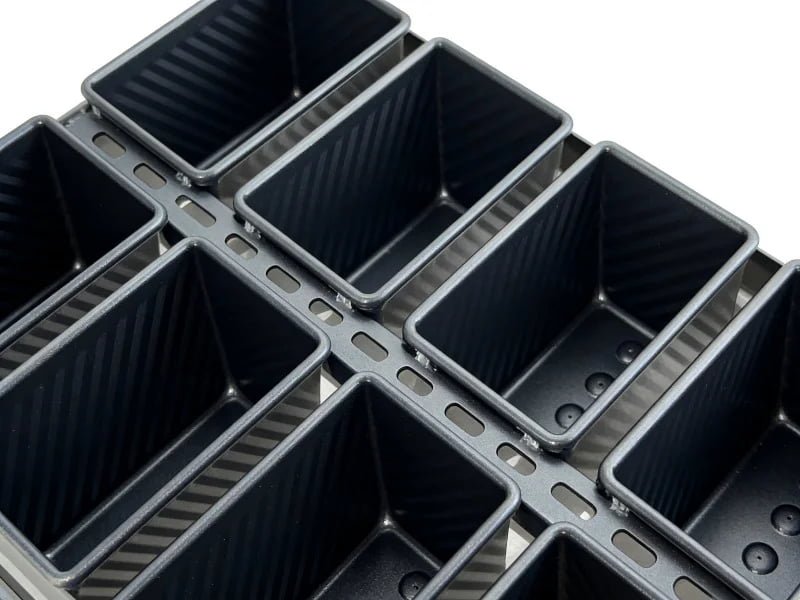
Customization is not about choosing a different color. For our professional customers, it is all about precision. I worked with a food science researcher who needed small, 316 stainless steel14 trays with a specific surface finish for her experiments. Any variation could ruin her data. At the other end of the spectrum, an executive chef in Dubai needed massive roasting pans to cook whole lambs, with reinforced edges to prevent warping under extreme heat. Neither of these could be bought off the shelf. Our ability to create custom molds and use specific materials is what makes us a partner, not just a supplier. For an automated factory, a pan that is just two millimeters too wide can shut down the entire line. Customization is the solution to that problem. It is a core part of modern, efficient baking.
Common Customization Requests
| Customer Type | Customization Need | Reason |
|---|---|---|
| Industrial Plant | Exact dimensions (≤1mm tolerance) | To fit automated conveyor belts and robots. |
| Luxury Hotel | Extra-large or deep pans | For high-volume banquet cooking. |
| Food Researcher | Specific materials and surface finish | To prevent interference with scientific tests. |
| Chain Bakery | Reinforced edges, specific coatings | To increase durability and improve bake consistency. |
Are Material and Durability Still a Top Concern for Buyers?
You're tempted by a lower-priced pan, but worry it won't last. A cheap pan that fails quickly costs more in the long run. Durability is not a luxury, it's a necessity.
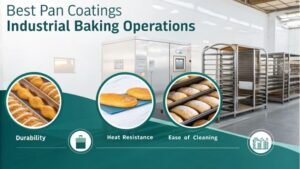
Absolutely. For professional buyers, material and durability15 are critical. Equipment must withstand thousands of baking cycles16, extreme temperature changes, and harsh cleaning. A durable pan ensures production uptime17, product safety, and a lower total cost of ownership18.
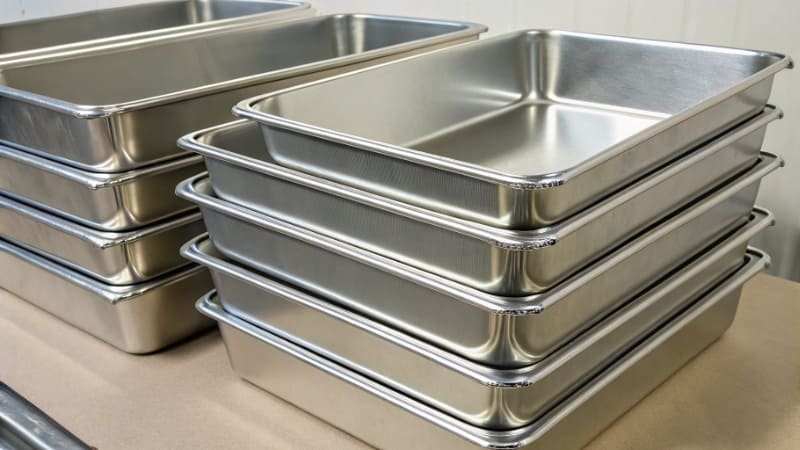
I will never forget a conversation with a purchasing manager for a huge German frozen dough plant. He told me, "I don't buy baking pans12. I buy 3,000 bake cycles." He thinks in terms of lifespan and total cost of ownership18. His pans go from a -30°C freezer to a 250°C oven, over and over again. A weak coating or a flimsy material would fail in weeks. That failure would shut down his production line and cost his company thousands of euros. That is why he specifies heavy-gauge aluminized steel19 and requires material test reports. It is the same for a hotel chef who cannot have a pan warp during a major banquet. Material choice—like aluminized steel for heat transfer or stainless steel for hygiene—is a science. Durability is not just a feature; it is the foundation of a reliable and profitable baking operation.
Material Choices and Their Uses
| Material | Best For | Key Advantage |
|---|---|---|
| Aluminized Steel | Industrial bread & pizza | Durability, corrosion resistance, even heating. |
| 316 Stainless Steel | Food science, acidic products | Extreme hygiene, non-reactive, easy to sterilize. |
| Heavy-Gauge Aluminum | Roasting, large-batch cooking | Excellent heat conductivity, lightweight. |
| Coated Carbon Steel | General baking, pastries | Good heat transfer, non-stick properties. |
Conclusion
The global baking market's growth is driven by smart investments in automation2, durable equipment, and strategic sourcing5. These trends are key to improving efficiency and staying competitive in today's world.
Explore insights on the baking equipment market to understand its growth and future opportunities. ↩
Learn how automation is revolutionizing the baking industry and enhancing efficiency. ↩
Understand the impact of rising labor costs on the baking industry and how to mitigate them. ↩
Discover the significance of durable equipment in maintaining quality and efficiency in baking. ↩
Understand how strategic sourcing can help bakeries reduce costs and improve quality. ↩
Learn about the benefits of sourcing from manufacturing hubs for cost-effective solutions. ↩
Explore the latest trends in the professional baking sector and their implications. ↩
Learn about the adaptations industrial bakeries are making to thrive in the current market. ↩
Discover how food service chains are influencing the demand for baking equipment. ↩
Find out how high-volume equipment can boost production and profitability for bakeries. ↩
Explore the importance of product consistency for customer satisfaction and brand loyalty. ↩
Explore key factors to consider for selecting the right baking pans for your needs. ↩
Discover how customization can enhance efficiency and productivity in baking operations. ↩
Discover the benefits of 316 stainless steel for hygiene and durability in baking. ↩
Understand why choosing the right materials is essential for long-lasting baking equipment. ↩
Understand the significance of baking cycles in evaluating equipment performance. ↩
Learn how durable equipment contributes to consistent production uptime in bakeries. ↩
Explore the concept of total cost of ownership and its relevance in equipment purchasing. ↩
Learn why heavy-gauge aluminized steel is preferred for its durability and performance. ↩