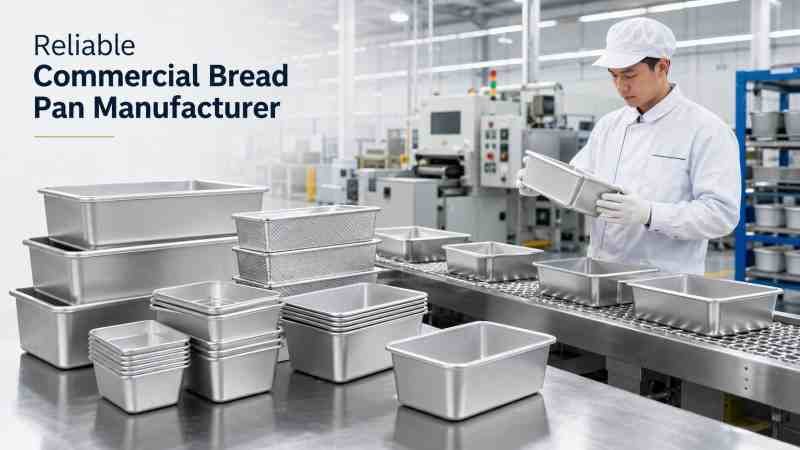
Struggling to find a bakeware supplier you can truly trust for a large order? You worry about quality, delays, and getting what you paid for. The solution is simple.
The best way to choose a reliable commercial bread pan manufacturer is to visit their factory in person.1 Seeing their operations firsthand allows you to assess their scale, production processes, employee environment, and existing partnerships, which are the most critical indicators of trustworthiness and quality.2
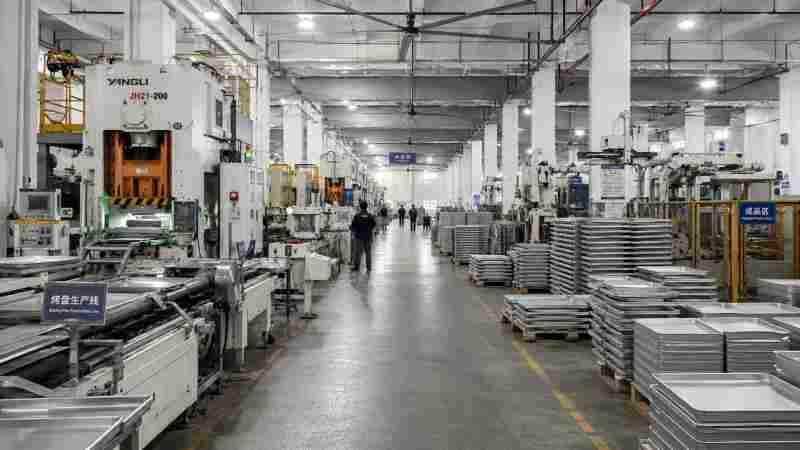
I always say, you can't have a real opinion without a field inspection.3 When you're placing a large order for commercial goods, the choice must be careful. I truly believe you have to see the factory before you can make a decision. After welcoming so many clients to our facility over the years, I've learned that a factory visit does more than just secure a big order. It builds a solid foundation for a long-term, worry-free partnership. So, what should you look for when you get there?
Is a Factory's Size and Capacity a Good Indicator of Reliability?
You found a supplier, but their small workshop seems risky. This can lead to production delays and inconsistent quality for your large order. A large-scale factory offers stability and peace of mind.4
Yes, size is a crucial indicator. A large factory with significant production capacity, advanced equipment, and a substantial workforce demonstrates stability and the ability to handle bulk orders consistently without compromising quality or delivery schedules.5 It shows they have invested heavily in their business.
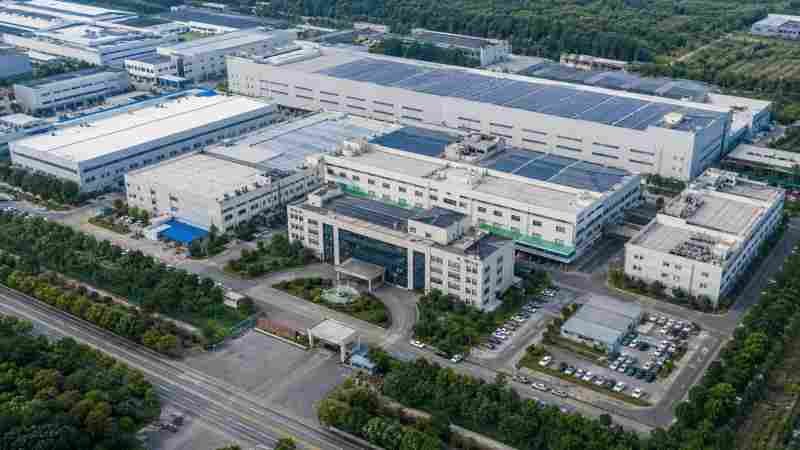
When I talk about size, I mean more than just square meters. It’s about the entire ecosystem. A large factory floor, like our 40,000-square-meter facility, means there is space for streamlined production lines, raw material storage, and finished goods. This prevents bottlenecks.6 Then there's capacity. With over 200 pieces of advanced equipment like CNC machines, laser cutters, and robotic welders, we can produce thousands of pans with incredible precision. This is something a small workshop simply cannot match.7 I remember a client, Klaus from Germany, who needed thousands of pans every month for his automated bakery. When he saw our production lines and the sheer scale of our operations, he knew we could meet his strict deadlines and tolerance requirements. The number of employees, over 300 in our case, also shows that the company can handle complex projects and has dedicated teams for things like R&D and quality control.
| Feature | Large Factory (Like KKbake) | Small Workshop |
|---|---|---|
| Production Capacity | High (handles 1000s of units) | Low (struggles with bulk orders) |
| Consistency | High (automated precision) | Low (relies on manual work) |
| R&D Capability | Strong (dedicated team) | Limited or None |
| Lead Times | Stable and Predictable | Often Variable and Long |
Why Should You Care About a Factory's Production Process and Employee Welfare?
A cheap price looks good, but you don't know how the product is made. This could mean poor quality, or worse, unethical labor practices. The answer is to look at their process.
A well-organized production process, ideally certified by standards like ISO9001, guarantees consistent product quality.8 Furthermore, a factory that treats its employees well fosters a motivated workforce, which directly translates into better craftsmanship and a higher-quality final product.9
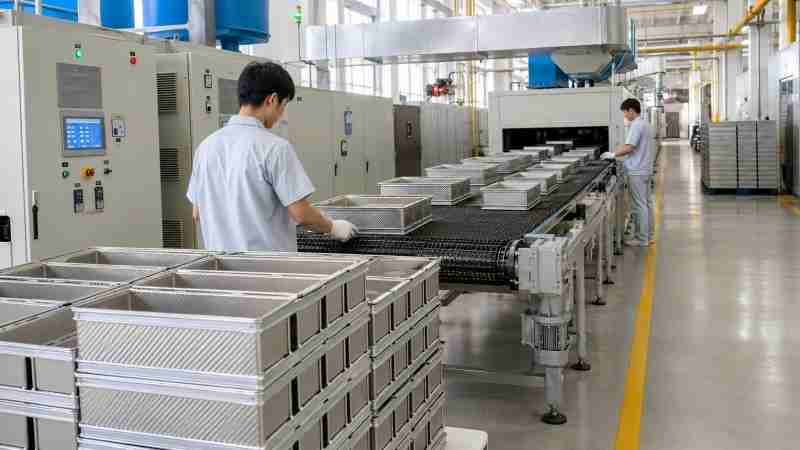
A factory's daily rhythm tells you everything. When you walk through a facility, look for order and cleanliness. Is there a clear flow from raw materials to finished products? Are quality checks happening at each stage? This is what a comprehensive management system like ISO9001 ensures. It’s not just a certificate on the wall; it’s a promise of consistency. But I believe you have to look deeper, at the people. A company's attitude towards its employees is directly reflected in the quality of its products. Happy, respected workers have pride in their work. They are more likely to notice a small defect or suggest a process improvement. When I give tours, I make sure visitors see our clean, well-lit workshops and the safety measures we have in place. I recall Sarah, a buyer from Australia, being very impressed by this. She said that seeing our team's focus and positive environment gave her more confidence than any sales pitch. She knew our pans would be made with care.
| Aspect | Good Management | Poor Management |
|---|---|---|
| Product Quality | Consistent and High | Inconsistent and Low |
| Defect Rate | Minimized | High and Unpredictable |
| Employee Morale | High, Motivated Team | Low, High Turnover |
| Certifications | ISO9001, CQC, etc. | None |
Can a Manufacturer's Past Partners Tell You if They're Trustworthy?
It's hard to trust a new supplier's promises. You might be their first major client, and that feels like a big risk. The safest bet is to see who else trusts them.
Absolutely. A manufacturer's client list is one of the strongest testaments to their reliability. If they supply well-known food brands or demanding industrial clients, it's clear proof they consistently meet high standards for quality, service, and durability.
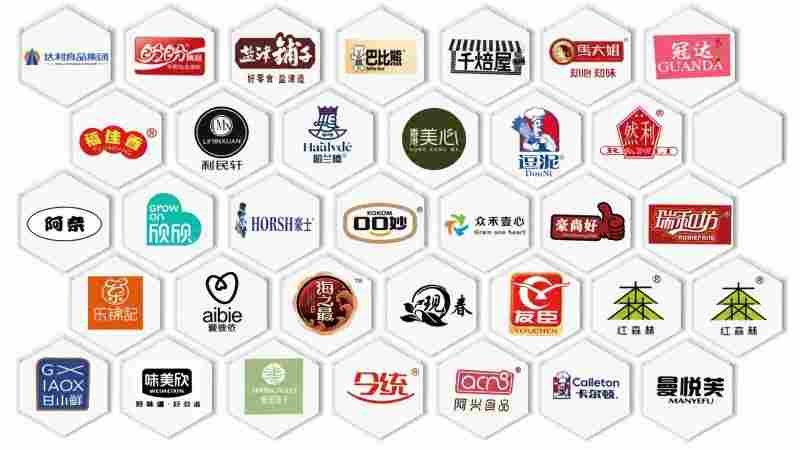
The choices of your peers are often the right ones. When you see that a manufacturer is already a long-term strategic partner for well-known food brands, it removes a lot of doubt. These large companies have strict procurement processes. They have already done the difficult work of vetting the supplier for you.10 Their continued partnership means the manufacturer delivers on time, meets quality specifications, and provides excellent service.11 I've had many clients visit from the United States, Australia, and Africa. They are always amazed by our factory's automation and scale. But the moment of truth often comes when they see pans being made for a brand they recognize and respect. It makes their decision to trust us an easy one. A manufacturer who can satisfy the diverse and demanding needs of different clients—from an industrial plant manager in Germany needing precision to a luxury hotel chef in Dubai needing heavy-duty custom pans—is a manufacturer you can count on.
| Client Type | What Their Partnership Implies |
|---|---|
| Industrial Bakery | Precision, Durability, High Volume |
| National Chain Bakery | Consistency, Logistics, Easy Maintenance |
| Luxury Hotel | Customization, Hygiene Standards, Heavy-Duty Quality |
| Food Science Lab | Technical Expertise, Small-Batch Customization, Material Purity |
Conclusion
To choose a reliable manufacturer, you must visit the factory. Evaluate their size, processes, and past partners. This simple step ensures quality and builds a foundation for a great partnership.
"Q&A: Getting the Most From Supplier Visits", https://www.ismworld.org/supply-management-news-and-reports/news-publications/inside-supply-management-magazine/blog/2018-08/qa-getting-the-most-from-supplier-visits/. Source materials on supplier evaluation and procurement best practices commonly recommend on-site inspections or factory audits as an important element of vendor due diligence for high‑risk or large-volume purchases; these sources frame site visits as one effective component of a multi-step vetting process rather than an exclusive or universally optimal method. Evidence role: expert_consensus; source type: institution. Supports: The best way to choose a reliable commercial bread pan manufacturer is to visit their factory in person.. Scope note: Supports that site visits are widely recommended as part of supplier due diligence but does not prove they are the single "best" method in all contexts. ↩
"Vendor Selection Process: Steps, Criteria & Checklist Guide [2026]", https://www.ivalua.com/blog/vendor-selection-process/. Procurement and supply‑chain guidance documents list facility scale, production controls, workforce conditions, and references/clients among common evaluation criteria for assessing supplier capability and quality; such sources treat these attributes as important indicators but note they are part of a broader assessment framework. Evidence role: definition; source type: education. Supports: Seeing their operations firsthand allows you to assess their scale, production processes, employee environment, and existing partnerships, which are the most critical indicators of trustworthiness and quality.. Scope note: Supports that these attributes are commonly used indicators in supplier assessments, but does not establish they are 'the most critical' in every procurement scenario. ↩
"[PDF] Investigating the Impact of Suppliers Relationship Management on ...", https://aast.edu/pheed/staffadminview/pdf_retreive.php?url=37415_153_7_212.pdf&stafftype=staffpdf. Industry guidance and trade‑procurement literature emphasize that direct observation (field inspection) provides information not always captured in documents or remote checks; however, these sources present field inspection as one important technique rather than an absolute prerequisite for forming any opinion. Evidence role: expert_consensus; source type: research. Supports: A field inspection provides information not captured in documentation and is commonly recommended as part of supplier due diligence.. Scope note: Supports the value of field inspections for richer information but does not validate the absolute statement that no 'real opinion' can exist without one. ↩
"The Importance of Reliability and Maintainability in Manufacturing", https://rmc.utk.edu/the-importance-of-reliability-and-maintainability-in-manufacturing/. Analyses of manufacturing capacity and firm size indicate that larger facilities typically have greater production capacity and resource redundancy, which can contribute to supply stability; however, researchers caution that size alone does not guarantee performance or reliability. Evidence role: mechanism; source type: paper. Supports: Larger manufacturing facilities tend to have greater capacity and resource redundancy, which can contribute to supply stability.. Scope note: Supports a link between larger scale and potential for greater stability, but size alone is not a definitive guarantee of reliability. ↩
"[PDF] Exploring Strategies in Manufacturing to Reduce Loss of Workers ...", https://scholarworks.waldenu.edu/cgi/viewcontent.cgi?article=19680&context=dissertations. Manufacturing research and industry reports indicate that production capacity, automation, and dedicated workforce capabilities are associated with higher throughput and more consistent output, but these relationships depend on process control and management systems and do not ensure perfect quality or delivery. Evidence role: mechanism; source type: research. Supports: Production capacity, automation, and workforce scale are associated with improved throughput and consistency in manufacturing, conditional on management and quality systems.. Scope note: Supports an association between capacity/equipment/workforce and the ability to meet large orders, but local management and quality systems are also critical factors. ↩
"Bottlenecks in Manufacturing: How to Identify and Eliminate - NetSuite", https://www.netsuite.com/portal/resource/articles/inventory-management/manufacturing-bottlenecks.shtml. Operations management literature explains that adequate floor space and properly organized material flow can reduce production bottlenecks by enabling parallel processing, storage buffers, and smoother logistics, though layout design and process balancing are decisive. Evidence role: mechanism; source type: education. Supports: Sufficient floor space and organized material flow can reduce production bottlenecks when combined with appropriate process design.. Scope note: Supports that sufficient space and good layout help reduce bottlenecks, but space alone is insufficient without proper process design and scheduling. ↩
"Benefits of Lean Automation in Manufacturing - Purdue MEP", https://mep.purdue.edu/news-folder/benefits-of-lean-automation-in-manufacturing/. Comparative studies and industrial case reports show that automated equipment (e.g., CNC, laser cutting, robotic welding) typically enable higher throughput and tighter tolerances than manual processes, making scaled automated production more suitable for high‑volume, high‑precision manufacturing; however, small workshops may still excel at low-volume customization and rapid prototyping. Evidence role: case_reference; source type: paper. Supports: Automation technologies generally provide higher throughput and precision than manual workshops, making them better suited for large-volume precision manufacturing, though small shops retain advantages for customization and small batches.. Scope note: Supports that automation often outperforms manual workshops for volume and precision, but does not imply small workshops are incapable of meeting all quality needs, especially for bespoke or low-volume work. ↩
"[PDF] How the ISO 9001 Standard for Quality Management Systems ...", https://www.hbs.edu/ris/download.aspx?name=09-018.pdf. ISO 9001 and related quality‑management standards are designed to help organizations establish processes that improve consistency and customer satisfaction; empirical studies often find associations between ISO 9001 adoption and improved quality metrics, but certification is not an absolute guarantee of product quality in every case. Evidence role: definition; source type: encyclopedia. Supports: ISO 9001 aims to standardize quality-management processes to improve consistency, and studies often report positive associations with quality performance, though certification alone is not a guarantee.. Scope note: Supports ISO9001's intent to improve consistency and evidence of positive association, but clarifies that certification does not guarantee flawless quality outcomes. ↩
"The Impacts of the High-Quality Workplace Relationships on Job ...", https://pmc.ncbi.nlm.nih.gov/articles/PMC6316783/. Organizational psychology and management research has found links between employee well-being, job satisfaction, and performance outcomes, including error reduction and quality improvements in production settings; however, effect sizes vary and other factors (training, process control) also influence product quality. Evidence role: mechanism; source type: paper. Supports: Empirical research links employee well-being and job satisfaction to improved performance and fewer errors in production contexts, which can contribute to higher product quality.. Scope note: Supports a relationship between worker treatment and quality outcomes, but the effect is one of several contributors to final product quality. ↩
"Procurement Policy Drafting 101: Guidance for LSC Grantees", https://www.lsc.gov/i-am-grantee/grantee-guidance/procurement-policy-drafting-101-guidance-lsc-grantees. Corporate procurement policies and standards for large enterprises commonly include formal supplier qualification, risk assessments, and performance monitoring steps intended to vet suppliers; such processes reduce some supplier risks but may not be fully transparent or transferable as proof for a different buyer's specific requirements. Evidence role: general_support; source type: institution. Supports: Large enterprises typically employ formal supplier qualification and vetting processes intended to assess vendor capability and risk, though their conclusions may not fully substitute for another buyer's own evaluation.. Scope note: Supports that large firms typically have formal vetting processes, but notes their assessments may not guarantee suitability for another buyer's distinct needs. ↩
"The Impact of Supplier Reliability Tracking on Customer Demand", https://www.academia.edu/7253778/The_Impact_of_Supplier_Reliability_Tracking_on_Customer_Demand_Model_and_Estimation_Methodology. Research on supplier performance metrics often uses repeat business or long-term partnerships as a signal of satisfactory past performance (e.g., on‑time delivery and quality), but continued partnership can also be influenced by non-performance factors such as switching costs, contractual lock‑in, or strategic alignment. Evidence role: statistic; source type: paper. Supports: Repeat or long-term partnerships are commonly treated as an indicator of past supplier performance (delivery and quality), with the caveat that non-performance factors can also sustain partnerships.. Scope note: Supports that repeat business is commonly used as an indicator of supplier reliability, but warns that it is not definitive proof of current or future performance. ↩