Choosing the wrong baking trolley can damage your products and workflow. It is a costly mistake. So, understanding the key differences helps you make the right long-term investment.
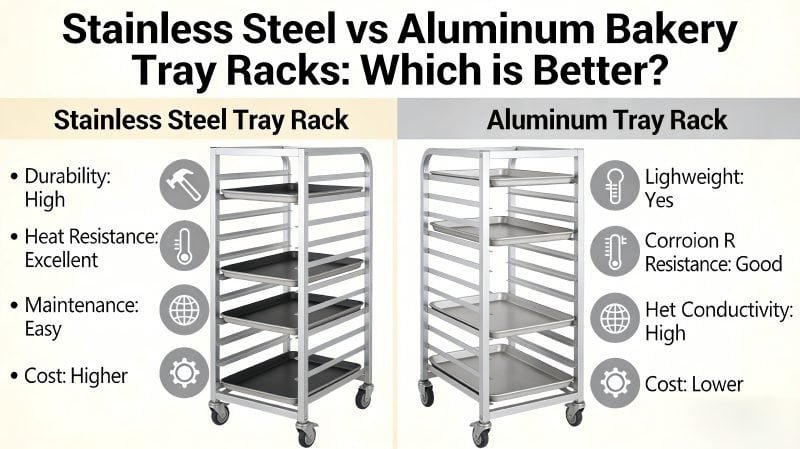
For moving dough outside the oven, lightweight aluminum1 is a great choice. But if your trolley needs to go into the oven, the heat resistance2 and durability3 of stainless steel4, like SS2015 or SS3046, is essential to prevent warping and damage.
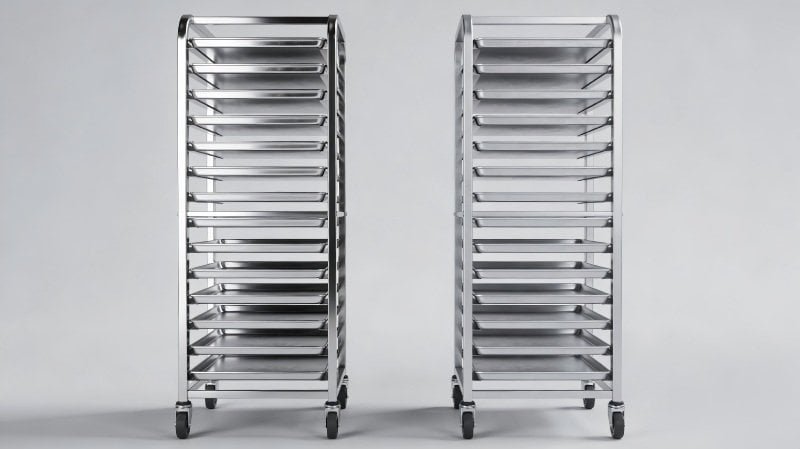
The choice between these materials is not just about price. The most important factor is how you plan to use the trolley in your daily operations. A trolley is a core part of your production line7, so getting this decision right is very important. Let's break down exactly when you should choose one material over the other, so you can find the perfect fit for your bakery.
When is an aluminum trolley the smart choice?
Your staff struggles with heavy equipment, which slows down your entire bakery. This fatigue leads to mistakes and inefficiency. A lightweight aluminum1 trolley makes moving racks of dough effortless and safe.
Choose an aluminum trolley when your main task is moving and storing unbaked goods at room temperature or in a proofing room8. Its lightweight nature makes it easy to maneuver, reducing staff fatigue and improving workflow efficiency in a busy bakery environment.
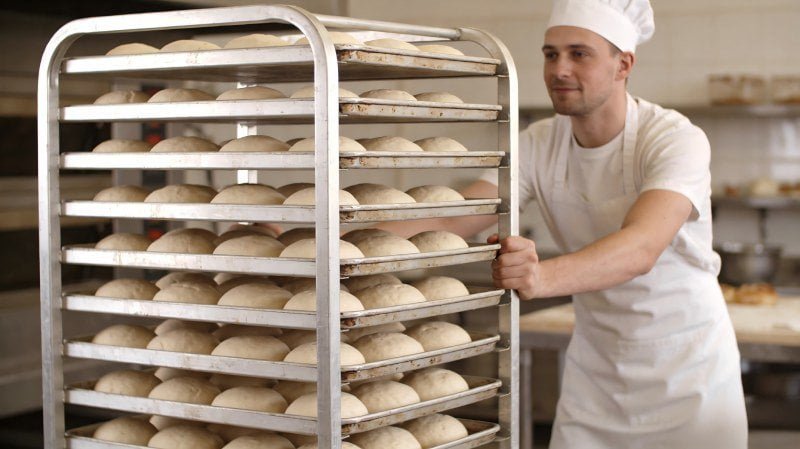
Aluminum is the best material when your priority is mobility9 and ease of use. I remember visiting a large bread factory where they had to move hundreds of racks from the mixing area to the proofers every hour. The speed of their operation depended entirely on how quickly staff could move these trolleys. This is where aluminum shines.
The Advantage of Being Lightweight
The primary benefit of aluminum is its low weight. An aluminum trolley is much easier to push and pull than a stainless steel4 one. This reduces physical strain on your employees, which can lead to fewer injuries and higher morale. In a fast-paced environment, this means quicker turnaround times. Staff can move full racks of unbaked bread or delicate pastries without a struggle. This simple fact can have a big impact on your overall productivity.
Cost and Application
Aluminum is also generally less expensive than stainless steel4. If your trolleys will never see the inside of an oven, you can save money by choosing aluminum. They are perfect for transport and temporary storage.
| Task | Aluminum Trolley Suitability | Why? |
|---|---|---|
| Transporting dough from mixer to proofer | Excellent | Lightweight, easy to push. |
| Storing proofed loaves before baking | Good | Saves space, easy to organize. |
| Rolling the trolley directly into the oven | Not Recommended | Prone to warping and oxidation10 at high heat. |
| Use in a cold room or freezer | Good | Resists cold well and remains easy to move. |
Why is stainless steel the go-to for in-oven use?
You have probably seen trolleys that buckle and turn black after just a few trips into a hot oven. This means costly replacements and inconsistent baking, a nightmare for production. Stainless steel trolleys are built to handle extreme heat without failing.
Stainless steel is the best choice for in-oven use because of its high heat resistance2 and structural strength. It will not warp, buckle, or oxidize at high baking temperatures11, ensuring your products bake evenly and your equipment lasts for years.
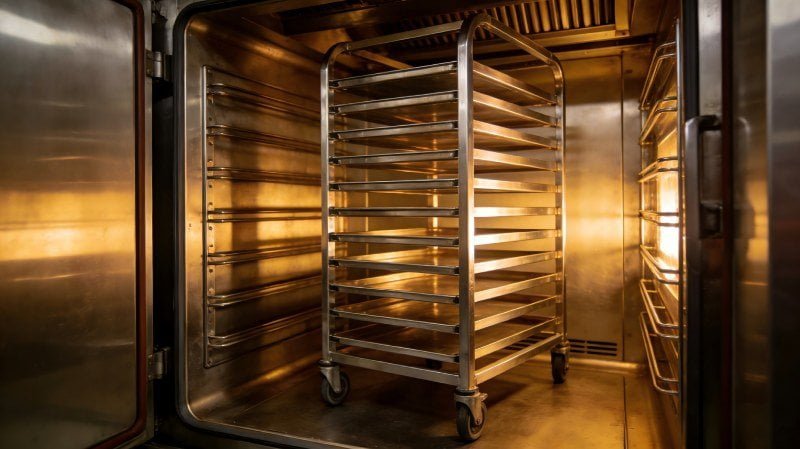
I learned this lesson the hard way early in my career. We tried to save some money by using a general-purpose trolley for an in-oven application. After a few weeks, the frame started to bend, and the trays no longer sat level. The bread on one side was burning while the other was undercooked. It was a disaster. Switching to a stainless steel4 trolley solved the problem immediately. The investment pays for itself by preventing product loss and equipment failure.
Unmatched Heat Resistance
The main reason to choose stainless steel4 is its ability to withstand high temperatures. Aluminum begins to soften and can warp at typical baking temperatures11. Stainless steel, on the other hand, maintains its shape and strength. This means your trolley will roll in and out of the oven smoothly every time, and your baking trays12 will remain perfectly flat for consistent results. It will not oxidize or turn black, keeping your bakery clean and professional.
Durability and Hygiene
Stainless steel is also incredibly durable and resistant to corrosion. It can handle the daily bumps and scrapes of a commercial kitchen. Its non-porous surface is also very hygienic. It does not harbor bacteria and is easy to clean, which is critical for meeting food safety standards13 like HACCP. This resistance to rust and acids from cleaning agents or certain doughs means it will last much longer.
SS201 vs SS304 - Is the extra cost worth it?
You know you need stainless steel4, but the different grades are confusing. Choosing the wrong one could mean you overspend, or you buy a trolley that fails too soon. Understanding the simple difference between SS2015 and SS3046 helps you make the right choice.
SS2015 is a cost-effective stainless steel4 suitable for most general baking applications, including in-oven use. SS3046 offers superior corrosion and rust resistance, making it the better choice for very humid environments or when using strong acid-based cleaners.
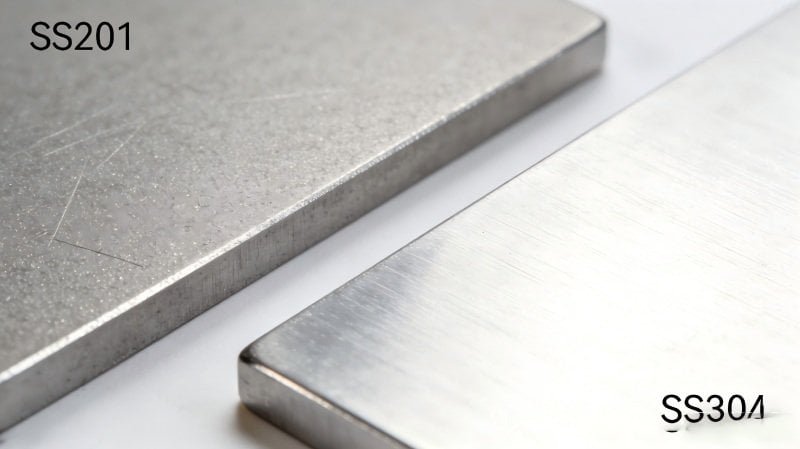
The choice between SS2015 and SS3046 really comes down to your specific environment and budget. For most bakeries, SS2015 is a fantastic, reliable workhorse. It provides all the heat resistance2 you need for in-oven applications at a more accessible price point. We have many clients, from industrial plants to local bakeries, who have used our SS2015 trolleys for years without any issues. However, for some clients, SS3046 is non-negotiable.
The Reliable Standard: Stainless Steel 201
SS2015 is a great all-around stainless steel4. It contains manganese and less nickel, which makes it more affordable. It offers good corrosion resistance14 and is more than strong enough for a standard bakery environment. If your bakery is in a dry climate and you use standard cleaning procedures, an SS2015 trolley will serve you well for a very long time.
The Premium Choice: Stainless Steel 304
SS3046 contains more chromium and nickel, which gives it superior resistance to rust and corrosion. This is the "food-grade" standard you often hear about. You should invest in SS3046 if your facility is in a humid coastal area, if you frequently wash equipment with harsh or acidic chemicals, or if you must meet the absolute strictest hygiene standards, like in a luxury hotel or for medical-grade production. The extra cost provides peace of mind and an even longer lifespan.
| Feature | Stainless Steel 201 | Stainless Steel 304 |
|---|---|---|
| Cost | More Affordable | More Expensive |
| Corrosion Resistance | Good | Excellent |
| Best For | General use, dry environments, budget-conscious buyers | High humidity, acidic foods, strict hygiene needs |
| In-Oven Use | Yes, handles heat well | Yes, with better long-term corrosion resistance14 |
Conclusion
For light transport, choose aluminum. For oven use, stainless steel4 is a must. SS2015 is a great start, while SS3046 is the ultimate long-term investment for durability3.
Explore how lightweight aluminum can enhance mobility and efficiency in your bakery operations. ↩
Understand the importance of heat resistance in maintaining product quality during baking. ↩
Explore how durability impacts the longevity and performance of baking trolleys. ↩
Learn why stainless steel is essential for durability and heat resistance in baking applications. ↩
Discover the benefits of SS201 for general baking applications and its cost-effectiveness. ↩
Find out why SS304 is the premium choice for high-humidity and strict hygiene environments. ↩
Explore the significance of a well-structured production line in enhancing bakery operations. ↩
Learn about the importance of proofing rooms in the baking process and equipment needs. ↩
Understand how mobility can enhance efficiency and reduce staff fatigue in bakeries. ↩
Discover how oxidation can impact trolley performance and product quality. ↩
Get insights into baking temperatures and how they affect trolley material selection. ↩
Find out which materials are best for baking trays to ensure even baking and durability. ↩
Explore essential food safety standards that impact equipment choices in bakeries. ↩
Learn about corrosion resistance and its significance in food safety and equipment longevity. ↩