Struggling to find the perfect baking tray1 for your unique needs? It can be frustrating when standard sizes just don't work. You need a custom solution that fits your process perfectly.
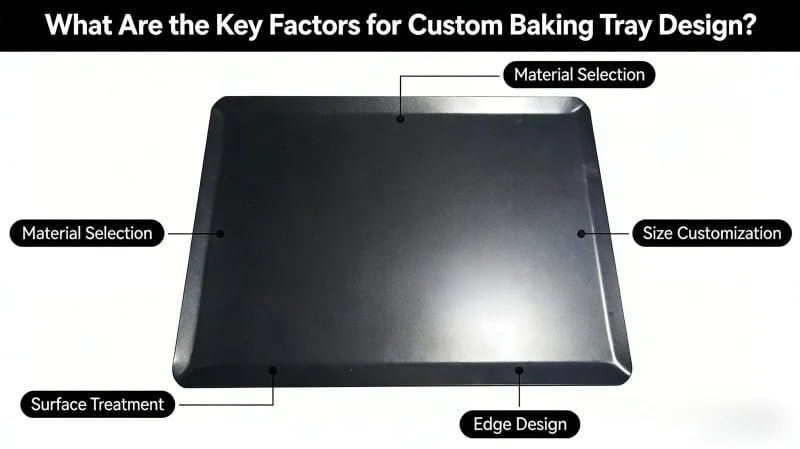
The key factors for custom baking tray design2s://kkbake.com/aluminum-vs-stainless-steel-baking-trays-which-wins-for-your-bakery/)1 design are providing clear specifications3, maintaining open communication4, and approving a physical sample5 before mass production. Success depends on a shared understanding of material6, dimensions7, coating8, and intended use9 between you and the manufacturer to avoid costly errors.
Getting a custom product made can seem complicated. You might worry about mistakes, delays, or the final product not meeting your expectations. We understand these concerns completely. That's why we've refined our process to be as clear and collaborative as possible. We want to walk you through how we turn your idea into the exact baking tray1 you need. This guide will show you the simple steps we take together to ensure the project is a success from the very first conversation to the final delivery. Let's get started on creating the perfect solution for your bakery.
How Do We Start the Custom Design Process?
Need a unique baking tray1 but don't know where to begin? The design phase10 can feel like a major hurdle. You want to get it right the first time.
The best way to start is by providing as much information as possible. Detailed drawings are ideal, but don't worry if you don't have them. Your product information, operational needs, and even your company website can give our experienced design team the details they need to start.
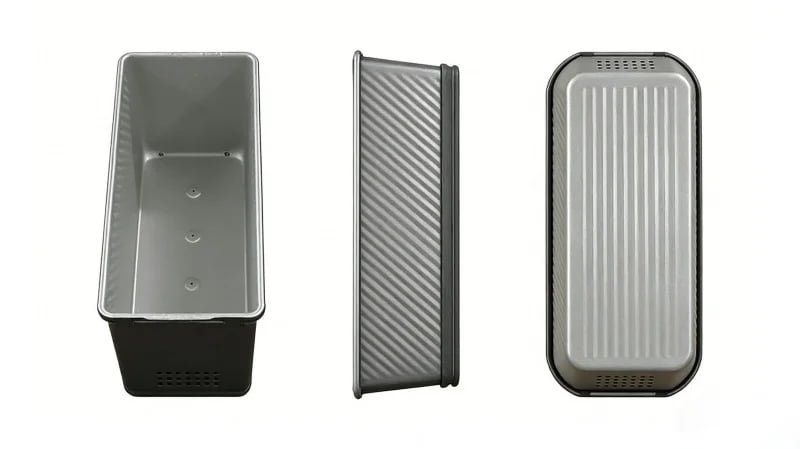
The first step in any custom project is gathering information. This is where we build the foundation for your baking tray1s. The more we know upfront, the smoother the entire process will be. We have two main paths we can take, and both are designed to be simple and effective. It all depends on what you already have. We can work with detailed technical drawings11, or we can create a design from scratch based on your specific requirements. Our goal is to make this initial stage easy for you, so we can move forward with confidence. We have a team of over 40 people in design and mold-making, so we have the experience to handle any request.
Path 1: You Provide the Drawings
If you have a technical drawing, that is a fantastic starting point. It gives us precise details and speeds up the process. We can quickly review your specifications and provide a quote and timeline.
Path 2: We Design for You
If you don't have drawings, that is perfectly fine. This is very common. We just need to understand your business and your needs. We will ask you questions to get the necessary information.
| Information We Need (If We Design) | Why It's Important |
|---|---|
| Your Company Website/Products | Helps us understand your brand and the types of goods you bake. |
| Oven & Rack Dimensions | Ensures the final trays fit perfectly into your equipment. |
| Product Being Baked | Determines the best material6, thickness, and coating8. |
| Desired Tray Lifespan | Guides our material6 and construction recommendations. |
| Automated or Manual Use | Affects design choices for durability and handling. |
Why is Clear Communication So Important for Customization?
Worried that a small misunderstanding could lead to a big mistake? When creating a custom product, miscommunication can cause serious delays and waste money, creating a lot of stress.
Clear, consistent communication with an experienced contact person is critical. This ensures all technical details are understood correctly by both our design team and you, preventing costly errors in mold and material6 preparation before production even begins. This is the most important part of the process.
I want to be honest about why this is so important to us. We learned a very expensive lesson not long ago. Good communication isn't just a nice idea; it's essential for success. It saves time, it saves money, and it makes sure you get exactly what you asked for. When we talk about your project, we need to be on the same page about every single detail. This is especially true when we are working with clients from different countries and cultures. A small detail that seems obvious to one person might be completely new to another. That’s why we always try to confirm everything.
A Costly Lesson in Communication
We recently worked with a client from the United States. The project was complex, and there was a lot of back-and-forth communication. Unfortunately, a key detail was misunderstood. On our side, we were eager to get started and show how quickly we could deliver. We went ahead and ordered the custom molds and material6s before we had the final sample approval. This was our mistake. We were trying to be proactive, but we moved too fast. The misunderstanding was discovered too late. The molds and material6s, which cost us nearly $50,000, were essentially useless.
This was a painful experience, but it taught us a valuable lesson.
- Confirm Everything: We now have a stricter policy. We do not order any custom material6s or begin mold production until a physical sample5 is formally approved by the client.
- Experienced Contacts: The project is much smoother when we can speak with an experienced manager or engineer on the client's side. They understand the technical language and can make decisions quickly. It helps avoid confusion and makes the process much more efficient for everyone.
What Happens During the Sampling and Approval Stage?
You've finalized the design, so what's next? Waiting for a sample can be nerve-wracking. You need to know if the final product will truly meet your standards.
Once the design drawings are confirmed, we create a physical sample5. We will send this sample to you via international courier, which typically takes 10-20 days. You can then test it in your own facility before placing a final bulk order.
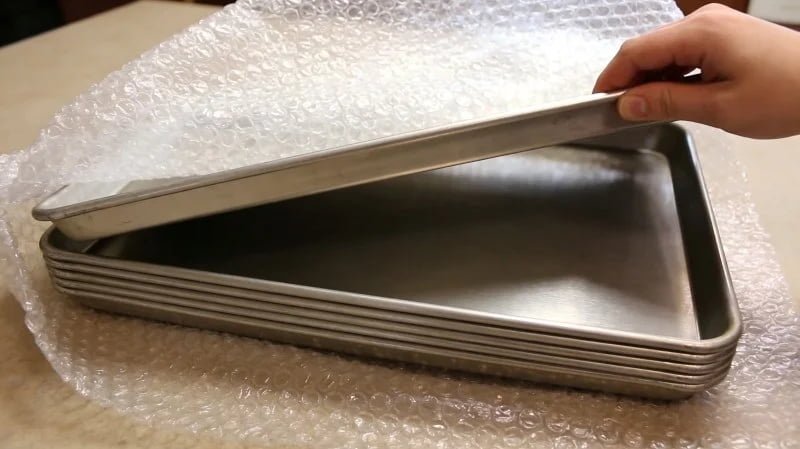
The sample is the most exciting part of the process. It’s when your idea becomes a real, physical product that you can hold and test. This stage is our final quality check to ensure we got everything right. We believe it is absolutely necessary for you to test the sample in your own work environment. Using it with your ovens, your racks, and your products is the only way to be 100% sure that it is the perfect fit for your operations. We want you to be completely confident in the product before we move to full-scale production. Your approval at this stage is the green light for us to proceed with your full order.
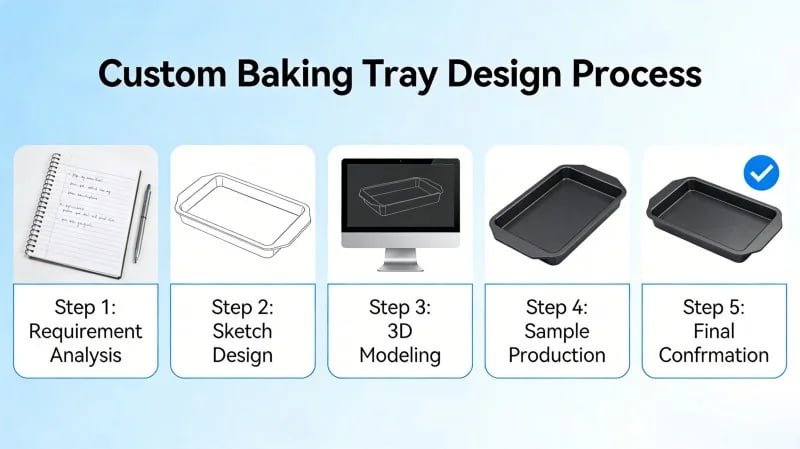
The Sample to Production Timeline
The process is straightforward and designed to give you complete control. We don't move forward until you are completely satisfied. This step-by-step approach protects both of us and guarantees a successful outcome12.
| Stage | Description | Typical Duration |
|---|---|---|
| 1. Design Finalized | You give final approval13 on the technical drawings11 and specifications we created together. | 1-3 Days |
| 2. Sample Production | Our factory manufactures one or more sample trays based on the approved drawings. | 7-14 Days |
| 3. International Shipping | We send the finished sample to your address using a reliable international courier like DHL or FedEx. | 3-7 Days |
| 4. Client Testing | You receive the sample and test it thoroughly in your facility to ensure it meets all your needs. | As needed |
| 5. Final Approval | You give us the final confirmation. At this point, you can confidently place your bulk production order14. | - |
Conclusion
In short, successful custom baking tray design2s://kkbake.com/aluminum-vs-stainless-steel-baking-trays-which-wins-for-your-bakery/)%%%FOOTNOTE_REF1%%% design relies on clear communication, detailed information, and your [final approval](https://en.wikipedia.org/wiki/Validation(drug_manufacture))13 of a physical sample5. This ensures you get the perfect trays for your needs.
Explore various baking tray options to find the best fit for your baking needs. ↩
Explore this resource to understand the essential steps and considerations for designing custom baking trays. ↩
Learn how clear specifications can prevent costly errors and ensure your product meets expectations. ↩
Discover the significance of open communication in avoiding misunderstandings during the design process. ↩
Find out why testing a physical sample is crucial before mass production to ensure quality. ↩
Learn about the best materials for baking trays to enhance durability and performance. ↩
Understand how to measure and specify dimensions for optimal baking tray design. ↩
Discover the different coatings available for baking trays and their benefits. ↩
Explore how the intended use of a baking tray influences its design and material choices. ↩
Learn about the critical steps in the design phase to ensure a smooth custom manufacturing process. ↩
Get insights on creating technical drawings that facilitate smoother custom manufacturing. ↩
Explore the key factors that lead to successful custom manufacturing projects. ↩
Understand the steps involved in securing final approval before production begins. ↩
Get tips on what to evaluate before committing to a bulk order for custom products. ↩