Tired of bread sticking to your pans, causing waste and cleaning headaches? Your choice of non-stick coating might be the problem, costing you time and money with every batch.
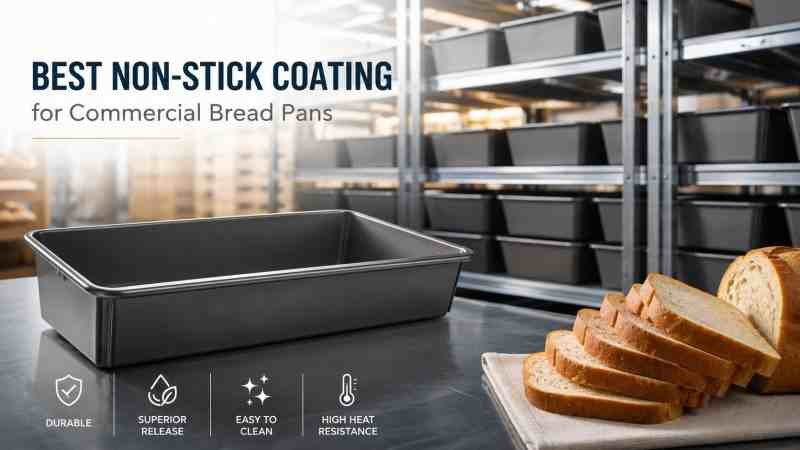
The best non-stick coating depends on your product's sugar content. For low-sugar items like standard bread, a PTFE (Teflon) coating works perfectly. For high-sugar products like cakes and sweet doughs, a silicone-based coating is essential for a clean release every time.1
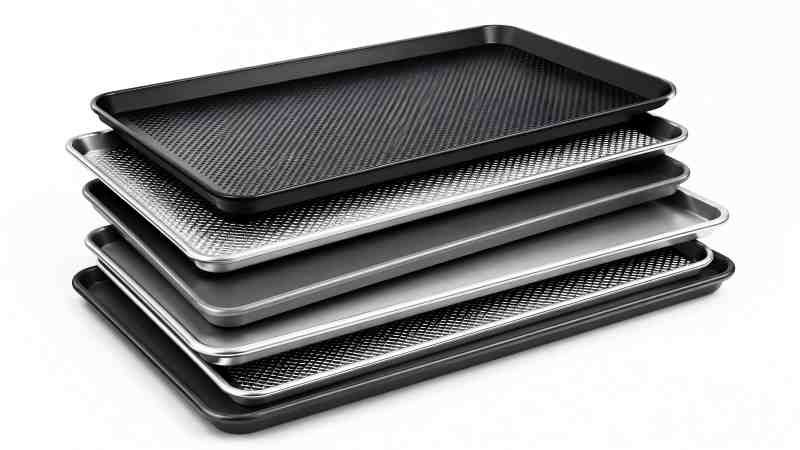
There are many technical details when it comes to coatings. You can find dozens of options and custom blends. But in my years of experience, I've learned that focusing on one key factor simplifies everything and gives the best results. Let's look at what really matters so you can make the right choice quickly and get back to baking.
Why Does Sugar Content Matter So Much for Coatings?
Are you choosing pans based on price or color? You might be ignoring the one thing that guarantees a perfect bake: the interaction between sugar and your pan's coating.
High sugar content causes caramelization during baking, creating a sticky, glue-like substance.2 Silicone coatings are specifically designed to release these sugary products more effectively than standard PTFE (Teflon) coatings, preventing sticking and product damage.3
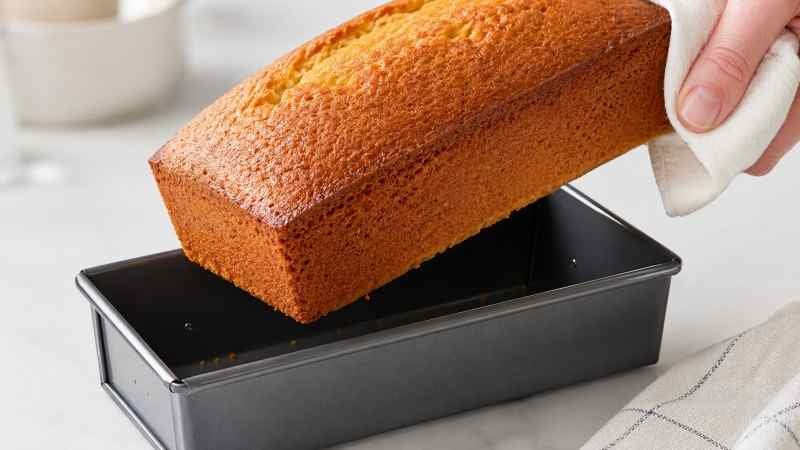
Let's dive a little deeper into this. When you bake, the heat causes sugar to break down and reform. This process is called caramelization.4 It creates the delicious brown crust and sweet flavor we love, but it also creates a very sticky surface.
How Different Coatings Handle Sugar
A standard PTFE (Teflon) coating is great for lean doughs with little to no sugar. It provides a very slippery surface that bread dough doesn't stick to.5 However, it's not as effective against the chemical bonds formed by hot, melted sugar.6 A silicone coating, on the other hand, has a different molecular structure. It's better at resisting the "glue" that caramelized sugar creates.7 This is why it’s the top choice for cakes, pastries, and sweet breads.
| Coating Type | Best For | Why It Works |
|---|---|---|
| PTFE (Teflon) | Low-Sugar Bread, Baguettes | Provides a slick surface for lean doughs. |
| Silicone | High-Sugar Cakes, Sweet Breads | Chemically resists sticky, caramelized sugar. |
Choosing the wrong one means you are fighting a chemical reaction, not just a sticky dough.
Can a Simple Mistake in Coating Choice Really Ruin a Bake?
Thinking a small coating mistake is no big deal? This simple error can cost you a client, ruin an entire batch of product, and damage your reputation for quality.8
Yes, it absolutely can. I saw this happen just last month. Using the wrong coating, like Teflon for a high-sugar cake, leads to total product adhesion, difficult depanning, and damaged goods that you cannot sell.
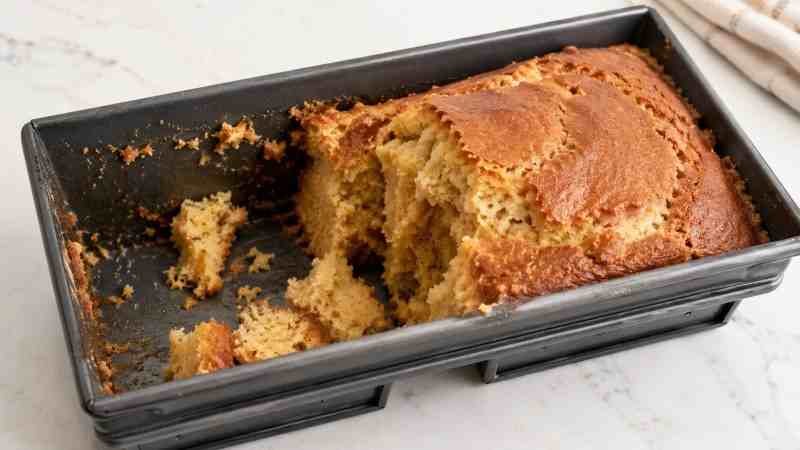
I want to share a recent story that proves this point. A new client asked us to make samples of a square cake pan. They tested the first batch and immediately told me the release was terrible. I was confused because this is a very rare complaint for us. I know my products and I trust my factory's quality.
I asked the client about their recipe, and I knew right away that their high-sugar cake needed a silicone coating. I went back and checked our factory's production records for the sample order. Sure enough, there was the problem. A simple mistake was made. The pans were coated with our standard PTFE Teflon instead of silicone.
I explained the situation to the client and immediately made a new set of samples with the correct silicone coating. I shipped them for free via DHL to make up for the lost time. The client tested them, and the feedback was perfect. The cakes slid right out. Now, we are finalizing the details for their first bulk order. This experience was a powerful reminder: my years of experience are valid, and sometimes the simplest rule is the most important one.
Is It Worth Customizing Coatings Beyond Standard Teflon or Silicone?
Are you spending too much time researching custom coatings? You might be wasting time and money on small improvements that you don't actually need for your industrial bakery.
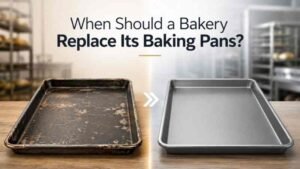
For most commercial bakeries, the answer is no. Sticking with high-quality standard Teflon for bread and Silicone for cakes is the most efficient and cost-effective choice.9 Baking pans are consumables in a busy bakery.10
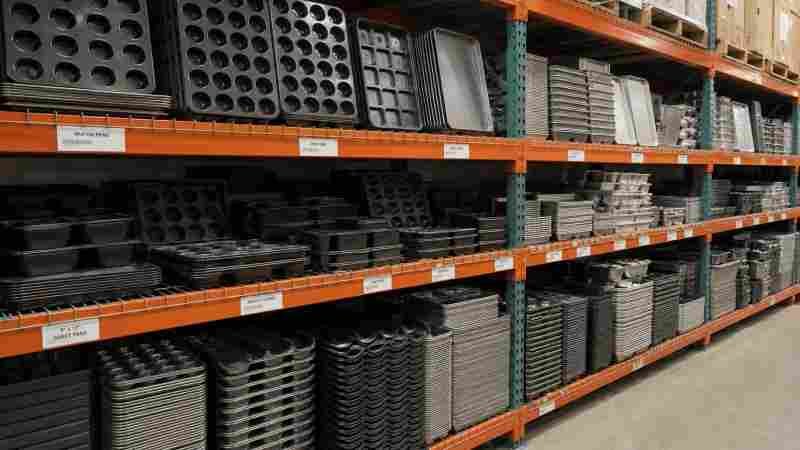
In a high-volume baking environment, pans are workhorses. They get used, abused, and eventually replaced. The goal is to maximize efficiency and keep production moving. Chasing a custom coating that promises a slightly longer life or a marginally better release often isn't practical. This is a classic case of diminishing returns.
The Cost vs. Benefit Analysis
Let's say a custom coating costs 20% more but only extends the pan's life by 5-10%. For a large bakery buying hundreds or thousands of pans, that extra cost adds up quickly. It's often smarter to buy the proven, standard option and replace them as needed. This keeps your cash flow flexible and your operations simple.
| Factor | Standard Coating (PTFE/Silicone) | Custom Blend Coating |
|---|---|---|
| Upfront Cost | Lower | Higher |
| Performance | Excellent for intended use | Marginally better |
| Availability | Readily available, fast replacement | Longer lead times |
| Best For | Most industrial bakeries | Specialized R&D or niche products |
There are exceptions, of course. If you are a food scientist developing a new product with very specific chemical properties, like Dr. Carter in our customer profiles, then a custom solution is necessary. But for the vast majority of bakers, from industrial plants to chain bakeries, the simple rule works: Teflon for bread, Silicone for sugar.
Conclusion
Stick to this simple rule: use PTFE Teflon for low-sugar bread and silicone for high-sugar cakes. This will save you time, money, and ensure perfect, consistent results every time.
"With or without non stick coating? : r/Breadit - Reddit", https://www.reddit.com/r/Breadit/comments/1aren6y/with_or_without_non_stick_coating/. Sources that review common bakeware materials support the general principle that coating selection is matched to product formulation (e.g., low-fat/low-sugar lean breads versus high-sugar cakes), while noting that specific performance depends on coating formulation and baking conditions. Evidence role: general_support; source type: education. Supports: The best non-stick coating depends on your product's sugar content. For low-sugar items like standard bread, a PTFE (Teflon) coating works perfectly. For high-sugar products like cakes and sweet doughs, a silicone-based coating is essential for a clean release every time.. Scope note: Broad industry guidance supports matching coatings to product type but does not universally prove the absolute statements (e.g., 'perfectly' or 'essential every time') for all formulations and processes. ↩
"Caramelization - Wikipedia", https://en.wikipedia.org/wiki/Caramelization. Entries on caramelization explain that heating sugars causes thermal decomposition and browning reactions that produce characteristic flavors and viscous caramelized residues, supporting the claim that caramelization can create sticky residues during baking. Evidence role: definition; source type: encyclopedia. Supports: High sugar content causes caramelization during baking, creating a sticky, glue-like substance.. Scope note: Caramelization is one of several browning reactions (e.g., Maillard reaction) in baking; the extent of 'sticky' residue depends on sugar type, temperature, and time. ↩
"Adhesive-Free Adhesion between Plasma-Treated Glass-Cloth ...", https://pmc.ncbi.nlm.nih.gov/articles/PMC8838903/. Technical notes and materials descriptions indicate that food-grade silicone offers flexibility and release characteristics useful for demolding sweets and pastries; such sources can support that silicone is formulated for release performance, though direct head-to-head comparisons with PTFE for caramelized sugar adhesion vary by formulation. Evidence role: mechanism; source type: research. Supports: Silicone coatings are specifically designed to release these sugary products more effectively than standard PTFE (Teflon) coatings, preventing sticking and product damage.. Scope note: Direct comparative data between specific silicone coatings and PTFE formulations for caramelized sugar adhesion may be limited; performance depends on coating chemistry and process variables. ↩
"Caramelization - Wikipedia", https://en.wikipedia.org/wiki/Caramelization. Authoritative food science references define caramelization as the thermal decomposition and polymerization reactions of sugars during heating, resulting in browning and flavor development. Evidence role: definition; source type: education. Supports: When you bake, the heat causes sugar to break down and reform. This process is called caramelization.. Scope note: Caramelization is one heat-induced transformation of sugars; Maillard reactions also contribute to browning when proteins are present. ↩
"Non-stick surface - Wikipedia", https://en.wikipedia.org/wiki/Non-stick_surface. Material and cookware references describe PTFE's low surface energy and common use in non-stick bakeware, which supports its suitability for many lean dough applications by reducing adhesion. Evidence role: mechanism; source type: encyclopedia. Supports: A standard PTFE (Teflon) coating is great for lean doughs with little to no sugar. It provides a very slippery surface that bread dough doesn't stick to.. Scope note: While PTFE reduces sticking for many lean doughs, specific outcomes depend on coating application, pan surface condition, and dough composition. ↩
"Influence of Sugars and Surface Properties on Wettability ... - PubMed", https://pubmed.ncbi.nlm.nih.gov/40565642/. Materials science and food-processing literature note that certain sticky, viscous residues (for example, caramelized sugars) can adhere to surfaces despite low surface energy coatings; such sources can support the claim that non-stick performance is reduced against some sugar-based residues. Evidence role: mechanism; source type: research. Supports: However, it's not as effective against the chemical bonds formed by hot, melted sugar.. Scope note: Specific comparative evidence quantifying PTFE's reduced effectiveness versus particular sugar residues is limited and depends on the exact sugar composition and baking conditions. ↩
"Mold Release Sprays & Agents, Food-Grade", https://www.slideproducts.com/food-grade-compliant/mold-release-agents-sprays?srsltid=AfmBOoriEufngwLEh7vcGFnGChaCJ2Vty3wgxGE93h0p9TUWJAXEFLES. Technical descriptions of food-grade silicone explain its elastomeric (flexible) nature and thermal stability, which can facilitate demolding and resisting certain sticky residues; these sources support the notion that silicone can improve release from some sugar-rich products, with performance varying by formulation. Evidence role: mechanism; source type: research. Supports: A silicone coating, on the other hand, has a different molecular structure. It's better at resisting the "glue" that caramelized sugar creates.. Scope note: Saying silicone is universally 'better' overstates the case—performance depends on specific coating chemistry and process conditions. ↩
"[PDF] bread and other bakery and confectionery products waste in ...", https://ageconsearch.umn.edu/record/330067/files/GORYNSKA.pdf. Industry and foodservice guidance and case studies document that production defects (including failed release or depanning problems) can generate product waste, customer dissatisfaction, and financial losses, supporting the general business risk described. Evidence role: case_reference; source type: institution. Supports: This simple error can cost you a client, ruin an entire batch of product, and damage your reputation for quality.. Scope note: The magnitude of reputational or financial harm varies by scale and context; the claim is presented as a plausible business risk rather than a quantified inevitability. ↩
"What Pan Coatings Work Best for Industrial Baking Operations?", https://kkbake.com/what-pan-coatings-work-best-for-industrial-baking-operations/. Business and industry guidance on equipment procurement often recommends standard, high-quality materials for high-volume operations because of availability, consistent performance, and lower unit cost, supporting the claim that standard coatings are typically cost-effective for many commercial bakeries. Evidence role: general_support; source type: institution. Supports: For most commercial bakeries, the answer is no. Sticking with high-quality standard Teflon for bread and Silicone for cakes is the most efficient and cost-effective choice.. Scope note: The statement generalizes across 'most' bakeries; specific cost-effectiveness depends on purchase volumes, product mix, and lifecycle costs. ↩
"When Should a Bakery Replace Its Baking Pans? - KK Bakeware", https://kkbake.com/when-should-a-bakery-replace-its-baking-pans/. Operational guidance for commercial bakeries and equipment maintenance notes indicate bakeware undergoes wear and regular replacement over time in high-throughput environments, supporting characterization of pans as consumable items in busy operations. Evidence role: statistic; source type: education. Supports: Baking pans are consumables in a busy bakery.. Scope note: Replacement intervals vary widely by material, use frequency, and maintenance; the term 'consumables' is context-dependent. ↩