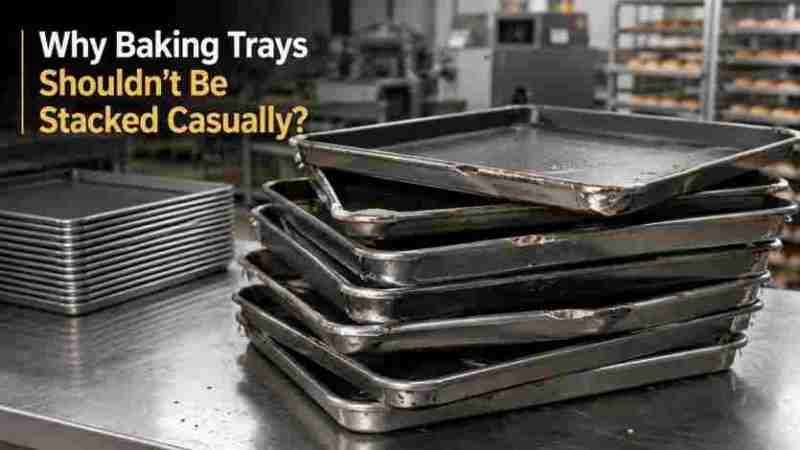
You might think stacking trays is simple, but this common practice could be secretly ruining your bakeware. It wears out coatings and shortens equipment life, costing you money down the line.1
The most important factor for stackable trays is designing them so the outer frame bears all the weight.2 This prevents the functional, coated surfaces from rubbing together, which causes friction, scratches, and premature damage3, especially on complex pans like multi-loaf toast boxes.
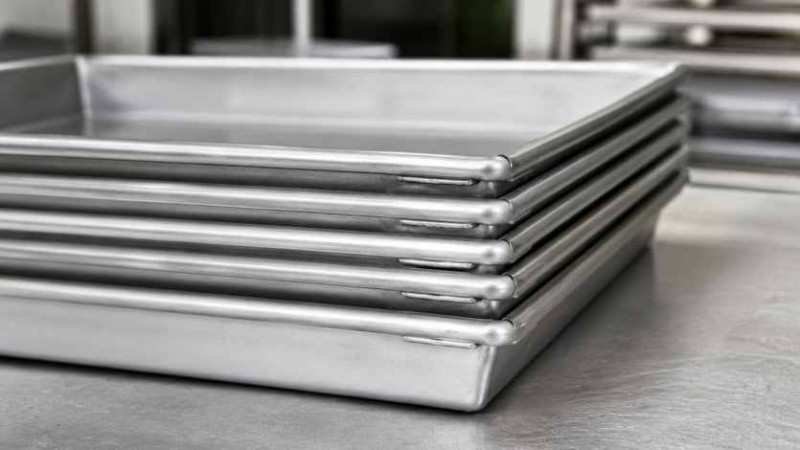
This might seem like a small detail, but it has huge consequences. For industrial bakeries, chain stores, or anyone ordering equipment in bulk, overlooking how trays stack can turn a major investment into a major headache.4 It’s a detail that separates a reliable supplier from one that will cost you money. Getting this right is fundamental to producing durable, long-lasting baking equipment that performs as expected from day one.
Why Does Improper Stacking Damage Baking Trays?
Your team stacks trays to save precious floor space, but you're noticing the non-stick coatings are failing way too fast. You can't figure out why some trays last for years while others give out in months.
Improper stacking damages trays because it concentrates the entire weight onto small, sensitive contact points.5 This high pressure creates friction that scrapes away the non-stick coating, leading to food sticking, inconsistent bakes, and the need for frequent and costly tray replacement.6
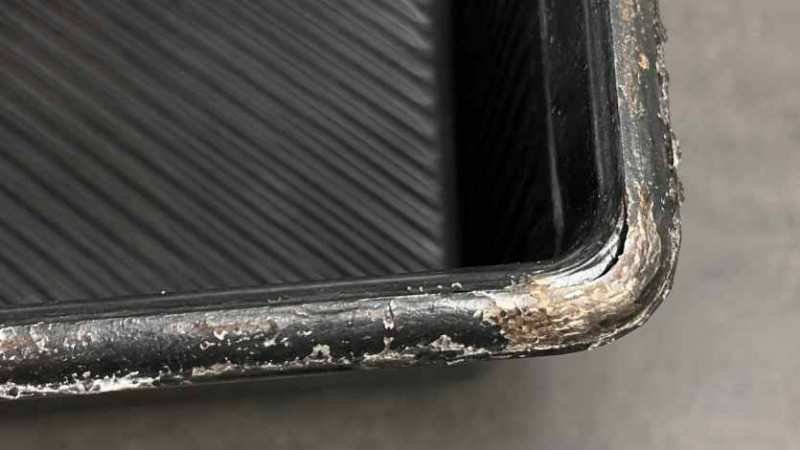
Let's break this down with some simple physics. The key concept is pressure. Pressure is just force spread over an area.7 When you stack trays, the force is the weight of all the trays on top. The area is where the trays touch. If that contact area is large, the pressure is low. If it's small, the pressure is very high. A flat sheet pan is a good example. When you stack them, they touch across their entire surface. This large contact area means the pressure on any single point is tiny, so the coating is safe.8 But with more complex trays, like a multi-loaf toast box, this changes completely. A poorly designed toast box will rest on the rims of the individual molds. All the weight from the trays above is focused on these tiny metal edges. The pressure becomes immense, and the simple act of stacking and unstacking grinds away the coating.
A good design solves this problem by using a strong outer frame. This frame must be slightly taller than the loaf molds inside. When you stack these trays, the frames touch each other, and the molds "float" in between with a protective air gap. The frame takes all the stress, protecting the valuable non-stick coating inside.
| Tray Type | Contact Points When Stacked | Pressure Distribution | Risk to Coating |
|---|---|---|---|
| Flat Sheet Pan | Entire flat surface | Low and even | Very Low |
| Poorly Designed Toast Box | Rims of individual molds | High and concentrated | Very High |
| Well-Designed Toast Box | Sturdy outer frame | Low and on the frame | Minimal |
This is why we focus so much on frame construction during the design phase. The welds have to be strong enough to support a tall, heavy stack without bending or breaking. It's a matter of both durability and safety.
How Can a Stacking Failure Turn into a Lesson in Quality Control?
You've just received a custom sample order that looked perfect. But when your team performs a basic test, like stacking them, they fail completely. Now you're facing an angry client and a damaged reputation.
A stacking failure reveals deep flaws in a company's design, production, and quality control processes. By owning the mistake, redesigning the product for free, and communicating transparently, a supplier can turn a disaster into a powerful demonstration of its commitment to customer success.
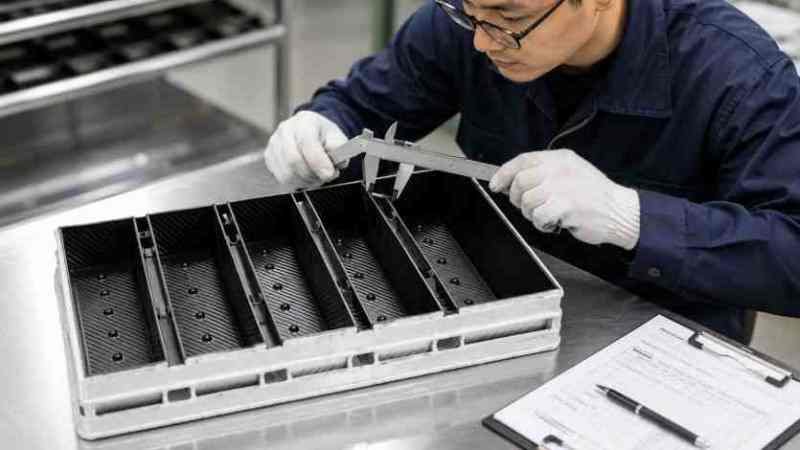
I want to share a story that still makes me angry, but it taught us a valuable lesson. A while ago, a company in Australia ordered 52 custom multi-loaf toast boxes from us for testing. This was a potential new partnership, and we were excited. Then, the feedback came in. I could not believe what I was reading. The client reported that the boxes were visibly uneven when stacked. Worse, the stacking force was resting directly on the toast molds, not the outer frame. The non-stick coating was already showing friction damage before they had even baked a single loaf of bread.
I was furious. This wasn't just one small mistake. It was a complete failure of our process, from the initial design drawing to the final quality check. Someone at every step had missed this critical flaw. My first action was to call the client directly. I didn't make excuses. I told them we had failed, and I sincerely apologized for the trouble we caused. I immediately guaranteed that we would redesign and remake the entire order, to the correct standard, completely free of charge. To make up for the lost time, I promised we would ship the new, correct order by air freight at our own expense.
This incident was a painful and expensive wake-up call. It was an error from a single product team, but it hurt our reputation and our bottom line. But the experience forced us to get better. We immediately implemented a mandatory stacking test for all custom-framed products as a final QC step. This story proves that problems will always happen. What matters is how you deal with them. Hiding from a mistake is what ultimately destroys a business. Facing it, fixing it, and learning from it is how you build trust and a stronger company.
Conclusion
Ultimately, stacking is not a trivial detail; it's a critical design feature. It protects your investment and ensures long-term performance. A supplier's response to failure is the ultimate test of their reliability.
"Influence of heating temperature and time on mechanical ...", https://pmc.ncbi.nlm.nih.gov/articles/PMC11324993/. Industry guidance and materials research document that repeated mechanical abrasion, including contact and rubbing, accelerates degradation of non-stick coatings and reduces service life of bakeware, increasing replacement and lifecycle costs; specific lifetime reduction depends on coating type and use conditions. Evidence role: general_support; source type: research. Supports: wears out coatings and shortens equipment life, costing you money down the line.. Scope note: Does not provide a single universal lifetime reduction; effects vary by coating formulation, substrate, and operating conditions. ↩
"Custom Baking Pans - Commercial Pans, Tins & Trays", https://www.americanpan.com/na/product-category/custom-baking-tins-trays/?srsltid=AfmBOopOS8vVLJ6vTf8M0fdun1vsnezkudiO66HINqNJmnmmVQ67wYhq. Engineering and product-design references recommend load-bearing features such as raised outer frames or dedicated support structures to transfer stacking loads away from functional surfaces in multi-component trays. Evidence role: mechanism; source type: education. Supports: The most important factor for stackable trays is designing them so the outer frame bears all the weight.. Scope note: Design recommendations vary by product and industry; sources typically describe the principle but may not prescribe exact dimensions. ↩
"What Maintenance Professionals Should Know About ...", https://professional.mit.edu/news/articles/what-maintenance-professionals-should-know-about-tribology. Tribology literature and coating manufacturer data note that repeated rubbing between coated surfaces produces frictional wear and scratching, which can remove polymeric or surface coatings and impair function. Evidence role: mechanism; source type: paper. Supports: rubbing together, which causes friction, scratches, and premature damage. Scope note: General tribology principles apply; specific abrasion rates depend on contact pressure, relative motion, and materials involved. ↩
"Understanding Total Cost of Ownership in Food Equipment", https://www.velecsystems.com/en/understanding-total-cost-of-ownership-tco-in-food-processing-equipment/. Procurement and asset-management guidance for commercial kitchens and industrial bakeries identify design details (including storage/stacking) as contributors to premature equipment failure and increased total cost of ownership when overlooked. Evidence role: general_support; source type: government. Supports: overlooking how trays stack can turn a major investment into a major headache.. Scope note: Guidance is typically sector-level and may not quantify losses for every product type. ↩
"Stress concentration in periodically rough Hertzian contact", https://pmc.ncbi.nlm.nih.gov/articles/PMC5046983/. Basic contact mechanics literature explains that concentrating normal force onto smaller contact areas increases contact pressure and contact stress, which raises the risk of surface damage at those points. Evidence role: mechanism; source type: encyclopedia. Supports: Improper stacking damages trays because it concentrates the entire weight onto small, sensitive contact points.. Scope note: Theory explains the mechanism but does not give specific pressure thresholds for coating failure on bakeware. ↩
"PTFE-coated non-stick cookware and toxicity concerns", https://pubmed.ncbi.nlm.nih.gov/28913736/. Materials and food-technology sources describe how loss or damage of non-stick coatings reduces release properties and can affect heat transfer uniformity, potentially causing sticking and variable baking performance; this in turn increases maintenance and replacement frequency for commercial operators. Evidence role: general_support; source type: research. Supports: creates friction that scrapes away the non-stick coating, leading to food sticking, inconsistent bakes, and the need for frequent and costly tray replacement.. Scope note: Sources may discuss effects qualitatively; direct quantified links between coating abrasion and bake inconsistency or replacement rates are scenario-specific. ↩
"Pressure", https://en.wikipedia.org/wiki/Pressure. Standard physics definitions state that pressure equals force divided by area (P = F/A), an elementary concept in mechanics. Evidence role: definition; source type: encyclopedia. Supports: Pressure is just force spread over an area.. Scope note: Basic definition; does not by itself quantify damage thresholds in coatings or complex contact geometries. ↩
"The Ultimate Guide to Sheet Pan Storage: Tips & Tricks for ...", https://www.newageindustrial.com/news/the-ultimate-guide-to-sheet-pan-storage-tips-tricks-for-maximum-efficiency/. Engineering and product-care resources note that flat, full-surface contact during stacking distributes loads evenly and reduces localized contact stresses, lowering abrasion risk compared with point contacts. Evidence role: mechanism; source type: education. Supports: When you stack them, they touch across their entire surface. This large contact area means the pressure on any single point is tiny, so the coating is safe.. Scope note: Applies when surfaces are flat, rigid, and full contact occurs; does not cover warped or dented pans that alter contact area. ↩